 Join on WhatsApp
 Join on Telegram
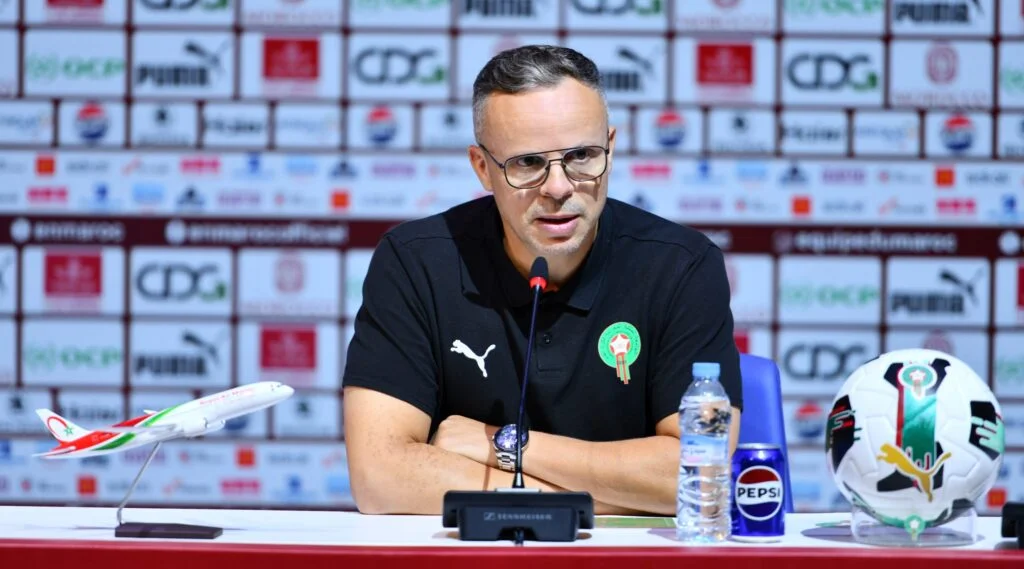
Rabat – After Morocco’s hard-fought win over Haiti in their final FIFA World Cup 2026 group-stage match, Atlas Lions’ coach Mohamed Ouahbi admitted that the Caribbean side exceeded expectations, echoing remarks later referenced by Haiti coach Sébastien Migné during his post-match press conference.
“After the match, Morocco’s coach told me Haiti surprised him,” Migné said while responding to criticism from parts of the Haitian media. “I’d rather focus on recognition coming from people who understand football than from those who don’t.”
For Haiti, the tournament was never supposed to be easy. Drawn into a brutal group featuring Morocco, Brazil, and Scotland, the Haitians entered the competition as clear underdogs. Yet they refused to play like one.
Before even facing Morocco, Migné had insisted his already-eliminated side still had something to fight for.
“The Moroccan team is sixth in the world, African champion, and World Cup semi-finalist,” Haiti’s coach said ahead of the game. “It’s an incredible opportunity to face an opponent of this caliber.”
He also stressed that despite elimination, his players still had a duty to make their supporters proud, something many observers felt they accomplished despite the defeat.
The emotional weight behind Haiti’s performances goes beyond results. The nation had gone 52 years without qualifying for a FIFA World Cup, with their only previous appearance dating back to 1974. Against Morocco, Haiti also scored their first World Cup goal in 52 years, ending another decades-long drought on football’s biggest stage.
Even in defeat, the celebration after the final whistle reflected a squad aware of what it had achieved.
Haiti may leave the tournament without advancing, but they leave having earned admiration from opponents, neutrals, and even Morocco’s coaching staff.
For a team many expected to simply survive the group stage, Haiti instead managed to leave a lasting impression.