 Join on WhatsApp
 Join on Telegram
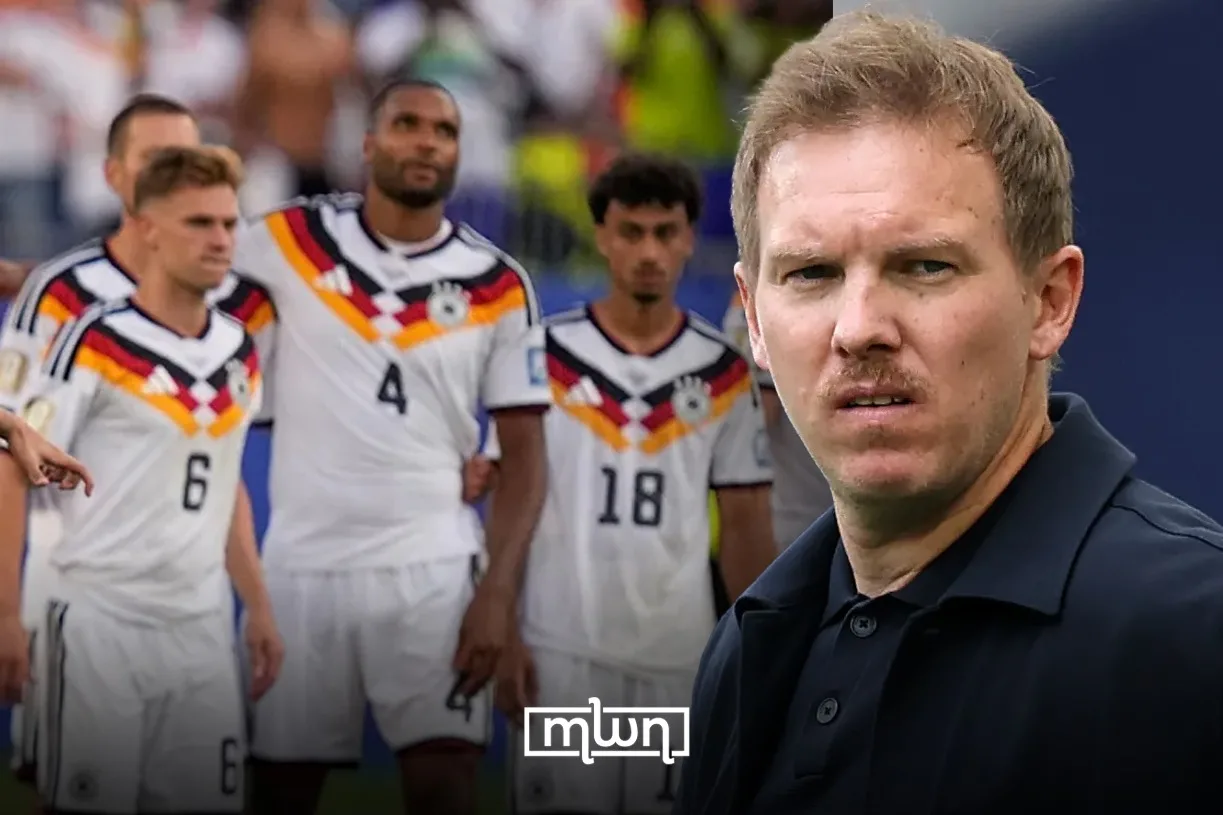
Rabat – Germany’s World Cup ended the way few people expected – on penalties, against a spirited Paraguay team in the Round of 32. But by the time Julian Nagelsmann sat down for his post-match press conference, the result almost wasn’t the headline anymore. Rather, it was his stark admission that the once terrifying German national team has become an ordinary and second-class squad.
“This is now the third elimination in a row,” Nagelsmann told reporters after the match, before adding that Germany are simply “not part of the first-class teams any more.” It wasn’t a slip or a moment of raw emotion talking; it was instead a coach respecting the so-called underdogs and finally saying out loud what a lot of German football had been circling around for years.
The numbers back him up, whether he intended that or not. Germany won the World Cup in 2014 and haven’t gotten out of the group stage since, not in 2018, not in 2022.
This year they made it one round further than those two campaigns, only to go out anyway, and in a way that stung even more: it was the first time in the country’s World Cup history that a shootout had ended their tournament.
‘I am not someone who runs away’
And yet, what made the exit harder to explain was the performance itself. Germany had more of the ball against Paraguay, created more chances, and still couldn’t find a way through before it went to penalties and lost there. For a team with as much shootout pedigree as Germany historically carries, that’s its own kind of symbolic.
“When you exit the World Cup against Paraguay, it’s very bitter. If you don’t score enough goals, some teams can hurt you,” the Germany head coach said.
As he turned his attention to his own future, Nagelsmann didn’t sound like someone preparing to walk away. He said he’d like to keep the job if the German federation wants him to continue, and that he plans to make his case rather than step aside on his own.
“I am not someone who runs away. This is not the first time this has happened, and there are some things about today that need to be changed,” he explained. “But if the DFB wants me to continue I am going to continue. I know the mechanics of football, I know how the industry works. I know a lot of people will want me to leave but I would love to continue if the football association wants me to.”
Yet whether the DFB agrees to extend his stay at the helm of the national team is a separate question altogether, not an easy one for them to answer after three straight early exits in a row.
What’s not really up for debate anymore is the bigger picture. Nagelsmann more or less said it himself: Germany isn’t operating at the level it used to take for granted, and getting back there is going to take some patient, painstaking work.