
 Join on WhatsApp
 Join on Telegram
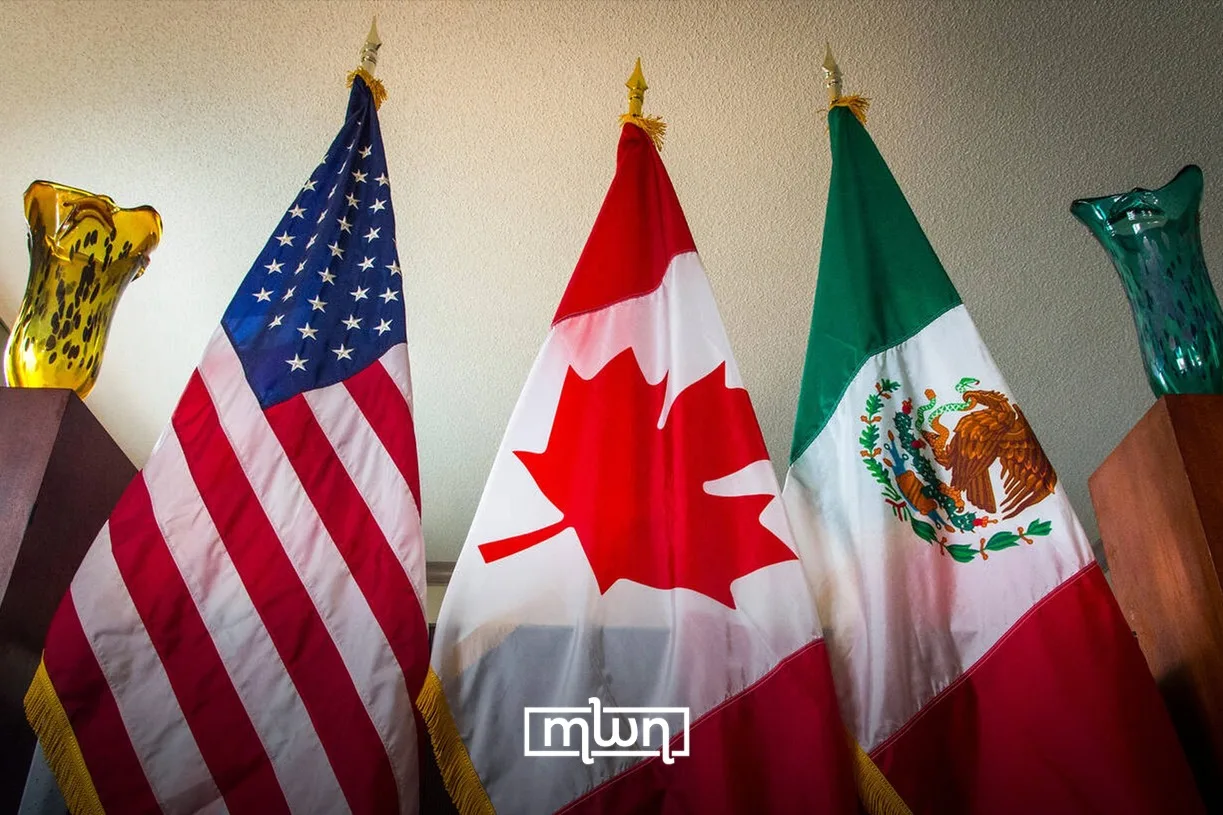
Fez – The administration of the U.S. President Donald Trump is expected to declare on Wednesday that it will not renew the U.S.-Mexico-Canada Agreement (USMCA), launching a review process that could eventually lead to the agreement’s expiration in ten years if no revised deal is reached.
The move activates the agreement’s “sunset clause,” which requires the three member countries to review the trade pact every six years.
Under the current rules, failure to agree on an extension would result in annual review meetings until July 1, 2036, when the agreement would automatically expire.
Trade officials from the United States, Mexico, and Canada are scheduled to meet virtually on Wednesday to discuss the future of the pact.
Although Washington is expected to reject an extension, negotiations over possible changes are likely to continue.
The USMCA replaced the North American Free Trade Agreement (NAFTA) in 2020 after being negotiated during Trump’s first term.
At the time, Trump described it as the fairest and most balanced trade agreement the United States had ever signed.
Since then, however, the U.S. president has repeatedly criticized the deal, arguing that it has failed to reduce the country’s trade deficit with Mexico.
He has instead favored tariffs on imported vehicles, steel and aluminum from Mexico and Canada.
No immediate withdrawal during the review process
Current negotiations are focused on major changes to the agreement, particularly in the automotive industry.
The United States is pushing for stricter rules requiring a larger share of vehicle parts to be produced in North America, with proposals that would require at least 50% U.S.-made content in vehicles qualifying for trade benefits.
Washington is also seeking stronger measures to prevent Chinese products from entering the North American market through USMCA countries.
For now, formal negotiations are taking place mainly between the United States and Mexico.
Talks with Canada remain limited as the two countries continue to face several trade disputes, including disagreements over Canada’s dairy market and other commercial restrictions.
Mexican officials say both countries largely agree on the main challenges facing the agreement, including the decline of U.S. manufacturing jobs, lower U.S. content in vehicles and concerns over goods being routed through third countries.
Discussions are now focused on how to address those issues while preserving regional trade.
Despite the expected declaration, the USMCA will remain in force during the review process.
Any immediate withdrawal would require a separate legal procedure, allowing a member country to leave the agreement after giving six months’ notice.
The coming negotiations are expected to shape the future of one of the world’s largest free trade areas, which has governed trade relations between the United States, Mexico, and Canada for more than three decades.