 Join on WhatsApp
 Join on Telegram
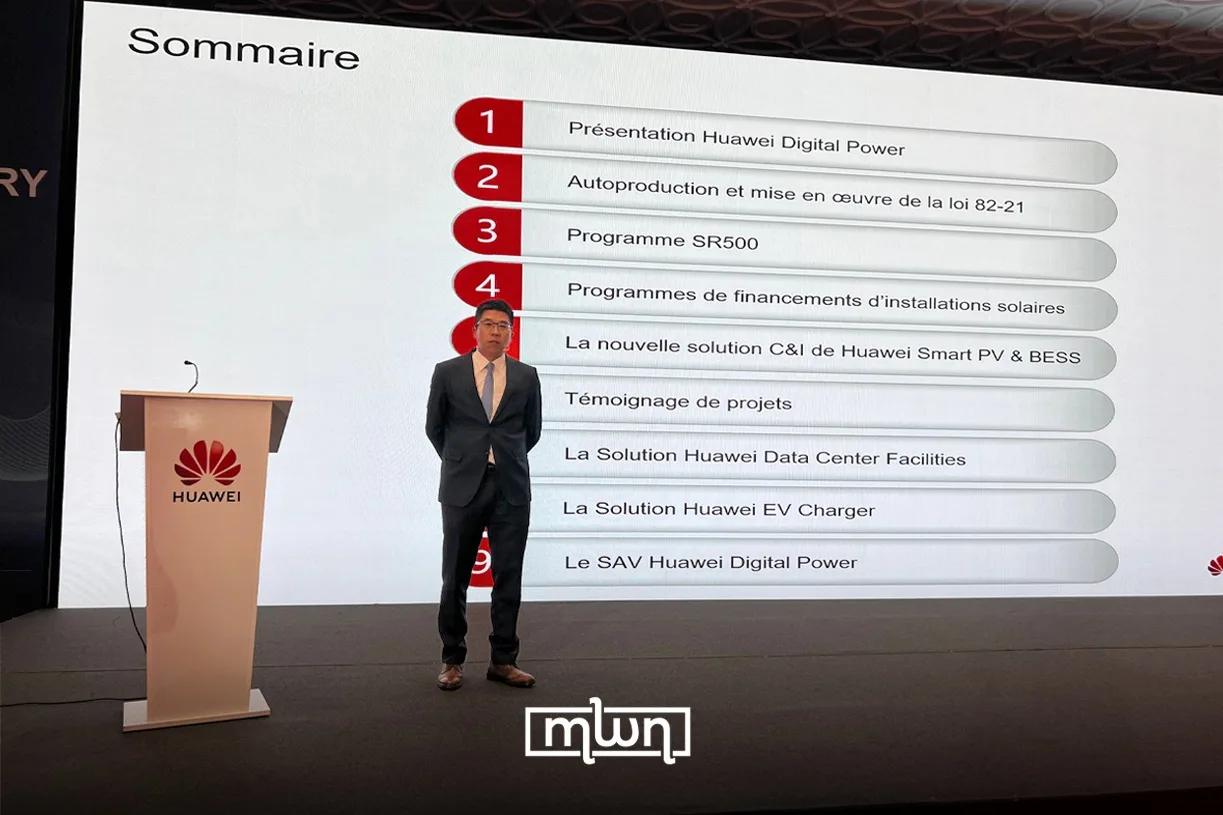
Casablanca – Huawei Morocco hosted the inaugural Clean Power Industry Summit 2026 on Tuesday at the Four Seasons Hotel Casablanca, launching a new platform dedicated to clean energy, digital power, and Morocco’s industrial energy transition.
As industries around the world accelerate their shift toward decarbonization, the newly launched summit aims to highlight technological innovations that support the digitalization of energy infrastructure and strengthen the long-term competitiveness of businesses.
Electrification, digitalization, and energy efficiency were at the heart of the discussions, reflecting their growing role as key drivers of a cleaner, smarter, and more competitive industrial sector.
The event brought together representatives from the Ministry of Energy Transition and Sustainable Development, industrial and commercial leaders, energy experts, and technology partners to exchange insights on Morocco’s evolving energy landscape.
Throughout the summit, Huawei showcased a range of digital power solutions designed to help businesses optimize energy use, lower operational costs, improve energy security, and accelerate their transition to cleaner energy systems.
In a press statement shared on the sidelines of the summit, Anis Liu Chengcheng, General Manager of Huawei Digital Power Morocco said the initiative was designed to support Morocco’s accelerating energy transition.
“Today, we have brought together industrialists who need a lot of electricity. And we have proposed solutions and technologies in digital power,” Chengcheng said.
Huawei outlines its digital power vision
During his presentation, Chengcheng pointed to rising global energy costs as one of the main drivers behind the growing interest in clean energy solutions.
He noted that geopolitical tensions have led to sharp increases in gas prices, particularly across Europe, placing additional pressure on industrial and commercial companies to reduce energy costs and improve efficiency.
Against this backdrop, he said advances in technology and falling costs have made solar energy increasingly competitive, with many projects capable of delivering a return on investment within three to four years.
He also mentioned that the company operates AI-powered manufacturing facilities and large-scale simulation laboratories to improve the reliability of renewable energy systems and better manage electricity grids as solar power becomes a larger share of the energy mix.
But beyond the regulatory framework, the summit also showcased Huawei’s Digital Power portfolio through a series of technology presentations.
These included the company’s latest Smart PV and Battery Energy Storage System (BESS) solution for commercial and industrial applications, electric vehicle charging technologies, and data center infrastructure solutions.
Law 82-21 expands self-production opportunities
In light of these discussions, the implementation of Morocco’s new Law 82-21 on electricity self-production emerged as one of the summit’s key topics.
Sanae El Hamraoui, Head of the Sustainable Energy Development Department at the Ministry of Energy Transition and Sustainable Development, outlined the framework and explained how it is expected to accelerate the adoption of renewable energy across different sectors.
“The goal is to reduce the dependence on fossil fuels, but also everything related to greenhouse gas emissions,” El Hamraoui noted.
She also explained that the reform is part of Morocco’s broader objective of increasing the share of renewable energy to more than 52% of installed electricity capacity by 2030.
Beyond reducing dependence on fossil fuels and cutting greenhouse gas emissions, she said the framework is designed to support a greener, more competitive economy while strengthening the country’s energy sovereignty.
Under Law 82-21, both public and private entities are now allowed to produce their own renewable electricity to meet their energy needs.
The framework also permits self-producers to inject up to 20% of surplus electricity into the grid and encourages the development of energy storage systems, helping businesses reduce costs while improving energy resilience.
As the summit came to a close, Huawei Morocco reaffirmed its commitment to supporting the country’s energy transition through digital power technologies and collaboration with public and private stakeholders, positioning the event as a new platform for advancing clean energy solutions across the industrial sector.