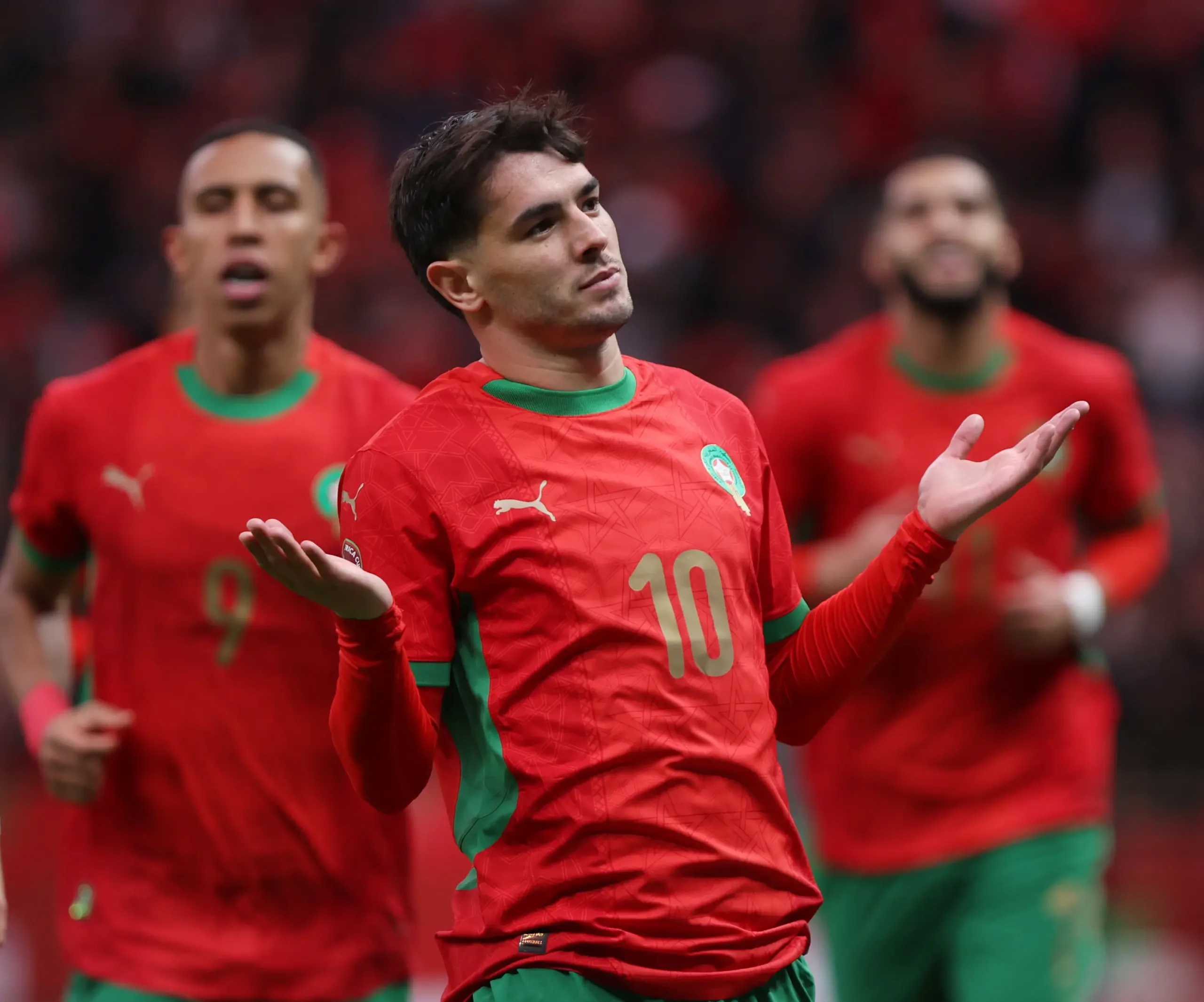
Morocco has secured the World Cup knockout phase for a second straight tournament, defeating the Netherlands 3-2 on penalties to secure a round of 16 date with Canada on July 4.
It’s a result that shadows their 2022 historic run to the semifinals in Qatar, the most advanced level achieved by an African/Arab country ever.
But two tournaments in, the real test is not whether this generation can win matches. It’s either Morocco’s academies and federation investment can turn a moment into a model that can keep the team outshining as a world power.
The foundation of that model sits in Salé, just outside Rabat, where the Mohammed VI Football Academy has spent nearly two decades converting royal investment into a talent pipeline.
Several members of the current World Cup squad passed through the academy’s facilities, including Azzedine Ounahi, Ahmed Reda Tagnaouti as well Nayef Aguerd. The academy says it has produced 26 players who have reached Morocco’s top division, while around 30 graduates are now playing in Europe– with at least five featuring in the current World Cup squad, according to academy scout Tarik El Khazri, cited by The Arab Weekly.
Around 90 percent of the boys who enter the academy come from low-income families, and the program pairs football training with a full academic curriculum. The academy has maintained a 100-percent high school graduation rate over the past decade, says education chief Abderrazak El Rhomari.
That pipeline isn’t limited to the senior team. Four academy-trained players started for Morocco’s U-20 side when it beaten Argentina 2-0 in Chile last October, 2025 to win the FIFA U-20 World Cup, the first Arab nation to claim the title.
Federation president Fouzi Lekjaa frames this continuity as deliberate rather than accidental, leading a comprehensive system running from the U-17s through to the Olympic and first teams.
In a separate interview with Le Figaro, Lekjaa traced the strategy to a single starting point: the 2008 National Sports Conference, where “the foundations were laid, and a clear roadmap was defined” for developing the country’s football infrastructure and governance.
The infrastructure argument is easy to see on the pitch. Morocco is now ranked 6th in the world, one of the highest FIFA rankings in the country’s football history whereby establishing itself among the powerhouses, and hosting duties are stacking up: the 2025 Africa Cup of Nations, the ongoing 2026 U-17 AFCON, and a 2030 World Cup, which Morocco will co-host with Spain and Portugal.
Federation officials see that hosting record as validation of the long-term plan rather than a standalone success. Still, sustainability is not the same as certainty. Morocco changed coaches mid-cycle, replacing Walid Regragui with Mohamed Ouahbi after AFCON, a shift Tangier-based curator Mehdi Sefrioui frames as generational bridging rather than crisis management. “We have a team in transition between older players that are playing less and new players who are supposed to be the next generation,” he said.
And the football project has not been immune to wider domestic pressure, Morocco saw youth protests in 2025 over how state budgets, including sports spending, are allocated, a tension Sefrioui says is about prioritization, not whether investment in football is justified at all.
On the field, Morocco’s challenge is no longer about proving they belong, it is about managing the expectations that come with being a contender. Upon booking a qualification with a 4-2 win over Haiti, coach Mohamed Ouahbi presented the team’s progress while insisting there was still room to develop and reshape.
That may be the honest state of Moroccan football heading into the knockout rounds: a nation with the pipeline, the ranking, and the hosting résumé of an emerging power from Africa to the World, still waiting to find out if one team’s run becomes a nation’s rise.