Rabat – As Morocco prepares to face France in one of the most anticipated quarterfinals of the 2026 FIFA World Cup, the conversation surrounding the match extends far beyond tactics.
Instead, it has become a referendum on trust in FIFA’s officiating.
The controversy surrounding Egypt’s dramatic round-of-16 exit to Argentina has ignited a broader debate over refereeing standards at the tournament, with criticism now stretching well beyond Egyptian supporters; coaches, former players, analysts, and public figures have all weighed in, questioning whether the sports governing body is applying its rules consistently.
Egypt’s exit sparks international backlash
Egypt’s 3-2 defeat to the defending champions ended in heartbreak after a series of disputed refereeing decisions, including a disallowed goal following a VAR review, several unpunished challenges, and claims that the referee failed to activate FIFA’s anti-racism protocol after Egypt coach Hossam Hassan made the official “X” gesture to report alleged abuse.
In the hours that followed, criticism intensified.
Real Madrid manager Jose Mourinho described the situation as “theft and an absolute disgrace,” questioning why football authorities had investigated previous incidents involving Argentina while Egypt, in his view, did not receive the same treatment.
Former Italian manager Fabio Capello also weighed in, saying football fans can accept defeat “when the better team wins,” but not inconsistent VAR decisions.
“You cannot apply one standard to one team and a different standard to another,” Capello argued, warning that such inconsistency inevitably damages confidence in the integrity of officiating.
Former France international Patrice Evra and chess legend Garry Kasparov were among several other high-profile figures who questioned the refereeing, adding to an online wave of criticism that spread well beyond Egypt.
Morocco-France under unprecedented scrutiny
The controversy has inevitably spilled into Morocco’s quarter-final against France.
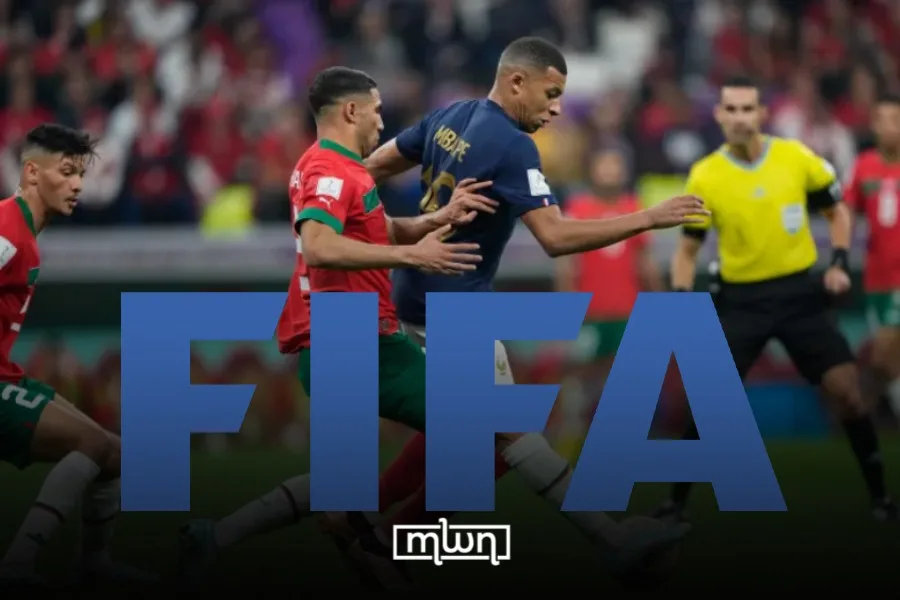
Within hours of Morocco securing its place in the last eight, memories of the disputed decisions from the 2022 World Cup semifinal resurfaced across social media.
Supporters revisited penalty appeals denied to the Atlas Lions in Qatar, while discussions over refereeing standards quickly returned to the forefront.
Those concerns only intensified after FIFA appointed an all-Argentine refereeing team for the France-Morocco quarterfinal, a decision that immediately attracted widespread attention.
Even major international outlets highlighted the appointment, with many fans questioning whether officials from the same nation whose controversial victory over Egypt sparked a load of criticism should oversee another high-stakes knockout fixture involving an African side.
A growing credibility test for FIFA
The scrutiny reflects a broader issue.
For many supporters across Africa, Asia, and Latin America, Egypt’s elimination has become more than an isolated refereeing controversy. It has reinforced long-standing concerns that football’s biggest tournaments still struggle to convince everyone that officiating standards are applied equally, regardless of the teams involved.
Whether those concerns are justified remains open to debate.
What is undeniable, however, is that confidence in FIFA’s refereeing system is increasingly becoming part of the tournament narrative itself.
When discussions before one of the World Cup’s biggest matches revolve as much around the referee as the football, the governing body faces an uncomfortable reality.
For Morocco and France, the focus will ultimately be on the pitch.
For FIFA, the spotlight will be on whether the officiating can restore faith, or deepen the doubts that Egypt’s dramatic exit has already brought to the surface.