 Join on WhatsApp
 Join on Telegram
Rabat – When the referee blew the final whistle in Egypt’s dramatic 3-2 defeat to Argentina, an entire continent saw its hopes narrow to a single flag.
For 78 minutes, Egypt looked set to join Morocco in the quarter-finals after racing to a two-goal lead against the reigning world champions. But Argentina mounted a remarkable comeback, ending the Pharaohs’ dream and leaving Morocco as the only African nation still standing at the 2026 FIFA World Cup.
The result also meant Morocco is the last remaining representative from the Arab world, placing the Atlas Lions at the center of expectations stretching far beyond Morocco’s borders.
Carrying more than a nation’s hopes
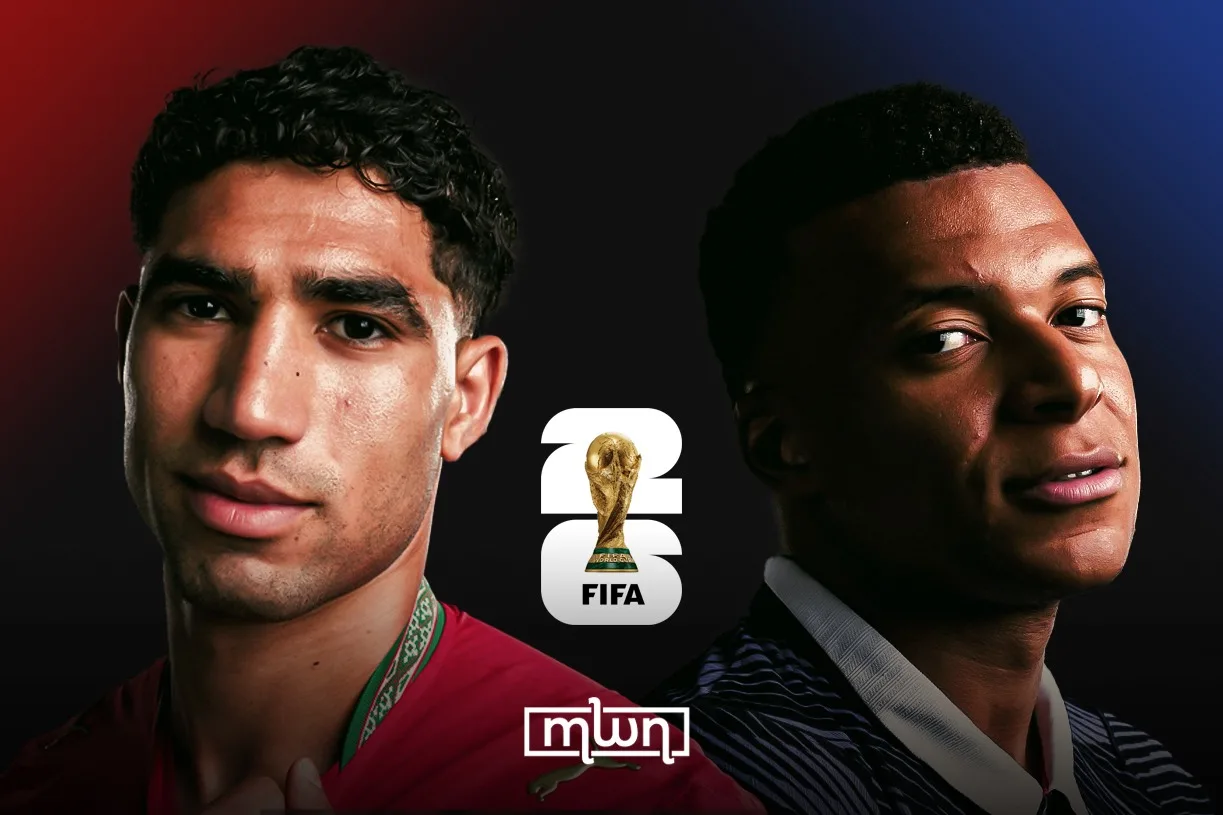
The Moroccan national team’s quarter-final against its French counterpart is no longer just another knockout fixture.
It has become a match watched with interest across Africa and much of the Arab world, where many supporters have rallied behind the Atlas Lions after seeing every other team from the two regions eliminated.
The 2026 World Cup began with record African representation. Ten nations qualified, hoping to build on the momentum created in recent tournaments. Yet one by one, Tunisia, Senegal, DR Congo, South Africa, Côte d’Ivoire, Algeria, Ghana, Cabo Verde, and finally Egypt saw their campaigns come to an end.
Now, only Morocco remains.
For many fans, the Atlas Lions are no longer competing solely for Morocco. They have become the final opportunity for an African and Arab nation to keep dreaming on football’s biggest stage.
A legacy built in Qatar
This is not unfamiliar territory for Morocco.
The Atlas Lions transformed global perceptions in Qatar four years ago when they became the first African and Arab nation to reach a FIFA World Cup semi-final.
That run was celebrated well beyond Morocco’s borders. Streets from Casablanca to Gaza, from Abidjan to Doha, filled with supporters who saw the team as a symbol of what football from the region could achieve against the sport’s traditional powers.
The achievement changed expectations forever.
Morocco’s Atlas Lions no longer arrive at major tournaments as a surprise package; they take the stage as genuine contenders capable of competing with anyone.
Another date with history
Standing in Morocco’s path is France, one of football’s modern heavyweights.
The matchup inevitably revives memories of the 2022 semi-final, when Morocco’s historic journey ended after a hard-fought defeat to Les Bleus.
This time, however, the stakes feel even greater.
Victory would not simply send Morocco into another World Cup semi-final. It would extend Africa’s and the Arab world’s presence in the tournament while reinforcing the idea that Morocco’s success is no longer an exception, but part of a sustained rise.
Defeat, meanwhile, would bring an end to the hopes carried by millions of supporters who have adopted the Atlas Lions as their team for the remainder of the competition.
Ninety minutes with continental significance
Football rarely belongs to one nation during a World Cup.
Allegiances often shift as teams are eliminated, allegiances often shift, with supporters embracing the countries that continue representing their region, language, or shared identity.
That is precisely where Morocco finds itself.
The Atlas Lions did not ask to become Africa’s and the Arab world’s final representatives. Circumstance placed them there.
Whether they view that as pressure or motivation will become clear when they step onto the pitch against France.
For one night, Morocco will play as Morocco.
But across Africa and the Arab world, millions will be watching as though their own flag is still flying.