
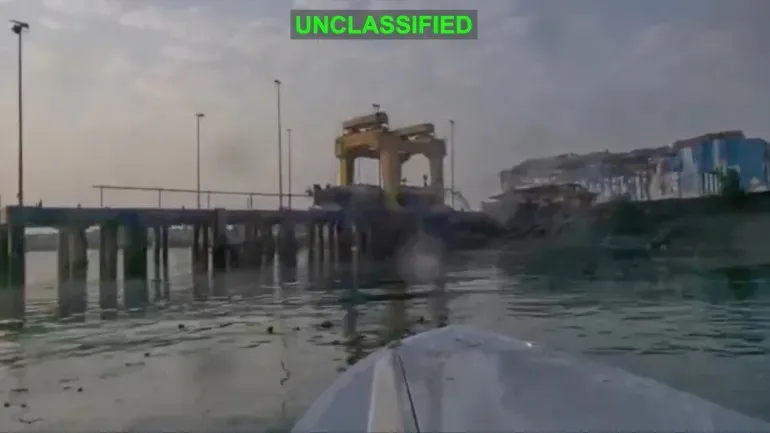
Rabat – Fighting between the US and Iran intensified on Tuesday after Washington launched a third consecutive night of strikes on Iran.
Iranian media reported explosions in several locations, including Bushehr, Bandar Abbas, Kish Island, and Qeshm Island, areas that are considered strategically important because they overlook the Strait of Hormuz.
Iran responded by launching attacks across the Gulf, targeting US premises. The country claimed responsibility for strikes on US military facilities in Bahrain, Kuwait, and Jordan, while also saying it targeted two oil tankers in the Strait of Hormuz.
The United Arab Emirates said the vessels were hit by Iranian cruise missiles, killing one Indian crew member and injuring several others. India later summoned Iran’s deputy ambassador over the incident.
Military analysts warned that the renewed fighting could grow into a much larger conflict. Iranian officials reported at least three deaths and dozens of injuries from the latest US strikes, while more than 20 people have reportedly been killed and around 100 wounded since hostilities resumed.
The crisis has also disrupted one of the world’s most important shipping routes. Traffic through the Strait of Hormuz has dropped sharply, with only six ships passing through the waterway on Monday compared to 14 the previous day. Around one-fifth of the world’s oil supply passes through the strait, which makes any disruption a major concern for global markets.
As ships avoid the area because of security risks, oil prices have continued to rise. The US has also reimposed sanctions on Iran and restored its naval blockade, while Iran insists the waterway will not reopen through what it describes as American aggression.
Meanwhile, diplomatic efforts are limited. Oman said discussions are underway to create a lasting framework that would guarantee freedom of navigation in the Strait of Hormuz. China also called on both Washington and Tehran to restore safe passage through the strategic waterway and reduce tensions.
At the same time, Iran condemned the UK’s decision to classify the Islamic Revolutionary Guard Corps (IRGC) as a security threat under new measures targeting foreign state-backed activities. Tehran called the move unjustified and argued that the IRGC is an official branch of Iran’s armed forces.