
 Join on WhatsApp
 Join on Telegram
Rabat – Who really controls a football match? The players? The coaches? Or the man standing between them, whistle in hand?
A referee’s decision can change the course of a match, and in a major tournament, it can even change the fate of an entire team or country.
Ismail Elfath, an officiator who has the world talking about him lately, knows that better than most.
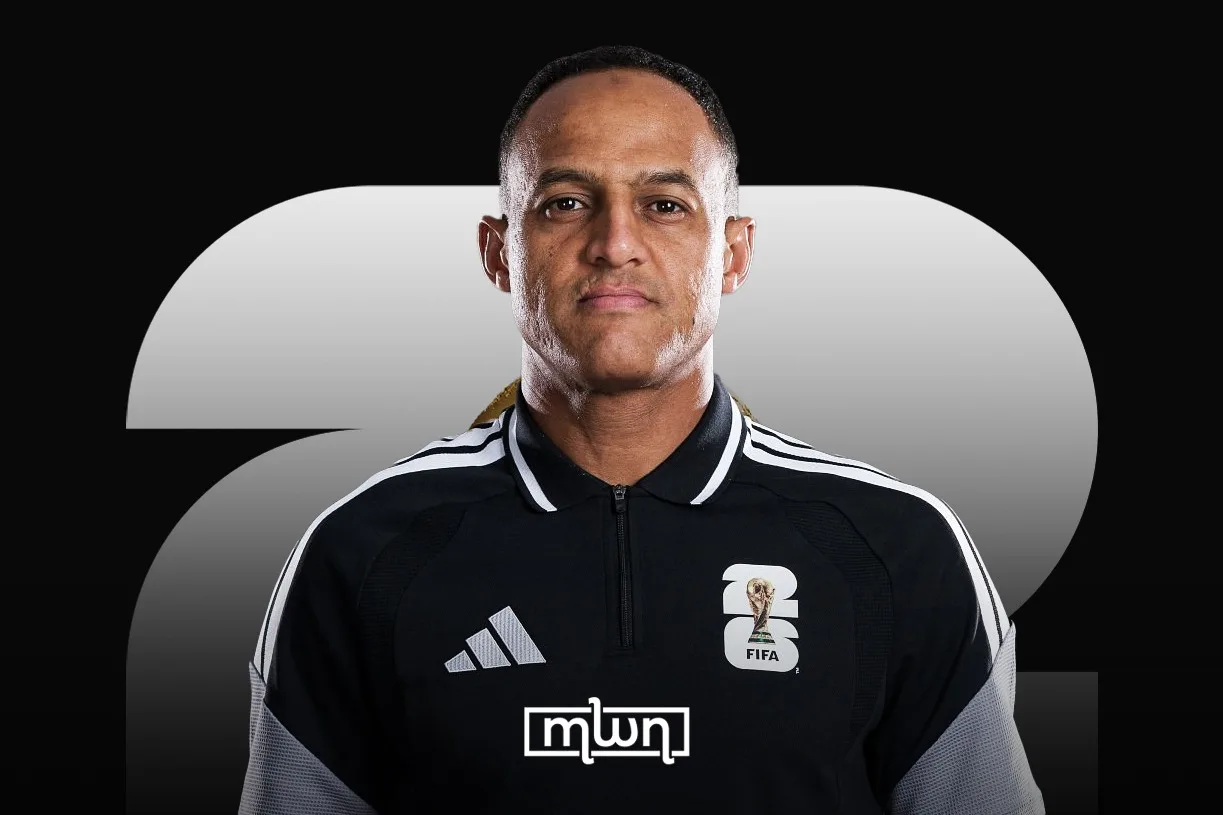
At the 2026 FIFA World Cup, the Moroccan-born referee reached a new stage in his career. FIFA appointed him to officiate the semifinal between England and Argentina. With that appointment, Elfath became the first American referee to take charge of a World Cup semifinal.
It was a historic moment for the United States, but for the Moroccan soul, the story had begun far away from America’s football stadiums. It began in Casablanca.
The early beginning
Elfath was born in Casablanca on March 3, 1982.
At only 18 years old, he left Morocco after winning the U.S. Diversity Visa lottery. He moved to Austin, Texas, and began chasing a new dream that would ensure him a fulfilling life.
This trip was not calculated; it was just an outcome of an ad in a newspaper that Elfath had encountered while doing his usual readings.
His initial plan was to become an engineer, so he went for a mechanical engineering major at the University of Texas. Later on, he achieved his dream by working in information technology.
Officiating was never a part of his journey; football, on the other hand, was just something he was passionate about, the same as any young Moroccan his age.
The pivotal point
While Elfath was playing football as an amateur, his instincts told him something was off in the referee’s decisions. While voicing his opinion, he got himself in disagreement with the game’s officiator, and a friend’s joke changed his overall perspective: “Why don’t you become a referee yourself?”
Elfath then felt that a whole new world had opened up for him. He began officiating youth matches on weekends. At first, it was just an additional means to earn extra money while exploring a new world that combined excitement and passion.
But the football field quickly became more than a side job. Elfath had an eye for the game. He understood its rhythm. He could read situations before they developed.
Slowly, the weekend job began to look like a career. Eventually, the football call was irresistible; Elfath left his career in information technology and committed himself fully to refereeing.
The birth of a great officiator
In 2012, Elfath made his Major League Soccer debut. Four years later, he joined the FIFA international referee list.
The young man who had arrived in the United States hoping to build a career as an engineer was now travelling the world with a whistle in his pocket.
His professional journey didn’t stop there; it continued to flourish.
Elfath won the MLS Referee of the Year award twice. He became one of the most trusted officials in North American football. He also found himself at the center of a major moment in the sport’s technological history.
Elfath refereed the first live match in which the Video Assistant Referee system was tested.
During the trial, he made the television-screen gesture that would later become one of the most recognizable signals in modern football.
While the game was evolving, Elfath was an attendant figure that witnessed the process.
The World Cup
By then, his career had taken him to the FIFA U-20 World Cup, the Olympic Games, the Africa Cup of Nations and Copa América.
Then came Qatar 2022. Elfath refereed Portugal against Ghana, Cameroon against Brazil, and Japan against Croatia. He was also selected as the fourth official for the World Cup final between Argentina and France.
One of Elfath’s most memorable moments came during Cameroon’s match against Brazil at the 2022 World Cup. Vincent Aboubakar scored the winning goal in stoppage time before removing his shirt during the celebration. The yellow card he received was his second of the match, meaning he had to be sent off. Before showing him the card, however, Elfath shook Aboubakar’s hand. The brief exchange quickly became one of the images associated with the tournament, showing a different side of a referee usually seen only through his decisions.
The Injury
During the 2024 Copa América, a serious knee injury interrupted Elfath’s career. The injury kept him out for more than a year and forced him to work his way back to full fitness.
He returned in time for the 2026 World Cup and was soon given several important assignments, including Japan against the Netherlands, Uruguay against Spain, and Brazil against Norway.
His comeback reached its biggest point when FIFA appointed him to referee the semifinal between England and Argentina, giving him the biggest assignment of his career and making him the first American referee to officiate a World Cup semifinal.
An American identity with a Moroccan heart
Elfath now represents the United States on the international stage, and his career has been built almost entirely in the country where he made a new life. But his story still leads back to Casablanca.
When he left Morocco at 18 with plans to become an engineer, he had no idea that refereeing would eventually become his profession, let alone take him to the biggest stages in football. A suggestion from another referee led him to officiate youth matches. That weekend job gradually became a career, and the career eventually took him to a World Cup semifinal.
For someone who left Morocco in search of a new future, the journey has taken Elfath further than he ever expected. He did not become the engineer he once planned to be. Instead, he found his place in football, and at the 2026 World Cup, he became the first American referee to stand in the middle of a World Cup semifinal.