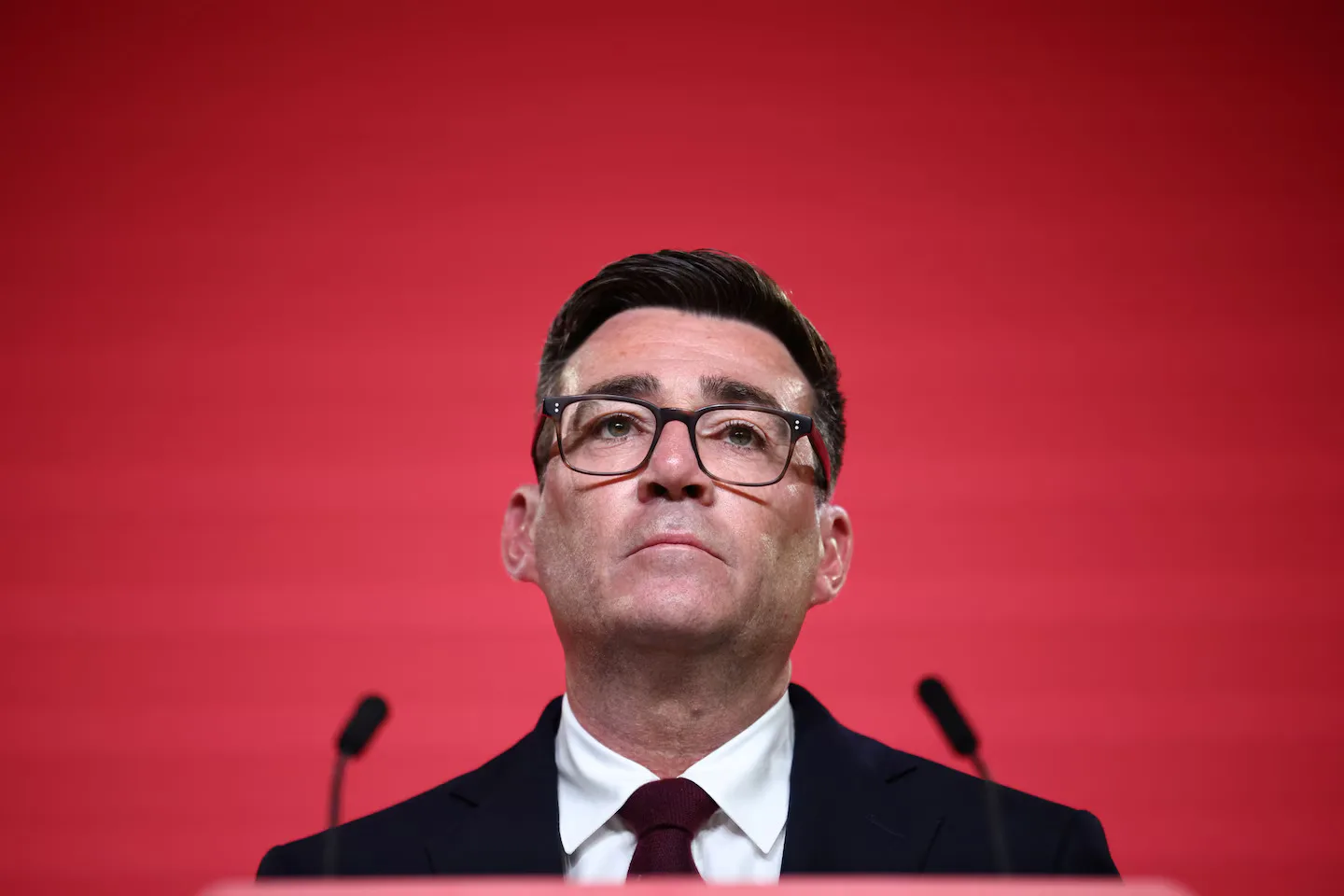
Marrakech – Andy Burnham officially becomes Britain’s prime minister on Monday, replacing Keir Starmer after a political upheaval that made Starmer the shortest-serving Labour premier in history.
The 56-year-old former mayor of Greater Manchester – nicknamed the “King of the North” – takes office as the country’s 59th prime minister and the seventh to occupy 10 Downing Street since 2016. He enters the role pledging to “rewire” a nation struggling with stagnant wages, high taxes, and poorly performing public services.
The transition is expected to follow a carefully choreographed sequence. Starmer delivers a final statement outside Downing Street before traveling to Buckingham Palace to formally tender his resignation to King Charles III. The monarch then receives Burnham and asks him to form a government.
The ceremony, known as “kissing hands,” no longer involves any literal hand-kissing – the two simply shake hands during a brief private audience.
Once appointed, Burnham travels to Downing Street to deliver his first address as prime minister. He will declare himself “acutely aware” of how many leadership changes the country has endured, his office confirmed, and will call for “a more stable and responsible politics.”
A long road back to Westminster
Burnham’s path to Number 10 stretches back decades. He became a parliamentary researcher at 24, a special adviser at 28, and a member of parliament at 31. Over 16 years in the House of Commons, he served in both Tony Blair and Gordon Brown’s governments, rising to health secretary. He ran for the Labour leadership twice – in 2010 and 2015 – losing both times.
He left Westminster in 2017 to become Manchester’s mayor, during which he built a national profile through his advocacy for northern England during the COVID-19 pandemic and his campaigns for greater regional investment.
His return to parliament came only last month through a by-election in Makerfield, northwest England, triggered specifically to give him a path back to the leadership.
Burnham ran unopposed for Labour leader, securing nominations from 379 of the party’s 403 lawmakers.
Starmer’s departure followed a pattern now familiar in British politics. He announced on June 22 that he would step down after less than two years in office, declaring at his final Prime Minister’s Questions that “his political journey is over.” Less than two years after leading Labour to its largest parliamentary majority this century, his approval collapsed.
Policy missteps – cutting benefits for pensioners, accepting freebies, appointing Jeffrey Epstein-linked politician Peter Mandelson as ambassador to Washington – eroded public trust. Heavy losses in May’s local elections, with Nigel Farage’s populist Reform UK surging, sealed his fate. He leaves office as the least popular prime minister on record.
Burnham inherits every one of those pressures. Average weekly pay, adjusted for inflation and excluding bonuses, has risen less than 1% since Labour took office in 2024, reaching £494 ($651). Taxes sit at multi-decade highs. Economic growth remains anemic.
In his first speech as Labour leader, Burnham described the moment as “the most significant change in our politics for 40 years,” promising a country where “life is more affordable, and all people and places are lifted from where they are now.” He pledged to govern for “the North, the South, the East and the West, for Scotland, Wales and for Northern Ireland.”
His early policy decisions are already drawing attention. Plans for a digital identity document were scrapped on Sunday. Thames Water, Britain’s largest water company, could be placed under temporary public control. His deputy, Lucy Powell, confirmed the government wants to “refocus and reprioritize” around cost-of-living concerns.
Burnham also makes history as the UK’s first Catholic prime minister – a distinction carrying weight in a country where centuries of legislation effectively barred Catholics from the office. He has credited “Catholic social teaching” as the foundation of his politics, with its emphasis on solidarity and local decision-making.
His most immediate task: appointing a cabinet. Home Secretary Shabana Mahmood has emerged as the frontrunner for chancellor, overtaking Energy Secretary Ed Miliband. Burnham offered no confirmation, urging his party to ignore “speculation.”
International reaction has been muted. US President Donald Trump remarked only that he suspects Burnham is “extremely liberal.” Russia expects no change in its strained relations with London. France’s foreign minister wished him well and hoped for “as much stability as possible.”