
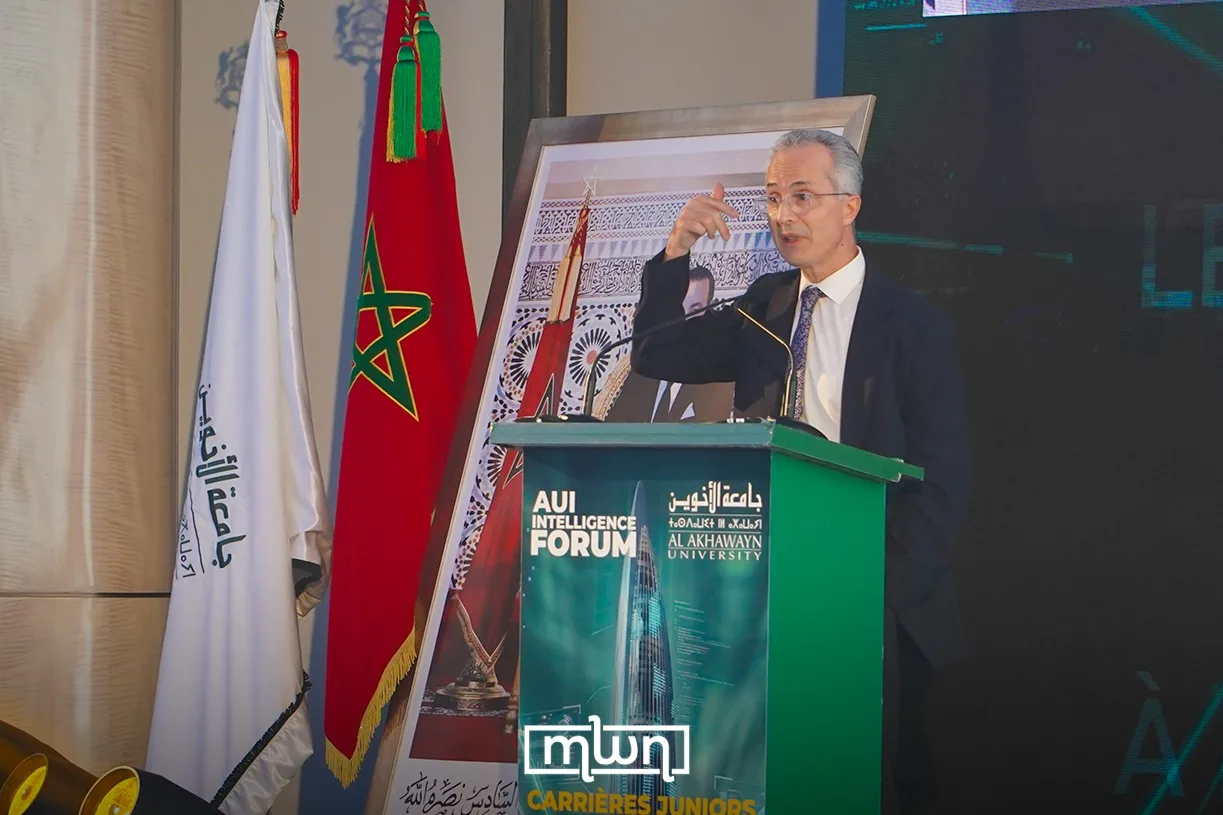
Rabat— Morocco has a crucial opportunity to prepare its workforce for the age of artificial intelligence, as AI has not yet led to widespread job losses among young people but is instead reshaping the tasks they perform, according to speakers at Al Akhawayn University’s Intelligence Forum.
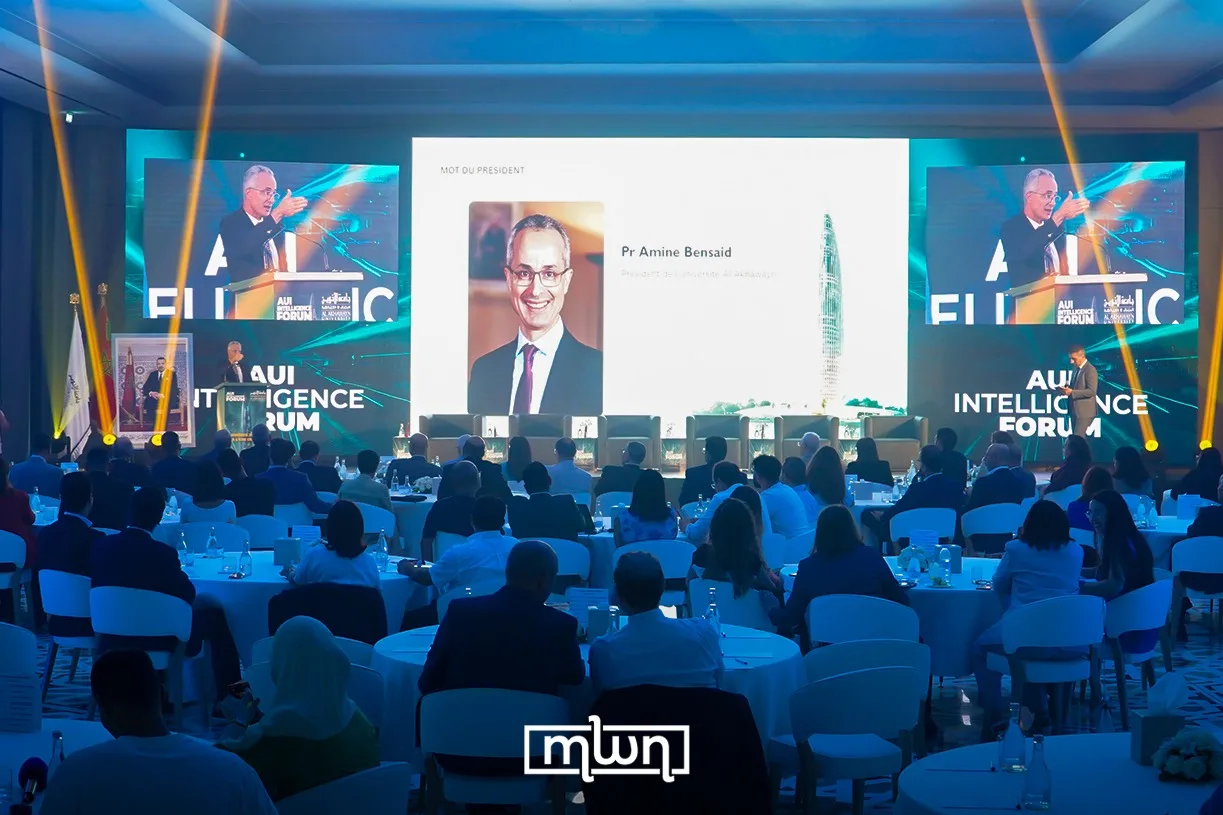
Held on July 14 at the Mohammed VI Tower in Rabat, the forum brought together Higher Education Minister Azzedine El Midaoui, CGEM President Mehdi Tazi, business leaders, academics, and public officials to discuss how Morocco can turn AI into a driver of employment and economic growth rather than a threat to jobs.
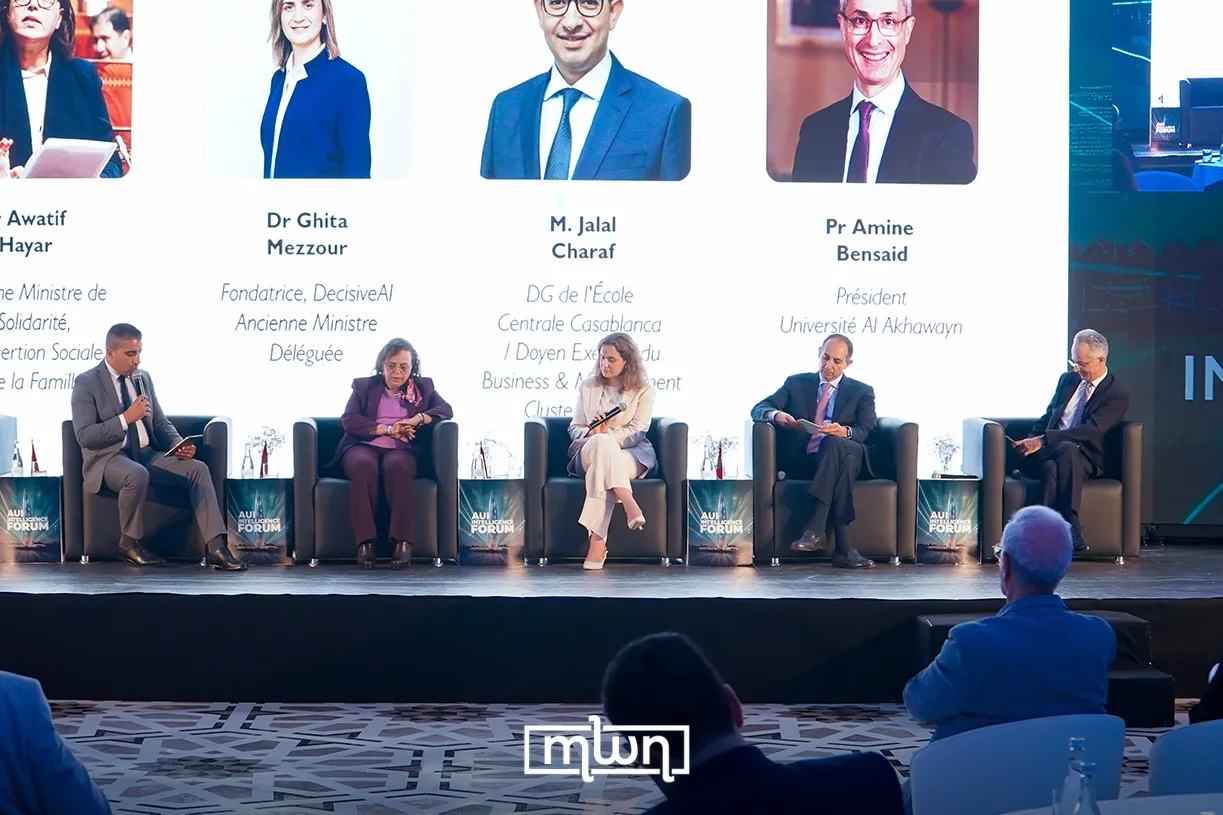
The event focused on strengthening collaboration between universities and employers to equip graduates with the skills needed in an AI-powered economy.
AI transforming work, not eliminating jobs
Business leaders agreed that artificial intelligence has yet to replace workers in Morocco.
“As a business leader, I do not yet see AI replacing people, either in my companies or in those of my colleagues,” said Mehdi Tazi, President of the General Confederation of Moroccan Enterprises (CGEM), adding that more than 90% of jobs are not directly affected at this stage.
Wafaa Asri, Secretary General of the Department of Vocational Training, echoed this assessment, citing international research from the OECD and the World Economic Forum showing that AI is primarily transforming tasks within professions—particularly those assigned to new recruits—rather than eliminating occupations altogether.
At the same time, speakers emphasized that AI adoption is accelerating. Mohamed Horani, Founder and CEO of HPS, described the technology as “irreversible,” noting that companies are integrating AI into both their operations and products to remain competitive.
Recruiters are also raising expectations. Capgemini’s hiring framework, presented during the forum, categorizes candidates as “AI Aware,” “AI Ready,” and “AI Native,” as the ability to critically evaluate and challenge AI becomes an increasingly important recruitment criterion.
A window of opportunity for Morocco
Participants said Morocco enjoys an important advantage because AI adoption remains at an intermediate stage, giving the country time to prepare its workforce before technological disruption intensifies.
However, they warned that this window could narrow as companies accelerate AI adoption to boost competitiveness.
According to international studies cited at the forum, between 33% and 48% of recent US graduates remain unemployed, even as 53% of companies report difficulty finding candidates with AI-related skills.
In Morocco, where graduates take an average of 33 months to secure their first job, and one in four young graduates is unemployed, policymakers still have the opportunity to shape a different outcome.
“The two scenarios can coexist. Everything depends on the choices we make today,” Asri said.
Amine Bensaid, President of Al Akhawayn University, said the institution launched the forum because it did not want to wait and observe AI’s impact.
“It is a good moment, and it is certainly not too late,” he said, stressing the need for employers, universities, and public authorities to work together.
Human skills remain central
Rather than replacing people, participants argued that AI should enhance human capabilities.
Higher Education Minister Azzedine El Midaoui called on universities to become “creators of wealth,” while Tazi said AI should help professionals become “a better version of ourselves.”
Former Minister Awatef Hayar highlighted AI’s potential to promote inclusion by enabling rural artisans to reach international markets in their own language.
Jalal Charaf, Director General of École Centrale Casablanca and Executive Dean at Mohammed VI Polytechnic University, added that universities are increasingly training graduates to orchestrate AI agents that significantly expand their productivity.
Four priorities to strengthen employability
The forum identified four key priorities for preparing Morocco’s workforce for the AI era.
The first is developing essential skills, including critical thinking, adaptability, relational intelligence, and proficiency in AI tools across all academic disciplines. El Midaoui noted that Morocco already offers more than 80 engineering and master’s programs specializing in artificial intelligence.
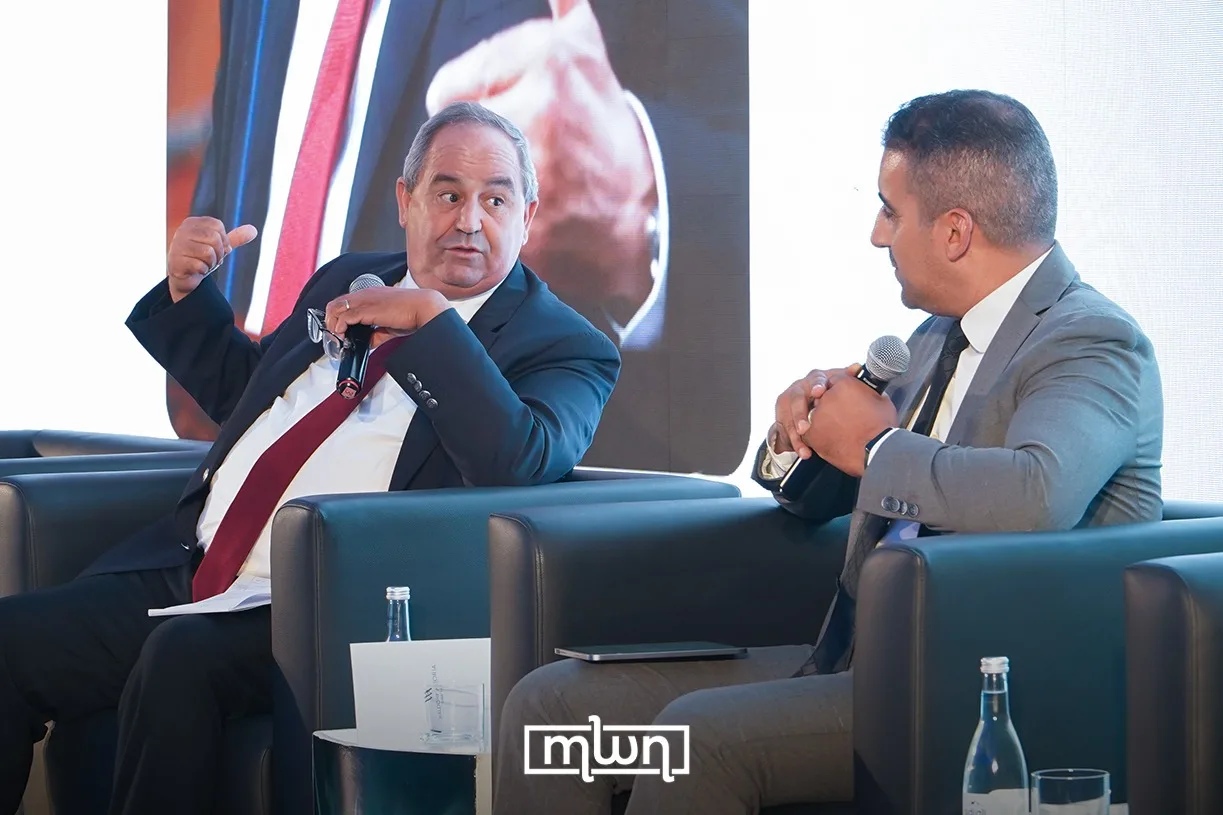
The second is strengthening companies’ role in education through co-designed curricula, work-study programs, and corporate academies. Charaf said employers are increasingly interested not only in students’ answers but also in “the questions they ask.”
The third priority is building a national strategy around data, which Horani described as “the fuel of AI,” while ensuring data sovereignty without relying on a single technology provider.
The fourth focuses on strengthening foundational learning before introducing AI, encouraging critical thinking about digital platforms, and using AI-assisted learning to expand equal educational opportunities.
Strong graduate employment
Al Akhawayn University said it has made AI use mandatory across all disciplines after three years of faculty professional development.
According to the university, 88% of graduates entering the labor market had secured a job offer before graduation, with work-study programs generating three to four times more employment offers than traditional academic pathways.
The university said it will publish a summary report and recommendations from the forum in the coming days, with the Intelligence Forum set to become a recurring institutional event.