 Join on WhatsApp
 Join on Telegram
Marrakech – The US Embassy in Morocco and the Moroccan Initiative for Space Industry (MISI), in partnership with the Lycée Mohammed VI d’Excellence (LM6E) and 1337 Coding School, will bring the inaugural AMAZE CanSat Academy to a close with a four-day residential space camp. The camp runs at 1337 Coding School in Khouribga from July 26 to 30.
The program will end with the launch of the CanSats built by the students, followed by a graduation and awards ceremony.
A CanSat is a miniature educational satellite fitted with sensors, coding modules, and recovery components. It lets students simulate a real satellite mission and collect and analyze flight data from launch to recovery, a model widely used in US high schools.
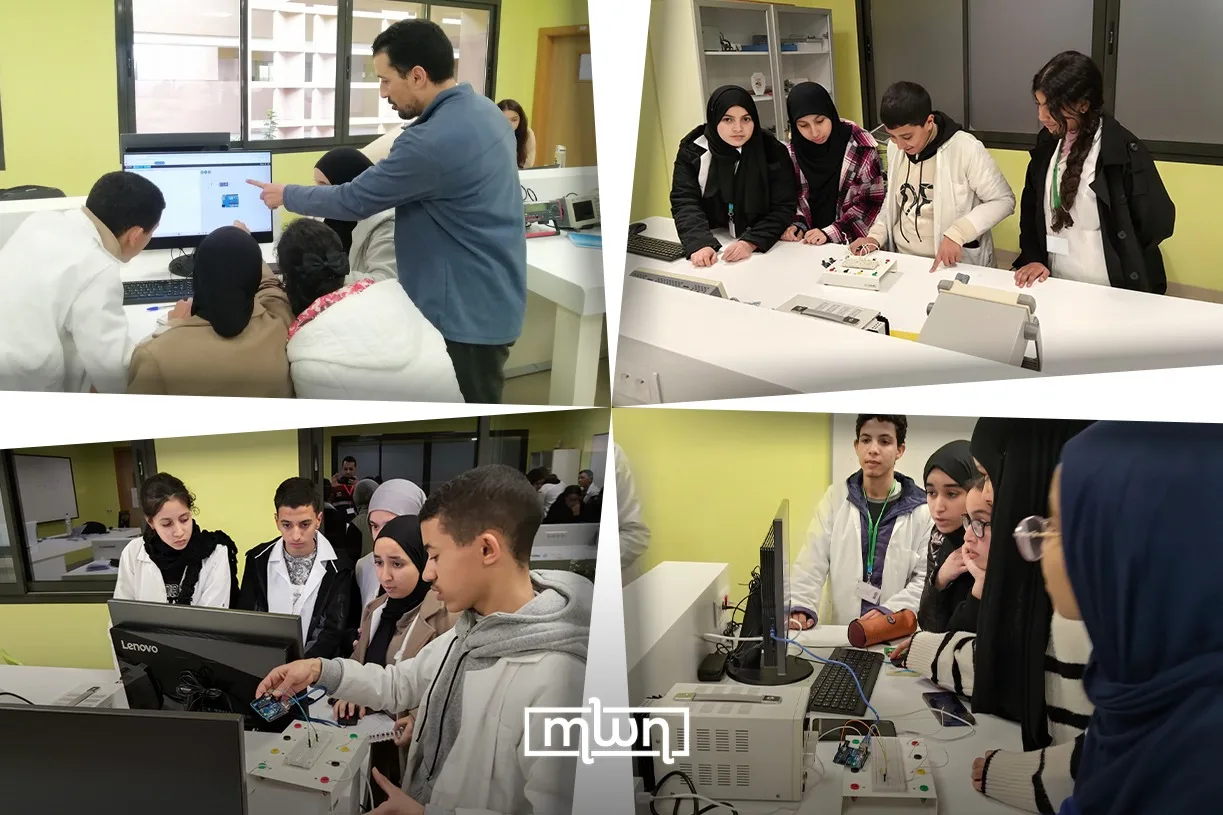
The academy launched on December 5, 2025, at LM6E in Benguerir. It brought together a cohort of 30 Moroccan students, chosen for their academic excellence, problem-solving abilities, and leadership potential. Working in six teams, the students took on missions covering air quality, aerodynamics, vibrations, and flight trajectory.
The curriculum draws on elements adapted from NASA’s systems engineering lifecycle and features virtual masterclasses with US-based space experts.
Since the kick-off, the students followed a weekly program spanning atmospheric science, programming, sensor selection, structural design, radio telemetry, software integration, and recovery systems. At each stage, the teams presented and defended their technical choices in formal design reviews modeled on professional space missions.
The academy drew international attention in April, when Morocco’s Permanent Representative to the United Nations Office in Vienna, Ambassador Azzeddine Farhane, cited the program before the UN Committee on the Peaceful Uses of Outer Space (COPUOS) as a promising pathway in space engineering.
The Khouribga camp marks the final phase. Over four days, the teams will complete their design reviews and system checks and take part in rocketry and recovery workshops, flight science classes, mission patch design, leadership challenges, and Moon mission simulations organized with the Challenger Learning Center of Maine.
The week culminates in the CanSat launch, before closing on July 30 with the final presentations of the six missions and the ceremony.
Campers will also step inside the NASA-sponsored Space Physics Mobile VR Lab, presented by an astrophysicist from the University of New Hampshire, whose Space Science Center builds satellites to study and predict space weather.
Inside the lab, students will explore what space weather is and how scientists study it, engage with hands-on games and instruments, and use a live data platform to visualize actual events as they happen.
For El Hassan Bouaghad, AMAZE Program Lead at MISI, “the hardest distance in space is the first meter, the one between an idea and a working object on the table.”
Over seven months, he noted, the students wrote the code, read the datasheets, and tested the parachutes themselves, producing “proof that Morocco can start training mission-ready engineers while they are still in high school.”
Muhammad Shahbaz, Cultural Attaché at the US Embassy in Morocco, described the effort as one where students are “applying the same engineering principles and methodologies used in the US space sector,” while building technical and leadership skills.
The academy is the latest chapter in the AMAZE series, which began in 2023 with the first AMAZE Space Camp at 1337 in Khouribga. That camp welcomed 30 students from more than 1,600 applications, and its approach was presented at the International Astronautical Congress in Milan in 2024.
Starting in the 2026-2027 school year, AMAZE will be available as an online program, opening its resources to students and teachers across Morocco.