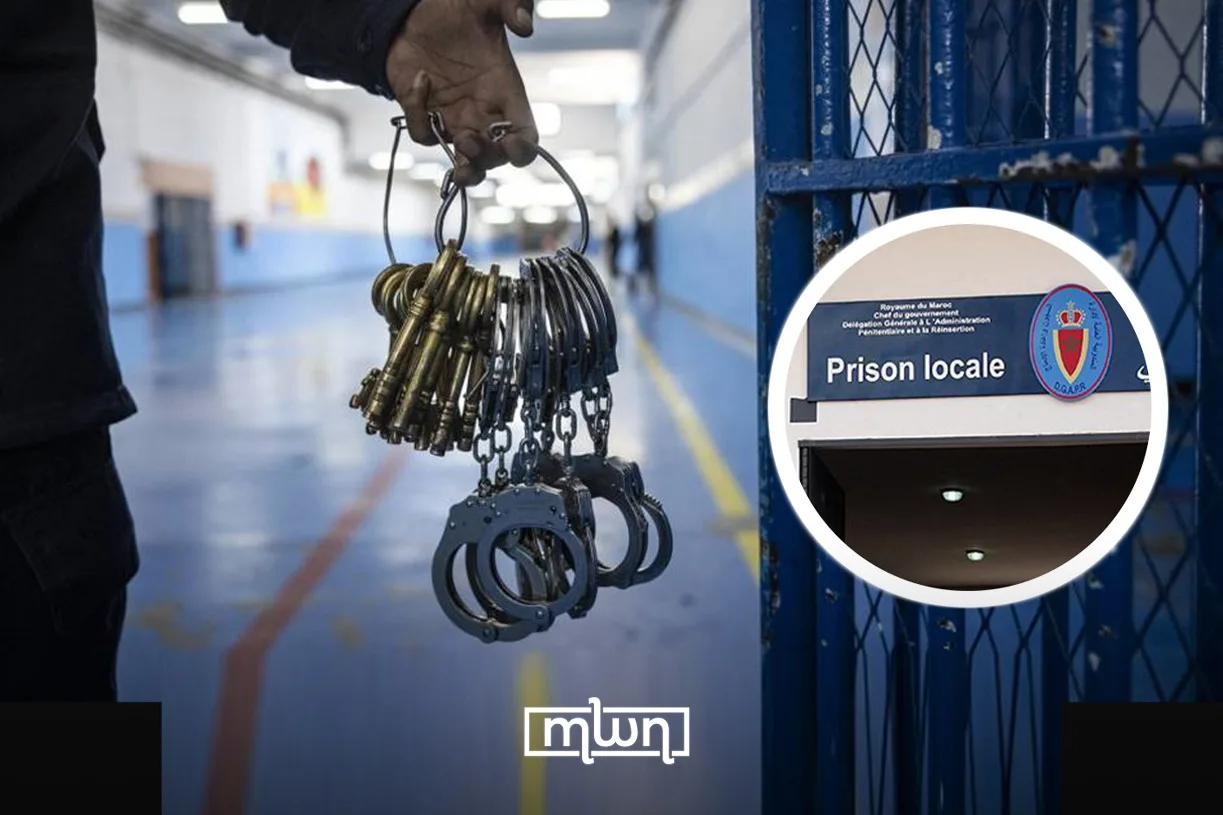
Rabat – Morocco’s General Delegation for Prison Administration and Reintegration (DGAPR) has rejected allegations circulating online—especially among pro-Polisario supporters and media—regarding the health condition of Naama Asfari, an imprisoned convict involved in the Gdeim Izik case.
The Gdeim Izik case refers to a 2010 tragedy that occurred on the outskirts of Laayoune, when a group of Moroccan security forces was killed by Polisario members. The officers had been tasked with dismantling the Gdeim Izik camp, where people had been living in protest of the unemployment and lack of opportunities in the city of Laayoune.
On July 29, 2017, Sale’s Court of Appeal handed verdicts ranging from two years to life imprisonment against 23 suspects involved in the Gdeim Izik incident.
The Moroccan prison authority commented on the allegations circulating in social media posts by parties hostile to the country’s territorial integrity regarding the health condition of prisoner Asfari, who is being held at Kenitra Central Prison in connection with the Gdeim Izik events.
The prisoner had begun a hunger strike earlier this month, with DGAPR stating that he has been placed under the protocol for handling prisoners.
The prison’s physician regularly monitored his vital signs until July 13, after which he refused to allow these measurements to be taken.
“Throughout the hunger strike, he continued taking certain vitamin supplements and remained under medical care both inside and outside the prison facility,” DGAPR said.
The statement also provided a timeline showing where the prison authority intervened to provide Asfari with medical treatment.
Read also: Gdeim Izik: Morocco’s Prisons Authority Rejects HRW, AI’s ‘Unfounded’ Claims
The authority said that he was transferred to an external hospital, where medical tests revealed a potassium deficiency. He was administered a serum infusion and provided with potassium medication by the prison administration.
On July 21, he refused to be transferred to the external hospital for medical follow-up. On July 22, however, he agreed to the transfer and walked into the hospital on his own, where he underwent several examinations, including a chest X-ray and laboratory tests.
The tests again showed a potassium deficiency. He was administered another serum infusion and provided with additional potassium medication.
A hunger strike is the prisoner’s own individual decision, not the prison authority’s.
“In accordance with the protocol for dealing with prisoners on hunger strike, the prison administration attempts to persuade the inmate to end the hunger strike in order to protect his health, but it has no authority to prevent him from continuing,” the authority said.
The prison authority said the prisoner bears full responsibility for any consequences resulting from the hunger strike, DGAPR stated.
The Deputy Public Prosecutor and representatives of the National Human Rights Council, in accordance with the established protocol, visited the prisoner.
The prison authority also commented on the prohibition from using the prison’s landline telephone.
DGAPR said that this measure was taken because the prisoner used telephone calls with his wife to spread what it described as false information that was exploited by Morocco-bashing entities, emphasizing that the prisoner continues to enjoy all rights guaranteed under the law.