
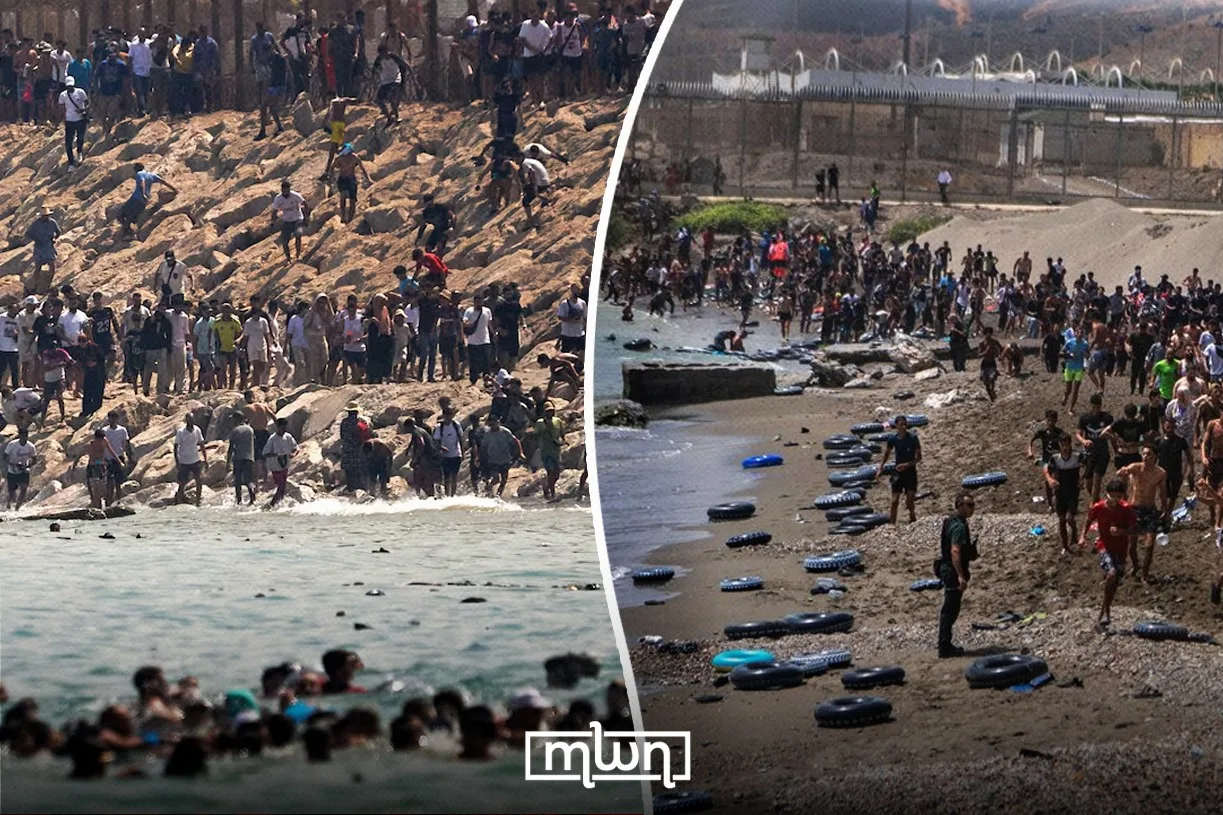
Casablanca – An open-source intelligence report by Spanish security analyst José María “Chema” Gil Garré says the attempted mass crossing into Ceuta on July 30-31 was preceded by a digital mobilization campaign that intensified over several weeks and relied on social media and messaging platforms to spread information and coordinate participants.
The 70-page report, completed on August 2 and based exclusively on publicly available information, reconstructs online activity between June 15 and August 2 using open-source intelligence (OSINT), social media monitoring (SOCMINT), and geospatial analysis (GEOINT). It states that its purpose is analytical and not to determine criminal, administrative, or political responsibility.
According to the report, activity increased after a July 8 Spanish Supreme Court ruling concerning the return of migrants intercepted at sea near Ceuta and Melilla. It says simplified and misleading interpretations of the ruling circulated online, portraying Spain’s border as legally open and encouraging attempts to reach Ceuta. The report focuses on the effect of those messages rather than the legal accuracy of the claims.
Read also: Ceuta Crisis: Spain Fires Senior National Security Communications Official
The report identifies WhatsApp, Facebook, TikTok, Instagram, Discord, and X as the main platforms used during the campaign, with each serving a different function. It says WhatsApp groups were mainly used to exchange practical information, including transport options, meeting points, routes, schedules, and updates from the border, while TikTok and Instagram helped amplify videos and images to wider audiences.
Facebook groups acted as semi-public spaces where users shared maps, contacts, equipment recommendations, and travel advice.
One of the report’s main findings is the identification of at least two public WhatsApp groups administered from phone numbers with Algeria’s international dialing code, +213.
One group, identified on July 28 and named “Hijma Kiraj Sebta,” allegedly shared logistical instructions for reaching Ceuta. A second group, detected on July 31, shifted part of its focus toward Melilla after security measures around Ceuta were reinforced.
The report also says digital communities in Morocco, Algeria, Tunisia, France, and the United States participated in spreading content related to the crossing attempt. It estimates the campaign generated more than 11 million potential impressions through video views, online communities, comments, and other interactions across platforms.
At the same time, the report says its findings have clear limits. It states that investigators did not identify the administrators behind the WhatsApp groups, determine whether the numbers were operated by one or several people, link them to any organization, or establish any state involvement or centralized command structure.