
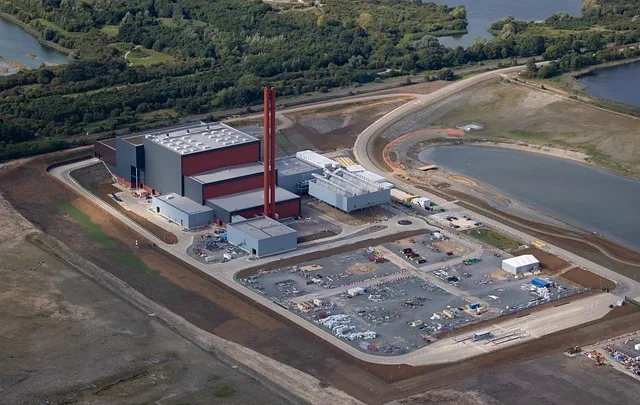
Agadir – Morocco has signed key agreements to advance the development of a $1.5 billion (MAD 13.97 billion) waste-to-energy (WtE) facility in Casablanca, a landmark project expected to transform municipal waste management while boosting the country’s renewable energy capacity.
Swiss-based Kanadevia Inova, alongside Moroccan energy company Nareva and Japanese trading group Itochu Corporation, announced the signing of the concession agreement with the municipality of Casablanca, as well as electricity off-take agreements with SRM Casablanca-Settat and Morocco’s National Office of Electricity and Drinking Water (ONEE).
The company described the agreements as “a significant step forward for sustainable waste management in Morocco” and said the project also marks Kanadevia Inova’s entry into Africa’s waste-to-energy market.
Under the 33.5-year concession, the facility will have the exclusive right to treat Casablanca’s municipal waste, processing approximately 1.5 million tonnes annually. The project aims to increase waste recovery rates to around 80% while significantly reducing reliance on landfills.
Serving more than 4.2 million residents in Casablanca, the integrated project will combine waste treatment, landfill management, and renewable electricity generation.
The plant is expected to generate approximately 126 megawatts (MWe) of baseload electricity, supported by a 50-megawatt solar photovoltaic installation and a 4-megawatt landfill biogas recovery system. Together, the installations are projected to produce around one terawatt-hour (TWh) of electricity annually—enough to supply nearly one million people.
Kanadevia Inova said in a press statement issued on Tuesday that the project comes as Morocco faces growing electricity demand, estimated to rise by around 3% annually through 2030, while supporting the country’s broader energy transition goals.
Read also: UM6P Breakthrough Turns Mining Waste into High-Value Fertilizers and Feed
The facility will be built adjacent to the Mediouna landfill, one of Africa’s largest methane-emitting landfill sites. According to the company, shifting from landfill disposal to energy recovery is expected to significantly reduce greenhouse gas emissions.
“The Casablanca Waste to Energy facility will allow Morocco to make a clear commitment to move away from methane-causing landfill practices,” said Fabio Dinale, Executive Vice President of Business Development at Kanadevia Inova.
“We look forward to working alongside our clients to build and operate an iconic piece of waste infrastructure that will help combat climate change and that future generations can be proud of,” he added.
Kanadevia Inova CEO Bruno-Frédéric Baudouin said the investment represents “a significant milestone” in the company’s international expansion.
“Entering the African market with a project of this scale and ambition reflects both the strength and affordability of our technology and the trust placed in us by our partners,” Baudouin said. “We are proud to contribute to Morocco’s environmental and energy transition while supporting the development of resilient, circular infrastructure.”
Beyond its environmental impact, the project is expected to create around 140 permanent skilled operational jobs. During the estimated three-and-a-half-year construction period, approximately 1,240 workers will be employed, alongside an additional 300 jobs linked to related infrastructure works.