Rabat – Last week’s mass crossing to the Spanish enclave of Ceuta continues to trigger a wave of anti-Morocco rhetoric among some Spaniards, including one Catholic priest who incited violence against Rabat.
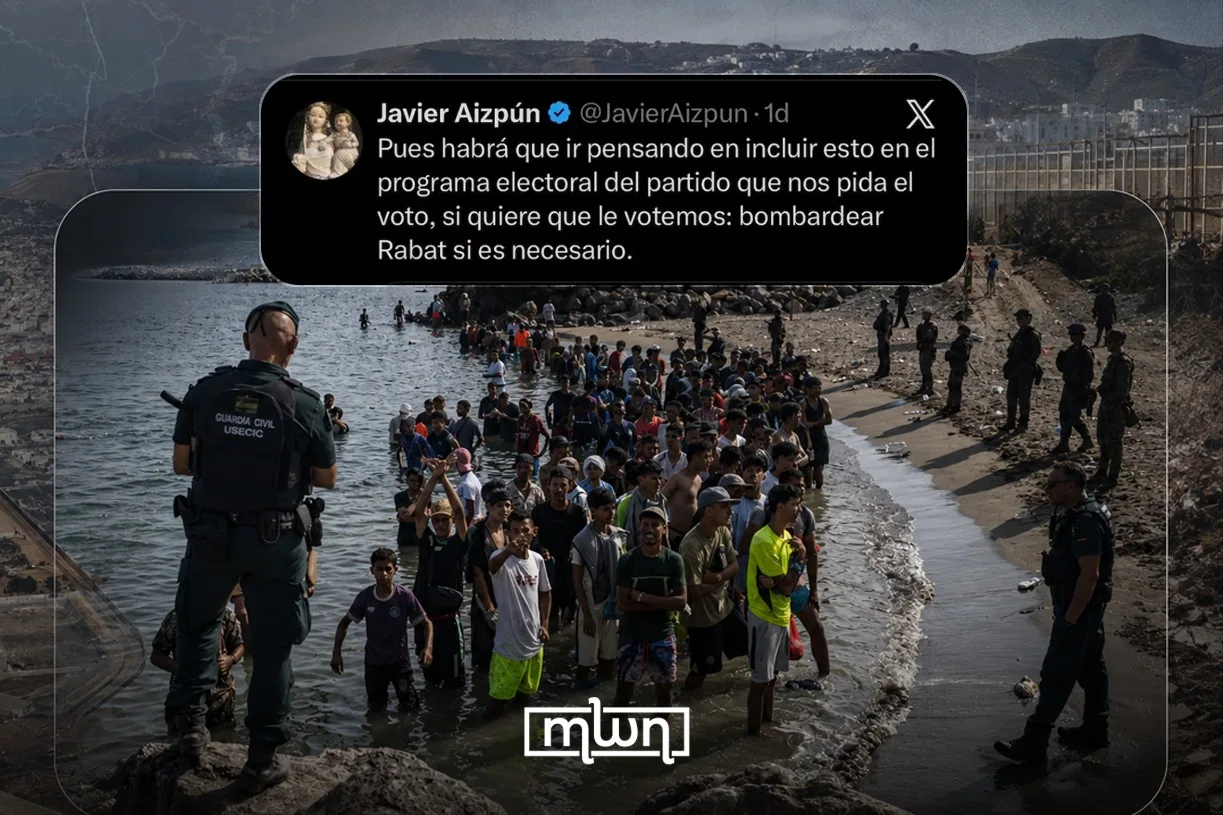
Javier Aizpún, the parish priest of Huarte, sparked controversy and uproar for several posts on his X account about the migration crisis in Ceuta.
In one post, he called for “bombing Rabat,” and he also reposted posts calling for “the reconquest of Morocco and its conversion to Christianity.”
He also called for “massive gunfire against the invaders of Ceuta,” before deleting the posts on X. He posted several others targeting Morocco amid a broader campaign by far-right politicians.
While there was no formal government investigation into posts that could be seen as inciting terrorism in cases like this in the West, the Archdiocese of Pamplona and Tudela released a statement to apologize and distance itself from his remarks.
They issued a rebuke over his remarks.
On Wednesday, the Archdiocese of Pamplona and Tudela described Aizpún’s remarks as “highly inappropriate.”
The statement said the remarks are “strictly personal opinions, which in no way represent or are shared by this diocesan Church.”
The Archdiocese said the priest also deleted his X account, adding that Aizpún personally apologized to the Archbishop, extending his apology to both the Church and society.
However, similar cases would require investigation if similar acts happened toward Spain or another country in Europe and beyond. Anti-Morocco sentiment across Spain took a new turn, targeting the North African kingdom and alleging Rabat facilitated the migration to Ceuta to put pressure on Spain.
The claims came amid acknowledgment from the government of Spain itself, which repeatedly emphasized Morocco has been contributing to tackling the situation in cooperation with Madrid since day one of the crisis.
Spain also described Morocco’s cooperation as essential, thanking Rabat for its mobilization.
Spanish reports alleged that 70,000 people crossed Ceuta last week, and 88 died during their attempts to reach the region.
Official data from Morocco emphasize the number is at 40,000 and 11 deaths on the Moroccan side, but stressed that it is in contact with Spanish authorities to identify the real number of deaths during the crossing.
Moroccan government sources also lashed out at critics, saying that Morocco has always been faithful to its commitment to tackle irregular migration and combat human trafficking, as recognized internationally, and as a strong ally in this field.
Rabat also slammed critics, emphasizing that Morocco is not a gendarme nor Europe’s concierge, stressing that a Spanish judge cannot dismantle the whole system tackling irregular migration and expect Rabat to bear the consequences, referencing the Spanish Supreme Court ruling of July 8, which disallowed the hot return of migrants who crossed to the enclaves by swimming.