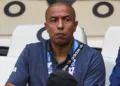
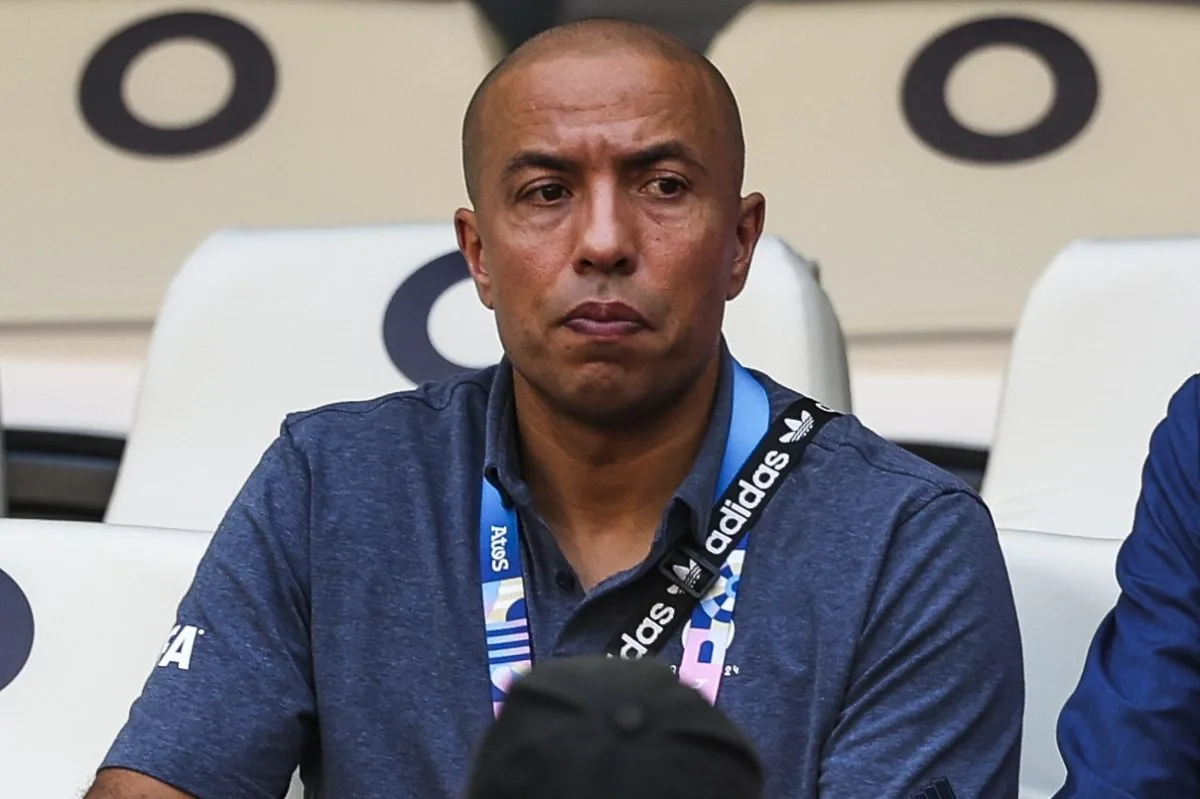
Rabat – Former Morocco captain Houssine Kharja has strongly backed Royal Moroccan Football Federation (FRMF) President Fouzi Lekjaa while also defending FIFA President Gianni Infantino in his escalating dispute with European football authorities.
Speaking in an interview with Moroccan football platform Soccer212, Kharja dismissed recent speculation linking him with a possible future role at the head of the FRMF and made clear that he wants Lekjaa to remain in charge. Kharja currently serves as FIFA’s regional director for the Middle East and North Africa and also works closely with Infantino.
“In relation to the presidency of the Federation Royale Marocaine de Football, I have only one thing to say: we currently have the best president the federation has ever known,” Kharja said.
“Fouzi Lekjaa is someone for whom I have great esteem and deep respect, and with whom I have an excellent relationship. I believe that, to date, he has done remarkable work at the head of the federation, from the youth national teams to the senior side, as well as in women’s football.”
Kharja added that he hopes Lekjaa remains in office, describing him as passionate, highly competent and difficult to replace. His comments effectively rejected suggestions that the former Atlas Lions midfielder could be positioning himself as Lekjaa’s successor.
Lekjaa has served as FRMF president since 2014 and is also a member of the FIFA Council. During his tenure, Moroccan football has recorded several historic achievements across different age categories.
The senior men’s team became the first African and Arab nation to reach a World Cup semi-final at Qatar 2022, while Morocco won its first Olympic football medal with bronze at Paris 2024. The country then claimed its maiden FIFA U-20 World Cup title in 2025 after defeating Argentina 2-0 in the final.
Kharja defends Infantino
Kharja also used the interview to address the mounting criticism directed at Infantino following the collapse of the FIFA Forward Enterprise proposal.
He argued that the confrontation between FIFA and UEFA reflects a broader struggle over the direction of global football rather than simply a financial disagreement.
“The issue is fundamentally simple: Infantino is working according to a global vision of football, while Europe wants to maintain its absolute monopoly and continue to be the primary decision-maker in the game,” Kharja said.
“This is where the real conflict between UEFA and FIFA lies. It is not about money or anything else.”
Kharja argued that FIFA’s increased investment in smaller football nations has allowed countries outside Europe’s traditional power centers to become more competitive.
He also pointed to Morocco’s ability to attract dual-national players developed in European academies as an example of the changing balance within international football.
The former Inter Milan, Roma and Fiorentina midfielder said his experience working closely with Infantino had convinced him that the FIFA president did not deserve what he characterized as unfair attacks.
Kharja also accused European critics of applying a double standard by opposing private investment linked to FIFA while accepting private capital throughout European club football.
UEFA, however, has publicly framed its opposition differently. European football’s governing body said its objections to FIFA Forward Enterprise centered on governance, transparency and a lack of consultation. UEFA said its 55 national associations unanimously rejected the project and later declared that FIFA’s current leadership had lost its confidence.
FIFA eventually withdrew the proposal, which could have raised up to $4.2 billion through private investment in a new commercial subsidiary. Following an emergency leadership meeting in Rabat, FIFA acknowledged mistakes in the process and promised an internal review, while its senior management reaffirmed support for Infantino.
CAF has meanwhile taken the opposite position to UEFA, unanimously renewing its support for Infantino and thanking him for his contribution to African football. Africa’s governing body represents 54 FIFA member associations, making its backing particularly significant ahead of the 2027 presidential election in Morocco.