In the 17th century, under the rule of Moulay Ismail, Meknes was proudly dubbed the “Versailles of Morocco,” celebrated for its imperial grandeur and lush, sprawling gardens. Today, the gardens are gone, the infrastructure is crumbling, and the historic city, along with its struggling suburbs, has become a heartbreaking symbol of systemic neglect.
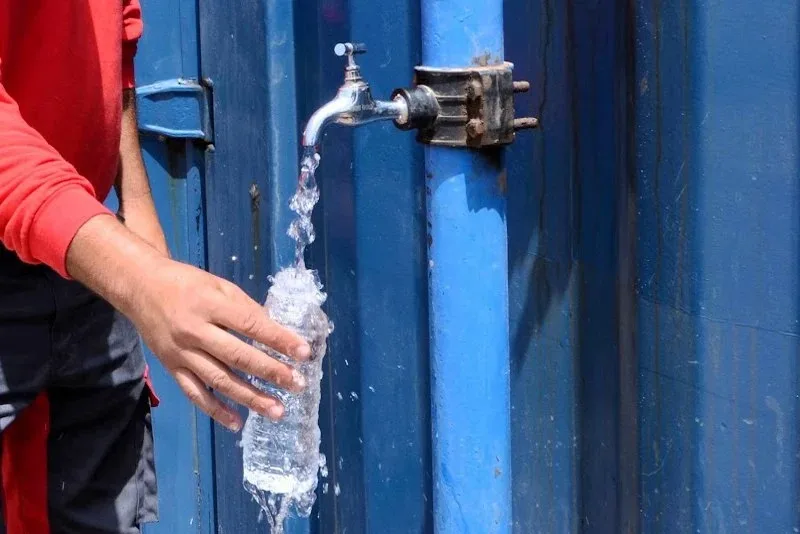
Right now, in the height of summer, a devastating water shortage is gripping the Fez-Meknes region, directly cutting off more than 1 million residents. For weeks, the taps have run completely dry. This is not just a statistical crisis; it is a daily indignity felt most sharply by the people living in the heart of Meknes and the overlooked communities on its outskirts.
The responsibility for this situation lies with the region’s leadership and those in charge of its administration. People in Fez-Meknes deserve access to basic necessities, and the region’s leadership has a responsibility to make sure those needs are being addressed.
Under the current administration, everyday tasks that should be guaranteed rights- from securing clean drinking water to taking a simple shower- have become logistical nightmares for families across the entire metropolitan area.
Read also: ONEE Launches $22 Million Project to Secure Water Supply for Fez, Meknes
The struggle spans generations. For seniors in their 60s, including my own mother, the water shortage is not a minor inconvenience, but a grueling, daily physical hardship. Every single time I speak to her, the exhaustion in her voice is heavy and undeniable. Instead of resting in her senior years, she is forced to walk a mile in the blistering heat just to haul basic drinking water back from a neighbor’s well.
Hearing a parent recount the pure physical fatigue of simply trying to survive in her own home is a painful reminder of how deeply the administration is failing families from downtown Meknes to the furthest suburban neighborhoods.
For the youth, the crisis represents a different kind of theft. Young people find themselves stranded in a city with mostly no public bus transportation, unable to commute reliably from the suburbs to universities, jobs, or training centers in the city center.
Deprived of parks, green spaces, and basic utilities, the youth of Meknes are left isolated and economically choked. The current administration of the region has allowed a reality where the elderly are physically broken by a lack of water, while the young are structurally broken by a lack of opportunity.
Yet, as the population suffers, the city’s leadership has chosen to look the other way; or rather, to put on a show. This month, Meknes is hosting a grand Gnawa music festival, an event featuring lavish public spending and a multi-million-dirham budget. The irony is as thick as the summer dust: a city where grandmothers in the suburbs must walk miles for a bucket of water somehow finds the liquidity to fund a massive party.
Bread and circuses
This calculated distraction is a modern resurrection of the ancient Roman strategy of panem et circenses -bread and circuses. Coined by the poet Juvenal, the concept describes how failing administrators use public spectacles and lavish festivals to appease the population, engineering a superficial state of joy to distract citizens from deep social anxieties and administrative failures.
By filtering public funds into the Gnawa festival, the wali of Fez-Meknes is operating directly out of this ancient playbook. The strategy is to saturate the public square with music to drown out the quiet desperation of a population left without basic utilities. It is a deliberate attempt to mask administrative failure with cultural prestige, using the rhythms of Gnawa to make a thirsty population forget that their taps are dry and their streets have no buses.
A festival cannot quench a city’s thirst. Spending lavishly on international events while local neighborhoods and suburbs go weeks without running water is an absolute abdication of governance by the wali and the municipal leadership.
In contemporary contexts, panem et circenses rarely appears in its original literal form, but evolves into a more subtle choreography of visibility and neglect. Public attention is carefully redirected toward moments of collective spectacle, where participation replaces scrutiny and emotion eclipses accountability.
In this context, this dynamic takes on particular urgency where the spectacle does not merely entertain, but reframes reality, inviting citizens to momentarily inhabit a narrative of vibrancy and cultural pride while structural deficiencies persist unaddressed. The result is more of a fragile illusion rather than genuine cohesion, which risks deepening public disillusionment once the music fades and everyday hardship resumes.
Yet, not everyone succumbs to such methods. Prolonged hardship has a clarifying effect. When neglect becomes routine, it sharpens perception rather than dulling it. Many residents are no longer staged by moments of celebration. Instead, they recognize the dissonance between spectacle and lived reality with increasing precision.
Water isn’t something people can wait for, and it isn’t something that can be replaced. When the heat drags on, and temperatures keep rising, it becomes a daily need that shapes how people live, work, and cope. Across Morocco, these longer, harsher summers are laying bare just how fragile basic services can be, turning something as simple as turning on a tap into a source of stress and uncertainty, especially for those with the least means.
Meknes does not need another stage; it needs working pipes, reliable buses, and basic human dignity for both its elders and its youth. Until the leaders in the Fez-Meknes region place the fundamental rights of more than a million residents above superficial spectacles, the music in the streets will sound less like a celebration and more like a tragedy.