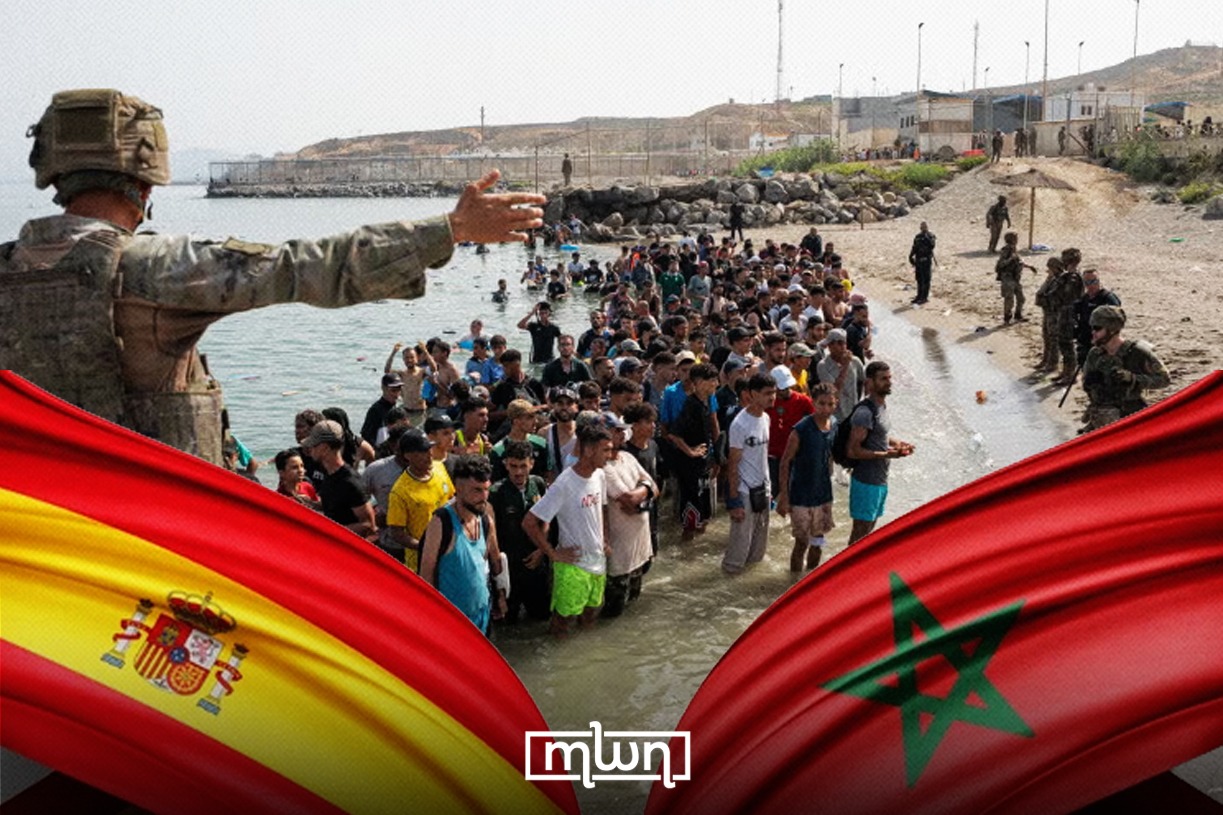
Rabat – Spanish media have highlighted Morocco’s efforts to address the migration crisis in the Spanish-occupied enclave of Ceuta amid ongoing anti-Moroccan rhetoric.
Spanish news agency EFE said Morocco significantly increased the presence of security forces along the Fnideq border with Ceuta.
“On the road connecting Tangier to Fnideq—about 80 kilometers apart—there are numerous police and gendarmerie checkpoints aimed at preventing migrants from reaching Ceuta, although small groups could be seen walking toward the border on Friday,” the report added.
The news comes amid anti-Moroccan rhetoric and bashing campaigns targeting Morocco, especially from Spain’s far-right Vox party and the country’s main opposition Popular Party (PP).
PP Deputy Secretary Alma Ezcurra said Morocco is “responsible for what happened and what is happening right now in Ceuta.”
Initially, PP directed its criticism at Pedro Sanchez’s government, with the party’s Secretary General Miguel Tellado accusing the Spanish Prime Minister of being the “main person responsible” for the mass crossings that took place in late July.
Both parties have accused Morocco of facilitating mass crossings to allegedly put pressure on Spain. However, Spanish authorities and the government have repeatedly commended Morocco’s cooperation since the beginning of the Ceuta mass crossing on July 30.
Morocco and Spain also launched a mechanism in response to the crossings through an agreement on the return of migrants.
Spanish reports estimate the number of those who entered Ceuta at between 70,000 and 80,000, while Moroccan assessments put the figure at around 40,000 who headed to Ceuta and more than 1,000 who headed to Melilla.
Most of those who entered the enclaves were returned, and Morocco has been urging authorities in Spain to speed up the process of sending back migrants, including minors.
Rabat also urged Spanish authorities to assume their share of responsibility, emphasizing that tackling migration is the responsibility of all parties, not only one.
It also emphasized that Morocco’s response to the crisis is not limited to a specific date.
The country has further strengthened security along its northern border in response to new social media campaigns inciting new crossings on August 15.