For several years now, and even more so with every crisis between Rabat and Madrid, one expression has returned with striking ease in Spanish public debate: “Spain’s concessions to Morocco.” Repeated often enough, it has gradually acquired the status of self-evident truth. Spain is said to have “given away too much,” Morocco to have “obtained everything,” and the bilateral relationship to have become a succession of Spanish capitulations.
But what concessions, exactly?
When examined one by one, the narrative becomes far less convincing. Some refer to genuine Spanish political decisions that are entirely open to debate. Others are European mechanisms misleadingly transformed into gifts from Madrid. Others still are simply negotiations, hypotheses, or unresolved issues presented as if they were concessions already made.
1. Western Sahara: the “great concession”
This is the central argument. In March 2022, Pedro Sánchez described Morocco’s autonomy initiative as the “most serious, credible and realistic” basis for reaching a solution to the Western Sahara dispute.
That decision can be criticized. Its motivations, the way it was announced, and its diplomatic consequences can all be debated. But describing it as a “territorial concession” raises a fundamental question: what exactly did Spain concede?
No Spanish territory. No Spanish sovereign right. Not a single square kilometre belonging to Spain.
Western Sahara was a Spanish colony whose decolonization process had begun when Spain withdrew in 1975-1976. Presenting a change in Spain’s diplomatic position today as a territorial “gift” almost amounts to suggesting that Madrid still disposes of Western Sahara as an asset it can allocate to someone.
Madrid changed its political doctrine; it did not transfer Spanish sovereignty. The Spanish government has, moreover, continued to frame the search for a solution within the United Nations process. (La Moncloa)
2. The hundreds of millions paid to Morocco for migration
The second argument is that “Spain pays Morocco to keep migrants out.”
Again, institutional levels need to be distinguished. A large share of the hundreds of millions regularly cited in the press and on social media comes from European Union funding, not from a cheque handed by Pedro Sánchez to Rabat.
Between 2015 and 2021, the EU Emergency Trust Fund had already committed €234 million to Morocco in the field of migration. Subsequent programmes have funded, among other things, border management, the fight against criminal networks, migrant protection and migration cooperation. (Enlargement and Eastern Neighbourhood)
This policy can of course be debated. But a European migration cooperation policy does not become a “Spanish concession to Morocco” simply because Spain benefits directly from it.
3. The customs arrangements in Ceuta and Melilla
The third argument is particularly revealing of the contradictions within the narrative.
Madrid is accused of having “conceded too much” to Morocco while simultaneously being accused of not having obtained enough in return, particularly regarding the commercial customs arrangements in Ceuta and Melilla.
Yet the 2022 roadmap specifically envisaged the establishment of regular, regulated and transparent trade, as well as the customs issue. Pedro Sánchez had explicitly presented this before Congress. (La Moncloa)
The fact that implementation may have been slow, contentious or insufficient can perfectly well be used as criticism of Spanish negotiating performance. But a reciprocal commitment that takes time to materialize does not automatically turn Spain’s initial position into capitulation.
4. Pegasus: from questions to a blackmail narrative
The fourth element is Pegasus.
The infection of the phones of Pedro Sánchez and several senior Spanish officials is an extremely serious fact. But in part of the public debate, the reasoning becomes: Pegasus spied on Sánchez; Morocco was behind Pegasus; a few months later Sánchez changed Spain’s position on Western Sahara; therefore Morocco blackmailed him.
The first fact does not automatically prove the next two.
Within the Spanish Parliament itself, Pegasus and Western Sahara have repeatedly been politically linked. (Congreso de los Diputados) But no conclusive public evidence has, to date, established the chain: Morocco → spying on Sánchez → blackmail → change of policy on Western Sahara.
A hypothesis may justify an investigation. It cannot be transformed into fact merely because it is repeated often enough.
5. Western Sahara’s airspace
The fifth supposed “concession” is that Madrid has handed Morocco control of Western Sahara’s airspace, currently managed technically from the Canary Islands.
But when one examines Spanish parliamentary debates, the language used is revealing: references are made to the possibility that Morocco may “end up assuming” that management, warnings are issued against a possible “transfer,” and the government is asked to guarantee that it will not take place. (Congreso de los Diputados)
In other words, what is presented in some political discourse as an accomplished concession appears in institutional documents as a possibility under discussion or a development that is feared.
A hypothesis is not a transfer of sovereignty.
6. Territorial waters and the Canary Islands
The same mechanism applies to maritime delimitation between Morocco and Spain.
Negotiations over maritime areas near the Canary Islands are sometimes described as if Madrid were necessarily preparing to “give” waters to Morocco.
But when two neighbouring states have maritime projections that may overlap, negotiating a delimitation is not a concession: it is precisely the normal procedure under international law.
One may challenge the line defended by either state. One may ask the Spanish government to defend its interests firmly. But negotiating does not mean recognizing all the claims of the other side, nor does it automatically transfer sovereignty.
7. Agriculture, fisheries, trade and economic support
Then comes a broad catch-all category: Moroccan tomatoes, agricultural agreements, fisheries, investment, trade, European funding…
Everything becomes a “concession to Rabat.”
Yet much of these relations falls under the European Union’s common commercial policy, the EU-Morocco Association Agreement, or European negotiations in which Spain does not act alone.
These mechanisms also involve reciprocal interests: market access, European investment in Morocco, industrial trade, shared value chains, energy, transport and economic cooperation.
Some agreements may be considered harmful to certain Spanish sectors — agriculture in particular. That is a legitimate debate. But a commercial agreement that creates winners and losers is not, by definition, a “Sánchez concession to Morocco.”
8. Ceuta and Melilla: “silence” presented as concession
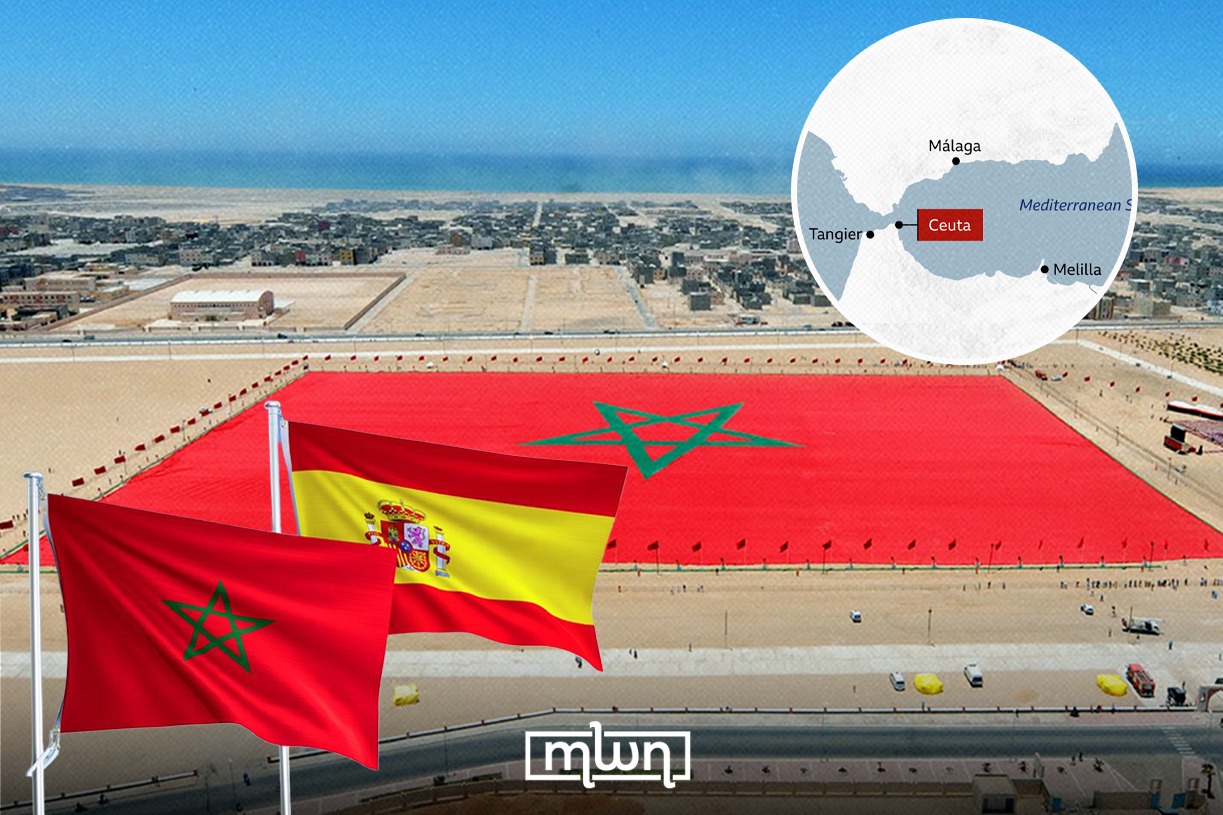
The most diffuse accusation remains: Madrid has supposedly become so cautious towards Rabat that it has almost implicitly accepted Morocco’s claims over Ceuta and Melilla.
The reality is more nuanced. Sovereignty over the two cities is subject to opposing positions: Spain asserts its sovereignty, while Morocco maintains its claim. But neither Madrid nor Rabat chooses to make this issue, permanently, the centrepiece of the bilateral relationship. And that is probably a form of diplomatic wisdom.
The Spanish government has never transferred, negotiated away or recognized Moroccan sovereignty over Ceuta and Melilla. For its part, Morocco has not renounced its historical position. Both countries nevertheless understand that they have an interest in preserving a space for cooperation on immediate and practical issues, without turning every sovereignty disagreement into a political crisis.
One may always wish for greater firmness on one side or the other. But diplomatic restraint does not mean renunciation, nor does it amount to implicit recognition of the opposing thesis. It can also reflect the choice to manage a longstanding dispute without allowing it to contaminate the relationship as a whole.
The issue is not criticism, but calling things by their proper name
None of this means that the choices made by Spain in its relationship with Morocco are beyond debate. As in any complex bilateral relationship, certain decisions may raise questions, expectations may differ on both sides, and some measures may be assessed differently. But such legitimate debates do not remove the need to distinguish clearly between political disagreement, negotiation, compromise and an actual concession.
Precisely because the relationship is important and complex, it deserves better than the catch-all word “concessions.”
Each time the term is used, four simple questions should be asked: what did Spain possess? What did it give up? Through what legal or political act? And in whose favour?
Applied seriously, this test makes a large part of the list disappear.
Western Sahara becomes a change in diplomatic position concerning a former colony, not Spanish territory gifted to Morocco. The “€500 million” becomes essentially European programmes. A maritime negotiation becomes a negotiation. A possibility concerning airspace ceases to be a fait accompli. Migration cooperation is no longer a tribute. And diplomatic caution towards a neighbour does not automatically become submission.
Criticizing Spanish policy towards Morocco is entirely legitimate.
Turning every form of cooperation with Morocco into a concession, and every supposed concession into a Spanish humiliation, belongs, by contrast, less to analysis than to political narrative.