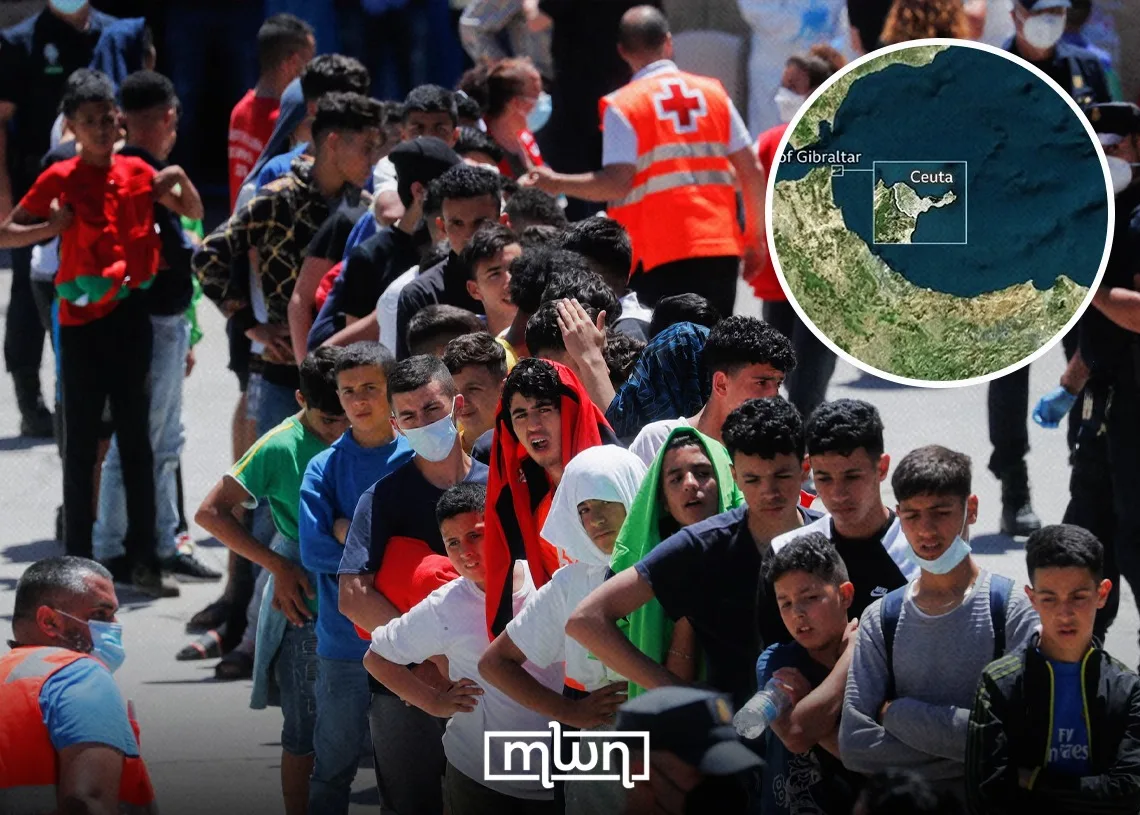
Rabat – UNICEF has reported “unsafe” and “unsanitary” conditions faced by hundreds of migrant children in the Spanish enclave of Ceuta.
Lara Contreras, director of Advocacy, Programs and Partnerships at UNICEF Spain, recalled the importance of the identification of unaccompanied children, warning that hundreds of minors are “wandering the streets alone, in unsanitary conditions and in urgent need of three meals a day and, in many cases, medical attention.”
Spanish reports quoted the UNICEF official, who said a team from the organization is in Ceuta to promote the implementation of the Multidisciplinary Unit for the Care of Migrant Children in Emergencies, known as UMAIME.
UNICEF, however, acknowledged that the program’s implementation will require sufficient resources.
Reports are also emerging about divisions following Ceuta authorities saying they are preparing an exceptional plan to transfer 500 migrant girls to mainland Spain.
El Pais said sources within the Ceuta government emphasized the need to “adopt extraordinary measures.”
The sources stress the importance of not only expanding reception capacity in the enclave but also “moving with the return process and, while this is being implemented, adopting extraordinary measures.”
Between July 30 and 31, tens of thousands of migrants swam or attempted to reach the enclave from Morocco, with Spanish reports putting the number at between 70,000 and 80,000.
Moroccan official data said those who headed to Ceuta are estimated at 40,000, while those who crossed to Melilla reached more than 1,000.
Following the crossing, Morocco and Spain adopted an emergency plan for the return of migrants, who were exploited by a social media campaign inciting human trafficking and irregular migration.
Social media accounts, using anonymous sources, used the Spanish Supreme Court ruling of July 8, ruling against hot returns or immediate returns, to incite and promote irregular migration.
However, governments from Spain and Morocco emphasized that most of those who entered in the recent mass crossing were returned home, with authorities working to return those who are still in the enclave.
Morocco has been reiterating its calls, urging Spanish authorities to assume their responsibility and speed up the process of children’s return and family reunification.