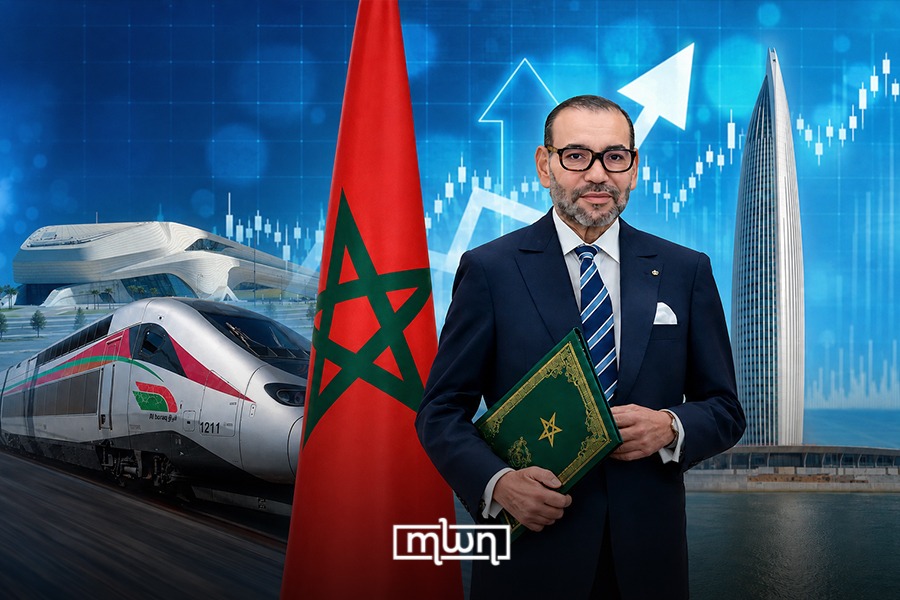
Rabat – Morocco celebrates Youth Day on August 21, a national occasion that marks the 63rd birthday of King Mohammed VI, coming just weeks after the country marked the 27th anniversary of the monarch’saccession to the throne.
Rooted in the early years of Morocco’s independence, the occasion has evolved into a longstanding national tradition, placing the country’s youth at the heart of a broader reflection on Morocco’s development, aspirations and future.
A tradition born after independence
Youth Day traces its origins to 1956, shortly after Morocco regained independence. At the time, young Moroccans expressed a desire for an occasion that would bring them together and celebrate their generation.
King Mohammed V responded to that request by agreeing that the birthday of Crown Prince Moulay Hassan, who would later become King Hassan II, could serve as an occasion to celebrate Moroccan youth.
The first celebration brought thousands of young people into the streets of Rabat, turning the event into a public expression of national pride at a defining moment in Morocco’s history.
Over the decades, the occasion became associated with the relationship between the Moroccan monarchy and the country’s younger generations, while reflecting the importance attached to youth in the development of an independent Morocco.
Youth at the heart of Morocco’s development
Since King Mohammed VI ascended the throne in 1999, youth has remained a recurring theme in national development policies and royal speeches.
The period has seen major investments and reforms in areas affecting younger Moroccans, particularly education, vocational training, healthcare, infrastructure, culture, and sport.
A review of successive Throne Day speeches points to a consistent theme in Morocco’s development agenda: the country’s long-term progress is closely tied to investment in its people, particularly its younger generations.
While national priorities have evolved alongside Morocco’s economic and social transformation, King Mohammed VI has repeatedly highlighted education, vocational training, employment, entrepreneurship, healthcare, social protection, territorial equity, and human capital development.
Royal speeches have also stressed the importance of equipping young Moroccans with the skills needed to compete in an increasingly demanding global economy and to improve their prospects for social mobility.
At the same time, successive speeches have not presented Morocco’s development as a completed process. They have frequently acknowledged structural challenges, shortcomings in implementation, and persistent social and territorial disparities, while calling on governments, public institutions, elected officials, and economic actors to accelerate reforms and ensure that national development translates into concrete improvements in citizens’ daily lives.
This distinction is important when assessing the situation of Moroccan youth today. The challenges facing young people — from employment and education to social mobility and access to opportunities — have been repeatedly identified at the highest level of the state. The more difficult question is how effectively this strategic vision has been translated into measurable outcomes in young people’s everyday lives.
That makes Youth Day not only an occasion for celebration, but also an opportunity to assess the distance between policy objectives and their implementation. Ultimately, public policy is measured not only by how accurately it identifies a problem, but by the effectiveness of its implementation, the coordination of institutions and, above all, the results experienced by citizens.
A milestone year for the monarchy
In his Throne Day address, the King placed particular emphasis on Morocco’s development, social progress, and the need to continue serving citizens. He also highlighted economic performance, noting that the national economy grew by around 4.9% in 2025, with expectations for similar or stronger growth in 2026.
The speech also pointed to a favorable agricultural season and its contribution to strengthening Morocco’s water and food security, while emphasizing the country’s growing position as a destination for industrial, tourism, and financial investment.
The King further referred to the upcoming legislative elections and the formation of a new government, placing the next stage of Morocco’s development within a broader political and institutional context.
From celebration to responsibility
Although Youth Day has evolved over the years, its underlying message remains closely connected to Morocco’s younger population and its role in shaping the country’s future.
For a country undergoing rapid economic, social and technological change, young Moroccans represent a significant part of the population and a central force in the labor market, entrepreneurship, education, culture and civic life.
The occasion therefore provides an opportunity not only to celebrate the King’s birthday, but also to reflect on the aspirations and challenges facing Morocco’s youth — from access to quality education and employment to opportunities for entrepreneurship, cultural participation and social mobility.
King Mohammed VI suspended the public celebrations traditionally associated with Youth Day in 2019, but the date has continued to retain its place in Morocco’s national calendar.
Looking toward the next generation
Nearly seven decades after the first Youth Day celebration, Morocco has changed profoundly. The country has moved from the early challenges of independence toward a more diversified economy and a stronger regional and international presence.
Yet the role of young Moroccans remains as important as it was when the tradition began.
Youth Day in 2026 thus comes at a moment when Morocco is preparing for another stage of its development, with major economic projects underway and new political and social challenges emerging.
The anniversary ultimately places the spotlight on a simple but enduring idea: Morocco’s future will depend significantly on the opportunities it creates for its younger generation and on the role young Moroccans are able to play in shaping the country’s next chapter.