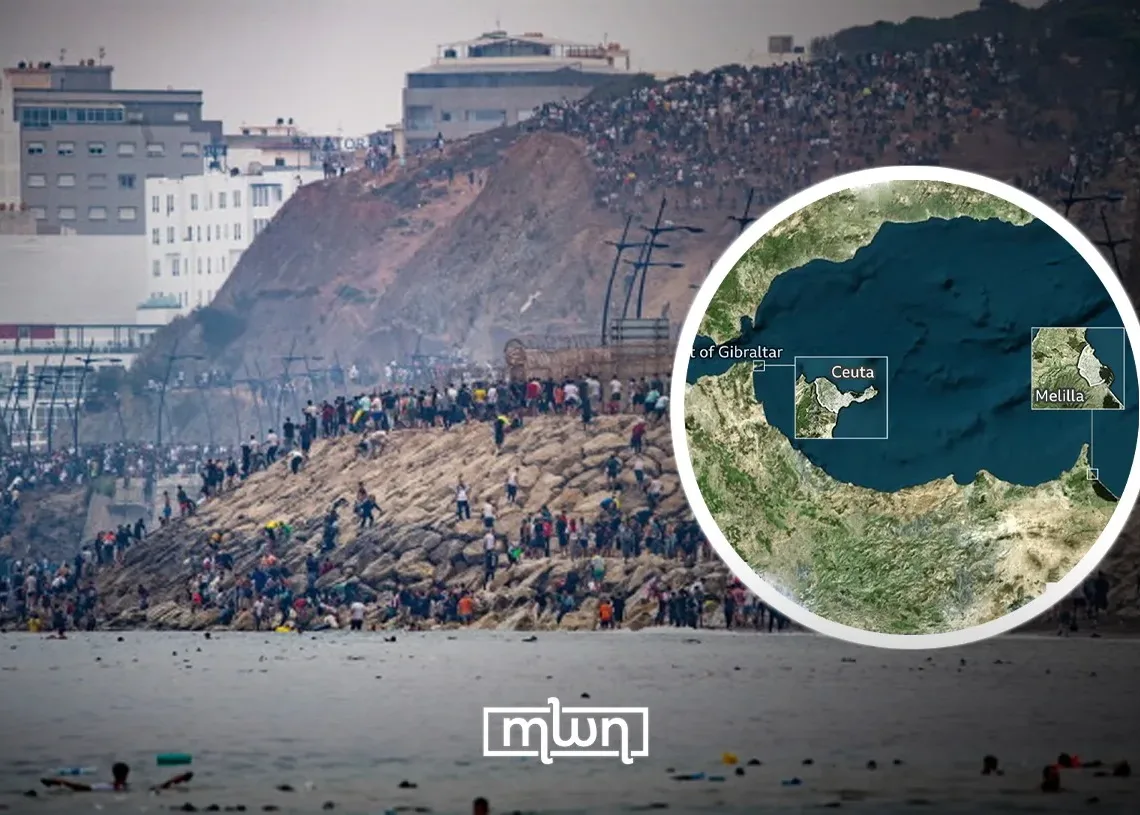
Rabat – Despite reassurance from the Spanish government on healthcare in Ceuta, the General Council of Nursing is demanding a “state of emergency” in response to what medics in the region describe as an “unprecedented healthcare collapse” in the Spanish enclave.
Healthcare professionals claim they tackle 200 cases in healthcare facilities a day, with peaks of up to 1,400, with each nurse taking on a caseload of between 14 and 16 patients.
EFE also reported the council’s concerns over shifts exceeding nurses’ scheduled hours by up to four hours.
The council’s statement also reported the lack of resources forcing professionals to handle peaks, with nurses now calling for a state of emergency.
Medics have attributed the situation to the recent Ceuta mass crossings of July 30 and 31, where tens of thousands crossed to the occupied region from Morocco.
Hundreds of migrants, including minors, remain in the enclave, with Moroccan authorities urging for the process of their repatriation to be sped up as part of an emergency agreement with Spain following the crossings to mitigate the migration crisis.
Spanish medics have been warning that the situation has sparked a healthcare crisis, with nurses estimating there have been 200 cases of acute gastroenteritis and 20 cases of scabies.
The diseases are in addition to those detected in camps at beaches like El Trampolín, where several migrants are sheltered – rejecting their return to Morocco.
Earlier this week, Spain’s Health Minister Monica Garcia denied claims – mainly also pushed by far-right politicians – that the recent crossing caused a collapse in Ceuta.
She said the healthcare system is operational despite increased pressure on several services.
The minister added that 5,800 migrants were treated over 15 days following the crossing, acknowledging the situation is not normal but emphasized that pressure on healthcare services has declined since the first day.
She also denounced claims that migrants bring diseases, stressing that there is a “moderate epidemiological risk” for migrants and “a low risk” for the local population.