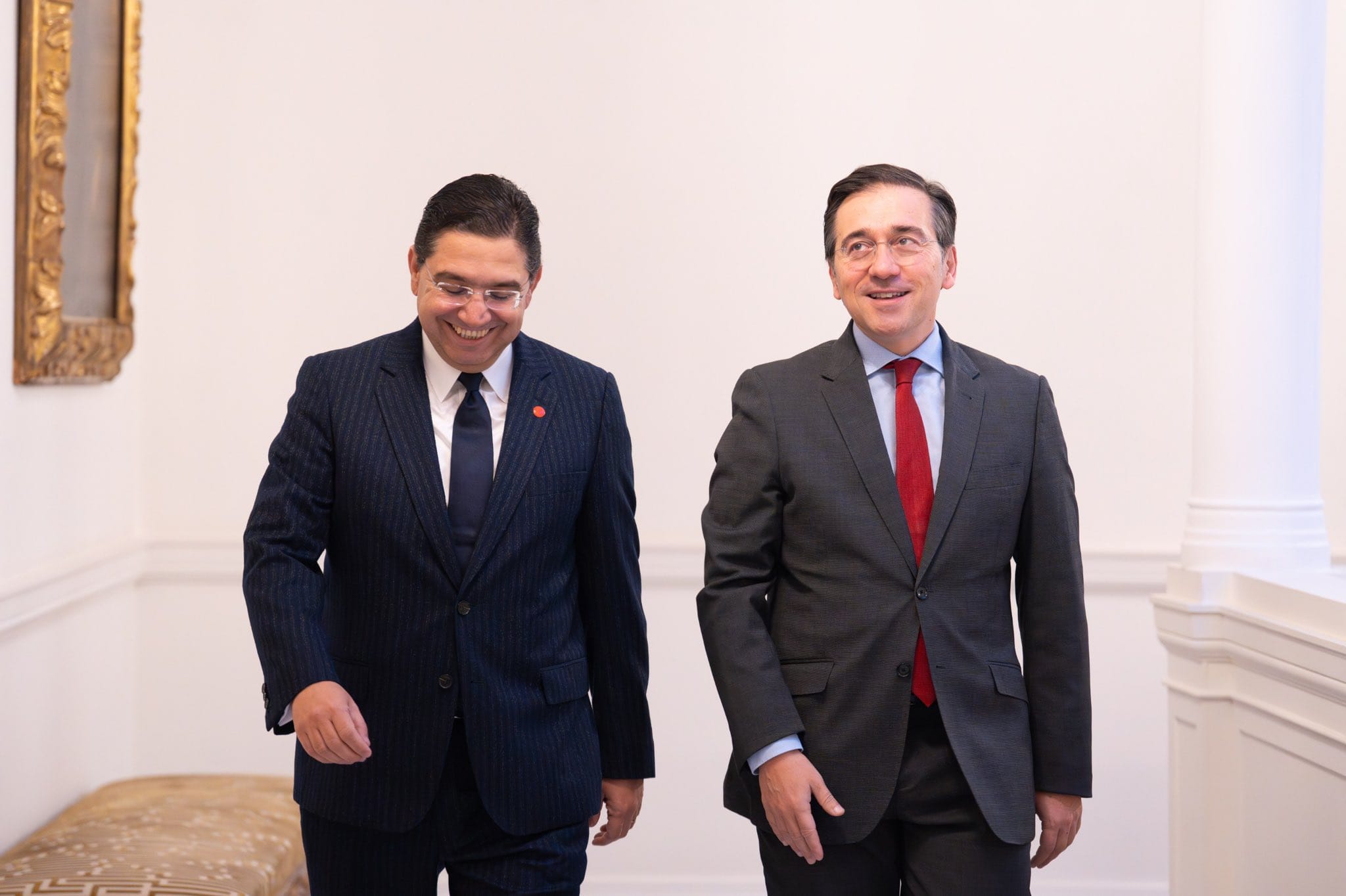
Morocco’s Foreign Affairs Minister Nasser Bourita is expected to meet with his Spanish counterpart Jose Manuel Albares in New York to discuss the Ceuta migration crisis, Spanish news agency EFE has reported, noting that Spain’s top diplomat announced the meeting in statements to journalists on the sidelines of the UN General Assembly session.
Albares said he speaks with Bourita on a daily basis about the situation, with both officials agreeing to meet this week to discuss the migratory crisis. The Ceuta mass crossing refers to July 30-31 events that saw tens of thousands of migrants cross to the Spanish-occupied city, sparking one of the largest mass crossings in years.
The crossing also triggered tensions at a time when Spain’s far-right politicians had already been launching a smear campaign targeting Morocco.
Following the mass crossing, many Spanish politicians used the rhetoric to accuse Rabat of unfounded allegations, including a hybrid attack through the mass migration to blackmail Spain.
The Spanish government, however, rejected the accusations and said there is no evidence of Morocco’s involvement and emphasized the importance of the Rabat alliance – especially in security and tackling the migration crisis.
EFE said Bourita and Albares already spoke about social media campaigns inciting a new mass entry on September 23, with the two officials reiterating their governments’ shared commitment to continue addressing human trafficking and irregular migration.
Within hours of the news of the mass crossings in late July, Morocco and Spain swiftly responded to the crisis through an emergency agreement on the return of all those who had entered the Spanish-occupied city.
The majority of those who had crossed to the city returned voluntarily or were deported back home, with Spanish reports estimating those who are still in Ceuta streets at 3,000.
The Spanish government acknowledged that between 150 and 200 migrants return to Morocco voluntarily on a daily basis.
Only those entitled to international protection, including minors who cannot be reunited with their families, will remain in the enclave, Spain has said, noting that this category does not constitute the majority of those who entered from Morocco in late July.
According to EFE, this category will go to mainland Spain to prevent overcrowding in the city of Ceuta.