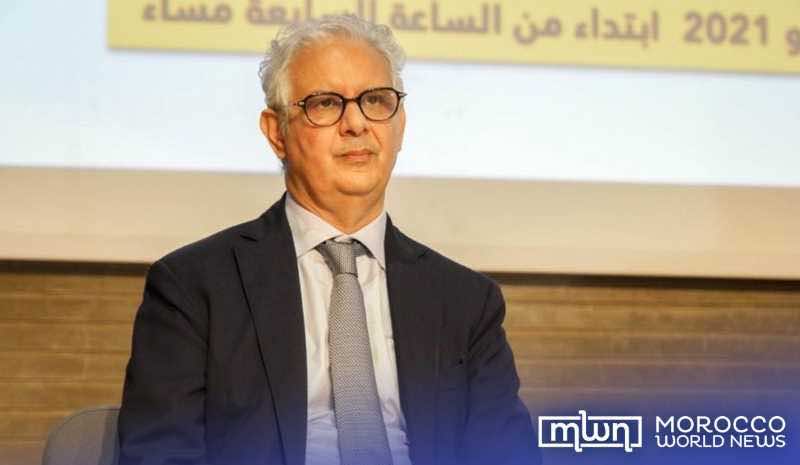
Secretary General of the Istiqlal Party Nizar Baraka said strengthening trust in institutions and public policies is among the main challenges in the upcoming phase of Morocco’s search for an effective government.
He said this challenge, among others, including opening new opportunities for youth and achieving development with a real impact on citizens, is important amid international, geopolitical, and geostrategic changes affecting Morocco’s economy.
The leader of the Al Istiqlal party, which forms the current governing coalition alongside the Rally of Independents (RNI) and the Authenticity and Modernity Party (PAM), also acknowledged impacts stemming from the sharp rise in hydrocarbon prices and ongoing wars, their repercussions, and how they affect Morocco’s economy.
Like other parties rallying for the legislative elections, Al Istiqlal is also touting its campaigns to tackle main challenges, including employment, purchasing power, as well as trust among youth.
He said the party’s slogan, “My Country, My Future,” reflects a “desire to see Morocco succeed and develop as an emerging power.”
In an interview with MAP, the Al Istiqlal leader said his party proposes that no young person should remain outside the education and training system or be unemployed.
The party seeks to provide support to facilitate youth integration into the labour market, allowing them to benefit from a second chance in education or vocational training, he argued.
The current government, especially the RNI, promised one million jobs if elected – a promise that many deem illogical – accusing the cabinet of failing its mission.
The leader of the opposition party, the Justice and Development Party (PJD), Abdelilah Benkirane, has accused the current government of being responsible for “many disasters.” Benkirane has in particular lamented high levels of unemployment, the capping of recruitment at 30, and the rising prices.
According to the latest report from the High Commission for Planning (HCP), unemployment declined during the second quarter of 2026.
The number of those unemployed, however, is estimated at more than 1.121 million people.
HCP said the number is down by 132,000 compared with the first quarter, attributing the decline to a reduction of 108,000 unemployed people in urban areas and 24,000 in rural areas.
Women represented 33.3% of the unemployed population, while 79.3% of unemployed people resided in urban areas.
Education is also marred by several challenges, including school dropouts.
Education Minister Mohamed Saad Berrada said last year that nearly 280,000 students abandon school annually, with 160,000 dropping out at the middle school level.
He acknowledged that the challenges are more evident in rural areas.
Baraka said his party proposes creating companies that will be responsible for distributing essential food products to protect purchasing power. The creation of these companies would help lower prices rather than merely keeping them stable, particularly by reducing the number of intermediaries, he explained.
He further argued that this measure would be accompanied by increases in wages and the minimum wage, as well as a reduction in income tax.
All parties bidding their campaigns in the ongoing elections have been vowing to tackle similar challenges, including unemployment and those related to purchasing power, healthcare and education.
Whether reforms are coming with the upcoming governments, that’s a question only implementation can answer.
Ballot polls will open tomorrow, and parties are aware that people, especially youth, are concerned about the future.