Marrakech – Morocco’s 23 September legislative elections are unlikely to disturb the political order that took shape in 2021, according to an analysis published by the Italian Institute for International Political Studies (ISPI) as part of its dossier on the vote.
The lead assessment, written by Mohammed Masbah, founder and president of the Moroccan Institute for Policy Analysis (MIPA), argues that the contest “seems to consolidate the 2021 status quo rather than being a real contest between parties.”
Masbah traces that continuity to the electoral rules. He writes that the electoral quotient, constituency design, and control of voter registration that produced the 2021 outcome have returned “with some cosmetic and procedural changes.”
This year’s reform eased requirements for young independent candidates and introduced digital candidacy submissions, yet left the core architecture untouched.
The quotient, in his account, remains the decisive instrument. Because seats are allocated on the basis of registered voters rather than votes cast, he argues it is “in practice, impossible for any party to win more than one seat per district,” a structural barrier that keeps any single party below 100 seats and rewards small and medium formations.
Constituency design compounds the effect through a guaranteed minimum of two seats per province and a map drawn from outdated census data.
Voter registration forms the third tool. Masbah records a drop from roughly 18 million registered voters in 2021 to 15.8 million in 2026, out of around 26 million eligible citizens. He rejects the Interior Ministry’s explanation of routine list-cleaning, recalling that in 2021 senior PJD leaders were removed by administrative decision, a move party figure Abdelali Hamieddine labeled a “political scandal.”
A rivalry that leaves room for the PJD
What distinguishes this cycle, in his reading, is the shape of the competition. For nearly two decades the central battle ran between the Justice and Development Party (PJD) and a party close to the palace.
This time it runs between two administrative parties, the National Rally of Independents (RNI) and the Authenticity and Modernity Party (PAM), both founded by figures from the royal circle and both in government – a contest Masbah casts as a “fake RNI-PAM rivalry.”
Masbah describes a “war of attrition” between them. RNI has accused PAM of poaching its members, though he points to the irony that RNI’s own leadership passed in February to Mohamed Chouki, himself a PAM defector. PAM answered on August 26 that it “will not accept lessons from a party that previously nominated 17 MPs from 5 parties, including from PAM.”
That mutual blame, he argues, reflects “elite capture rather than programmatic difference,” a dynamic that may work to the PJD’s advantage.
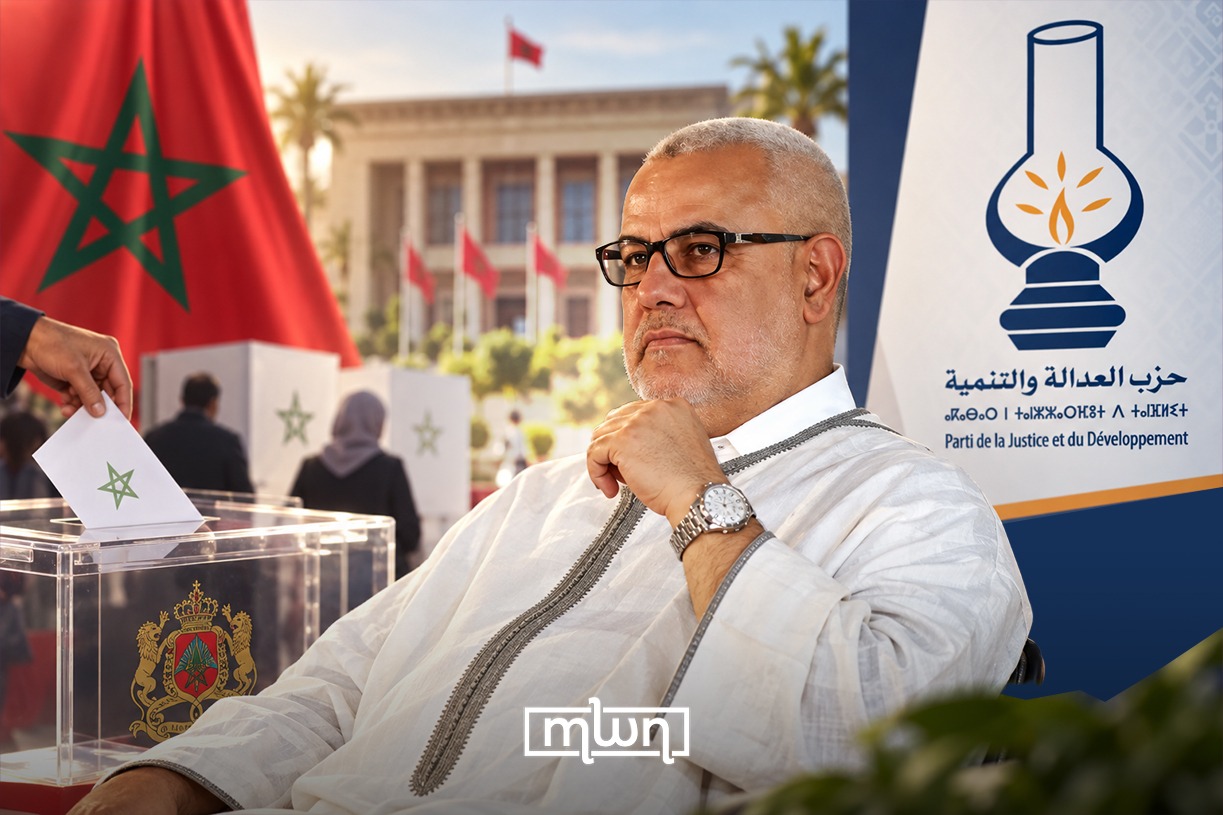
The party’s recovery, however, has limits. It collapsed from 125 seats in 2016 to 13 in 2021, and Masbah cautions that any rebound “does not amount to a return to relevance or central status.”
His own estimate places the PJD at roughly 40 to 50 seats, which he frames as “a subjective judgement based on qualitative observations” in a country with no opinion polling. He credits the shift to Abdelilah Benkirane’s strategy since October 2021, built on identity politics, Palestine and Gaza, and anti-corruption.
Turnout may limit that revival. The PJD has historically led in urban strongholds, ranking first in Casablanca, Rabat, Tangier, and Fez in the 2015 local elections, while administrative parties draw on rural clientelist networks. With urban turnout typically lower, Masbah argues the geography could limit any rebound.
He leaves open one scenario: a PJD-PAM alliance, though he calls it “difficult to conceive given their historical animosity.” Benkirane attacked PAM and its de facto leader, Fouzi Lekjaa, after Lekjaa formally joined the party in mid-2026, but has since turned his fire mainly on Head of Government Aziz Akhannouch and the RNI. Masbah notes those attacks run milder than earlier PAM leaders drew.
The pact would depend on PAM leading the vote, the PJD securing enough seats to negotiate, and both agreeing to govern together. He likens it to Morocco’s 1999 succession context, when opposition parties were brought into government to project stability during a transition, a logic that could recur as the country approaches the 2030 FIFA World Cup and its next royal transition. Even then, he writes, the PJD “may at best be a junior partner.”
Protests, migration, and a disillusioned electorate
Broader conditions frame the vote. Masbah situates it against declining public trust, recurring corruption controversies, and the Gen Z protests that erupted in October 2025 over economic conditions and social justice. Government promises to widen youth participation, he writes, have been “only partially” honored. In the weeks before the vote, he observes little public engagement, no serious debate, and few pre-campaign rallies.
A migration crisis compounds those pressures. In late July and early August, an estimated 50,000 to 80,000 people attempted to cross into occupied Ceuta on foot or by swimming, the largest such movement since 2021; around 140 died. Masbah recalls the criticism that followed reports Akhannouch vacationed in Mallorca as the crisis unfolded, while Moroccan officials stayed silent for days.
The ISPI dossier frames these strains as a “two-speed Morocco.” Its editors, ISPI fellows Caterina Roggero and Aldo Liga, place the vote after five years that brought major development and infrastructure projects and the country’s selection to co-host the 2030 FIFA World Cup, set against persistent socio-economic fragilities and a diplomatic gain at the United Nations over Western Sahara.
A separate commentary by Pierre Vermeren, professor of contemporary history at Université Paris 1 Panthéon-Sorbonne, reaches a similar conclusion from another angle. He argues the elections “will pass under the radar of international political life because their stakes are limited,” with the monarchy retaining its role as kingmaker over weak parties.
Vermeren expects Akhannouch to relinquish power and sees PAM positioned to take the government, with Lekjaa or Marrakech mayor Fatima Ezzahra El Mansouri as the leading candidates for prime minister. He reads voter apathy in the figures: an electorate down 1.7 million since 2021, and only 10% of Moroccans who believe elected representatives keep their promises.
Read also: From Constitutional Promise to Political Participation: Morocco’s Unfinished Diaspora Question