
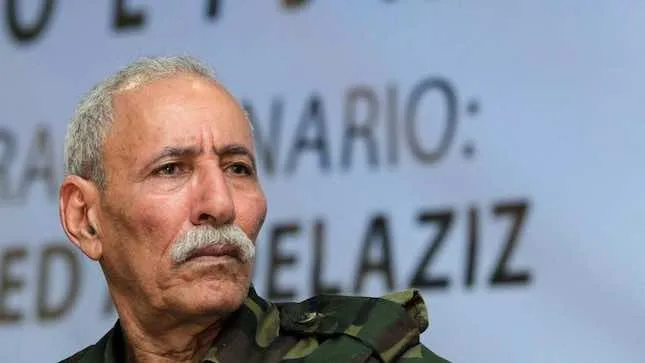
Tan-Tan – Several speakers before the United Nations General Assembly’s Fourth Committee on Wednesday warned of links between the Polisario Front and terrorist groups operating in the Sahel and Sahara, arguing that the connections pose risks to regional security and stability.
During the session in New York, speakers also raised concerns about the humanitarian situation in the Tindouf camps in southwestern Algeria, warning that limited opportunities for young people and alleged ideological indoctrination could increase their vulnerability to extremist recruitment.
Souleymane Satigui Sidibe, president of the Sahel Institute for Research and Analysis for Conflict Transformation, said the links between the Polisario Front and extremist groups have attracted growing attention in the United States.
He described the shift as a change in how the international community views the movement, arguing that its involvement in terrorism can no longer be overlooked.
Sidibe also pointed to bipartisan legislative efforts in the US Congress, where Republican and Democratic lawmakers have introduced bills seeking to designate the Polisario Front as a terrorist organization.
He said around 20 members of the US House of Representatives and Senate had taken part in these efforts, which he argued were based on evidence of the movement’s involvement in activities that threaten regional stability.
Concerns over extremist recruitment
Mohamed Ziad Al Jabari, representing the Moroccan-Palestinian Friendship Association, also raised concerns about the recruitment of Polisario members by extremist organizations operating in the Sahel.
He referred to Adnan Abu Walid al-Sahrawi, the former leader of the Islamic State in the Greater Sahara, who was killed by French forces in 2021. Al-Sahrawi had previously been associated with the Polisario Front before joining jihadist groups.
He warned that young people and children in the Tindouf camps could be recruited to serve extremist agendas.
Abdul Basith Pattinathar, representing the World Humanitarian Drive, called on the international community to pay greater attention to the links between separatism, terrorism, and cross-border crime in vulnerable regions.
Al Jabari also called for the protection of humanitarian areas from militarization, exploitation and extremist influence, while ensuring that aid reaches the people it is intended to support.
Amal Jbour, speaking on behalf of the Jordanian Philosophical Association, expressed similar concerns about connections between the Polisario Front and terrorist networks in the Sahel. She also pointed to the US congressional proposals seeking to classify the movement as a terrorist organization.
Jbour argued that the situation in the Tindouf camps, where Sahrawis have lived for decades, contributes to wider regional security concerns. She described the population as being held under the Polisario’s control.
Other speakers, including Mahmoud Al Rahman Anwar of the Africa International Culture Organization and Harald Trosch, noted the lack of prospects for young people in the camps, difficult humanitarian conditions, and continued ideological mobilization by the Polisario.
They warned that these conditions could create opportunities for extremist groups to recruit vulnerable young people.
US lawmakers push for terrorist designation
The remarks at the United Nations come as US lawmakers pursue legislation that could lead to the designation of the Polisario Front as a terrorist organization, citing cooperation between the movement and Iran-backed groups.
In March, Republican Senators Ted Cruz of Texas, Tom Cotton of Arkansas, and Rick Scott of Florida introduced the Polisario Front Terrorist Designation Act of 2026. The bill would require the US government to designate the Polisario Front as a Foreign Terrorist Organization if the Secretary of State determines that it has cooperated with Iranian-affiliated terrorist organizations.
A similar bipartisan initiative followed in the House of Representatives in July. Democratic Representative Josh Gottheimer of New Jersey introduced H.R. 9982 alongside Republican and Democratic colleagues, including Ronny Jackson, Claudia Tenney, Greg Landsman, Don Bacon, and Jared Moskowitz. The proposal seeks to impose sanctions on the Polisario Front if its cooperation with Iranian-affiliated terrorist groups is confirmed.
The proposed legislation calls for the US Secretary of State to assess whether the Polisario Front has received or provided military support, weapons, drones, air-defense systems, or intelligence to Iranian-affiliated terrorist organizations. If the assessment confirms such cooperation, the bills would require the US government to pursue a formal terrorist designation and related sanctions.