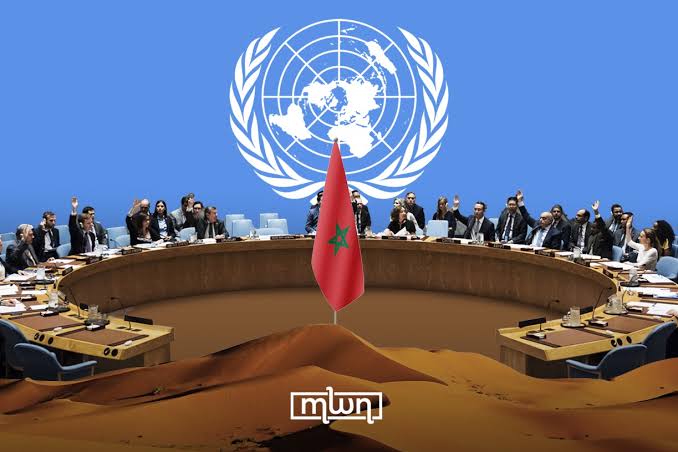
Rabat – The administration of US President Donald Trump is examining the future of the United Nations Mission for the Referendum in Western Sahara (MINURSO) ahead of a UN Security Council vote on the mission’s mandate scheduled for October 31.
According to Africa Intelligence, US Secretary of State Marco Rubio’s team held a closed-door meeting with academics and regional experts on October 9 to discuss the Western Sahara issue and the future of the UN mission.
The consultations aim to inform Washington’s position ahead of the Security Council vote on renewing MINURSO’s mandate, the report said.
Participants included specialists affiliated with the International Crisis Group (ICG), the Washington Institute for Near East Policy (WINEP), and Colgate University.
The consultations come as the Security Council prepares to consider a draft resolution on MINURSO’s mandate.
The Trump administration is reportedly weighing two options: ending the mission or revising its mandate. The latter would follow the framework set out in Security Council Resolution 2797, which calls on the UN Secretary-General to present a strategic review of MINURSO’s future mandate within six months of the mandate’s extension, taking into account the outcome of negotiations.
The discussions also reflect questions raised by senior US officials involved in the Western Sahara file, including Massad Boulos, Trump’s senior adviser for Arab and African affairs, and Michael Waltz, the US ambassador to the United Nations.
The process began earlier this year with two closed-door meetings in April involving Security Council members, UN Secretary-General António Guterres, his personal envoy for Western Sahara, Staffan de Mistura, and MINURSO chief Alexander Ivanko.
US pushes for UN peacekeeping reform
The consultations come amid a broader US push to reform UN peacekeeping operations.
In September, the Trump administration called for significant changes to peacekeeping missions, arguing that mandates should focus on security functions in support of a political plan and that missions unable to adapt should be prepared for termination.
Jeffrey Bartos, the US mission’s official responsible for UN reform, reiterated this position, referring to recommendations outlined by Guterres in a review published in late August.
Guterres has called for more flexible peacekeeping operations supported by stronger technological and planning capabilities, particularly as the United Nations faces budget constraints and challenges involving military and police deployments.
The UN Secretary-General has also argued that peacekeeping operations should be deployed only when a peace agreement or a credible ceasefire exists, warning that peace cannot be maintained where there is no peace to preserve.
The Security Council has already decided to end the mandate of the United Nations Interim Force in Lebanon (UNIFIL), which has operated since 1978.
The upcoming vote on MINURSO’s mandate will determine the mission’s immediate future as Washington considers whether its current role should be maintained, revised, or brought to an end.