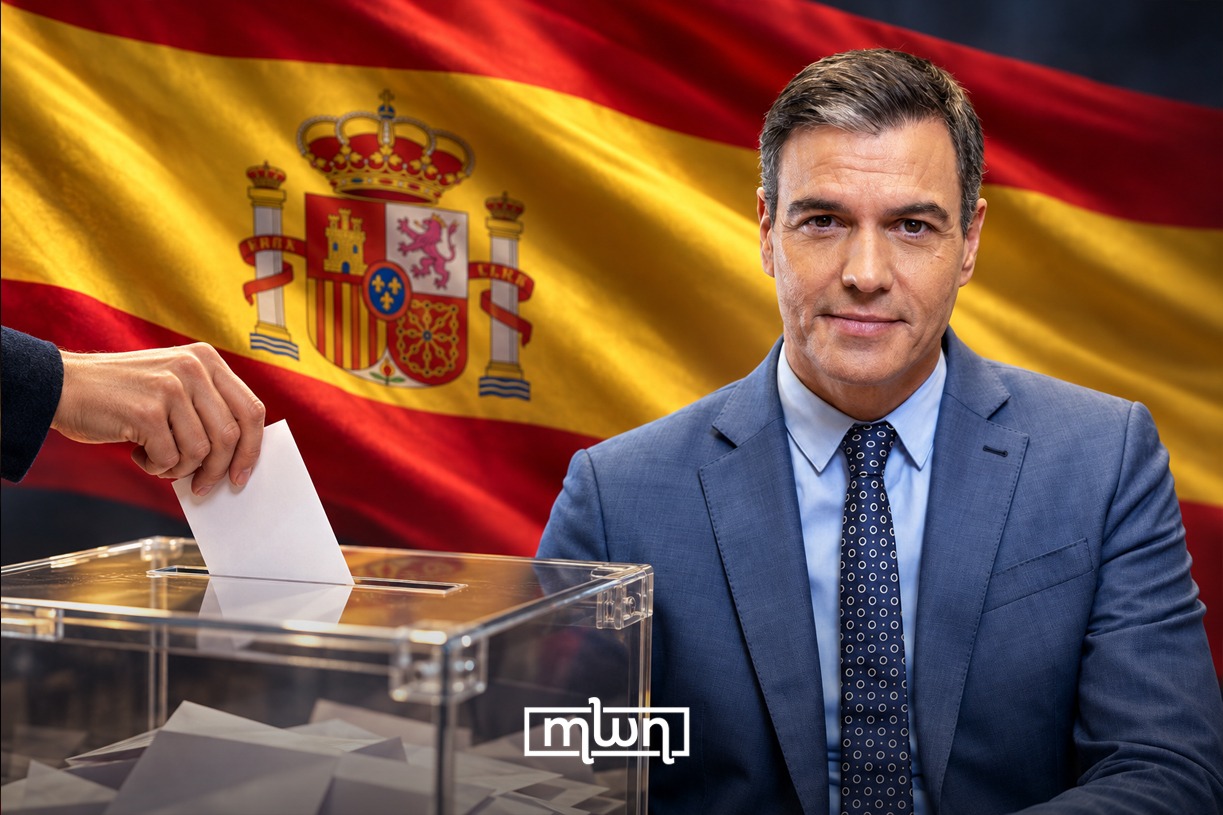
Viral social media posts and campaigns encouraging members of the Moroccan diaspora to support Spanish Prime Minister Pedro Sánchez’s party during the upcoming general elections have caught the attention of Spanish media.
Several news outlets, including El Español, reported on a social media campaign urging the Moroccan diaspora in Spain to vote for Sánchez’s Spanish Socialist Workers’ Party (PSOE) in the upcoming elections.
The news outlet specifically focused on a page with around 117,000 followers, calling on the Moroccan community to vote for Sánchez.
It cited similar initiatives during previous Spanish election campaigns, alleging that Morocco’s Socialist Union of Popular Forces (USFP) called on Spanish voters of Moroccan origin to vote for the PSOE during the 2019 elections.
The Objective, another Spanish news outlet, reported on the same campaign in favor of Sánchez, recalling the size of the Moroccan community in Spain.
The community is Spain’s largest foreign-nationality population, with around 969,000 Moroccans holding Spanish nationality.
According to the latest official estimates, the number of people born in Morocco who live in Spain exceeds 1.16 million.
Beyond the community’s size, The Objective also recalled alleged USFP campaigns in favor of Sánchez during the 2019 and 2023 elections.
The outlet cited a letter that it claimed had been verified and attributed to the USFP, rather than the Moroccan government, encouraging Spanish voters of Moroccan origin to support the PSOE.
The Sánchez government has noticeably worked to enhance and strengthen bilateral ties with Morocco.
However, the same government has also had to navigate intensified tensions with Morocco, with the most notable episode dating back to when Spain received Polisario leader Brahim Ghali for hospitalization in 2021. The separatist leader entered Spanish territory using a fake passport to evade war crimes lawsuits filed against him by Spaniards and Moroccans alike, reliable reports showed at the time.
The episode and the tensions surrounding it sparked one of the most unprecedented crises in the history of Moroccan-Spanish relations.
It was only after Spain decided to back Morocco’s Autonomy Plan as the most serious and credible political solution to the Sahara dispute that ties were restored. The decision to back Morocco’s Sahara stance was followed by Sánchez’s visit to Rabat, where he reiterated Madrid’s newfound position on the Sahara question.
Since then, the Spanish prime minister and his cabinet have repeatedly highlighted Morocco’s importance as a strong ally in addressing different challenges, including migration and trade cooperation.
However, one of the latest sources of tension between Spain and Morocco is the crisis following the mass crossing into Ceuta in July, when more than 70,000 people entered the Spanish enclave.
The entry sparked a crisis and a smear campaign targeting Morocco, especially from the far right, which has been weaponizing similar challenges to attack both Morocco and Sánchez’s policy toward Rabat.
Amid the pressure, Sánchez dissolved parliament earlier this month and called a general election for November.