
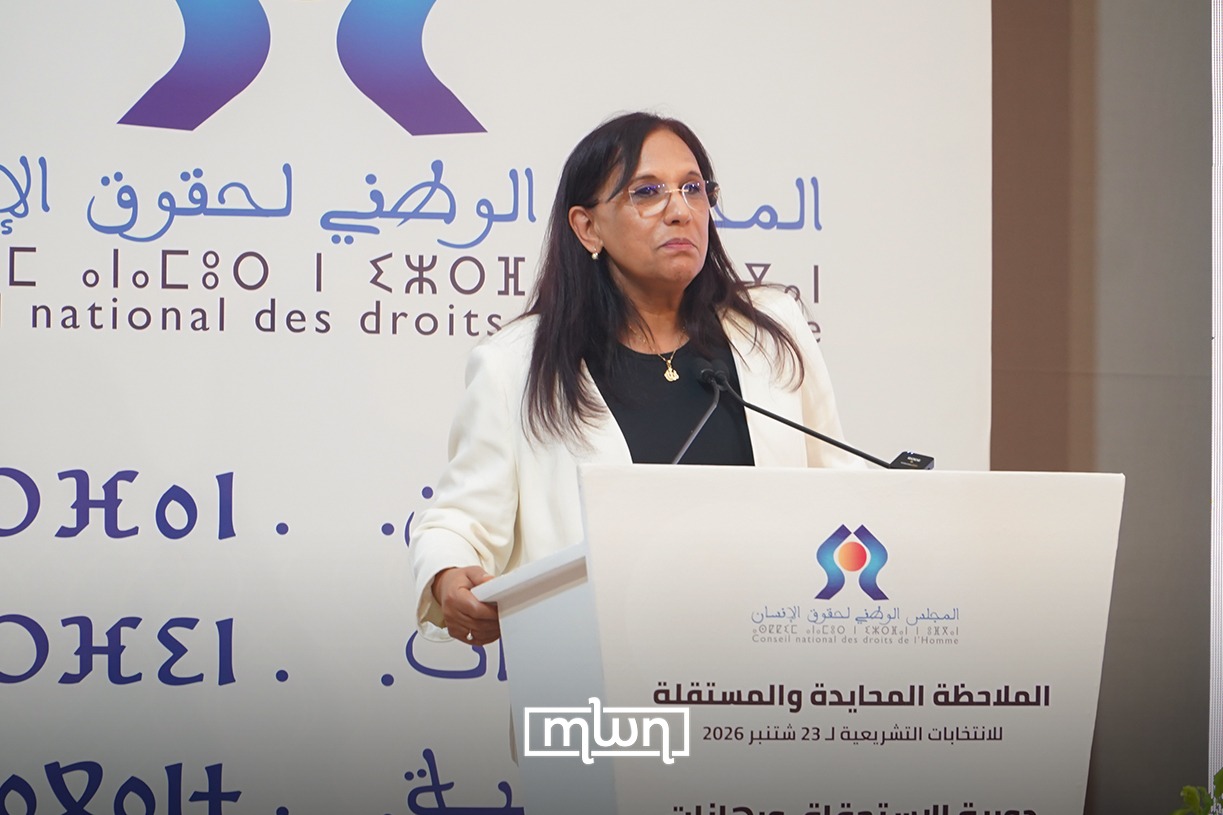
Rabat – Amina Bouayach, president of Morocco’s National Human Rights Council (CNDH) and the Global Alliance of National Human Rights Institutions (GANHRI), has warned that artificial intelligence (AI) and digital technologies could threaten fundamental rights if they are not used responsibly.
Speaking at an international conference on human rights in the digital age and artificial intelligence in Athens, Greece, on Wednesday, Bouayach called for human rights to remain at the center of AI governance.
She said that while digital technologies offer opportunities to improve public services, expand access to rights, and promote inclusion, they can also deepen inequalities and create new forms of human rights violations.
Bouayach outlined several risks linked to the growing use of AI, including online disinformation, deepfakes, and biased algorithms. She warned that these technologies could undermine access to reliable information, threaten privacy, and reinforce existing forms of discrimination.
She also raised concerns about the misuse of facial recognition technology, which can pose risks to privacy, equality, and other fundamental freedoms.
The Moroccan human rights official stated that protecting human rights requires more than addressing the consequences of AI after its deployment. Safeguards must also be in place during the design, development, and testing of digital systems, as well as throughout their use.
Read also: Amina Bouayach Calls for Human Rights-Centered Governance of AI
Bouayach called for stronger accountability, human oversight, and clear rules defining responsibility for the development and use of AI systems.
She also discussed the importance of assessing the potential impact of these systems on human rights before they are introduced and monitoring their effects throughout their life cycle. Authorities should reconsider or stop using systems when serious risks cannot be adequately controlled, she said.
Beyond the impact of AI on its users, Bouayach noted the need to protect people who help develop and operate these technologies, including workers involved in content moderation and data labeling in different parts of the world.
She said national human rights institutions have an important role in turning international human rights commitments into practical measures. Their responsibilities include monitoring violations, advising public authorities, and contributing to the development of laws and public policies.
Bouayach stressed that technological progress should serve people and promote justice and inclusion rather than undermine their rights.
“Commitment to human rights is not optional,” she said, calling for a responsible approach to technological development that protects human dignity and fundamental freedoms.
Her remarks come amid growing international debate over how governments and institutions should regulate AI while allowing innovation to continue.
The challenge, she said, is not technological progress itself, but the political and legal choices that determine how these technologies are developed and used.