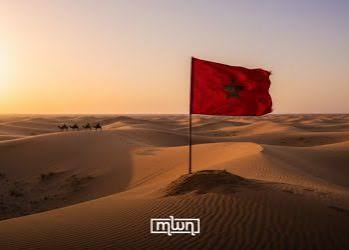
Some conflicts withstand the passage of time. Others persist because time alone cannot resolve them when certain actors have more to gain from keeping them alive than from bringing them to an end. The Moroccan Sahara dossier, commonly referred to as the “Western Sahara,” belongs, in many respects, to the latter category.
For nearly half a century, the United Nations has launched one initiative after another, special envoys have come and gone, resolutions have piled up, and diplomatic capitals have repeatedly expressed their determination to reach a political solution. Yet the dispute remains unresolved. The people held in the Tindouf camps continue to wait, the Maghreb remains mired in division, and international diplomacy seems condemned to replay the same scene indefinitely.
In its relentless pursuit of compromise between irreconcilable positions, the international community has lost sight of a fundamental question.
Why has this dispute still not been resolved when a political proposal exists and the diplomatic balance of power has shifted?
There is no single answer. But the question inevitably leads to an examination of Algeria’s role, given its longstanding support for the Polisario Front and its central place in any effort to reach a settlement. True diplomatic courage sometimes means naming the obstacles that others would rather avoid. Today, the UN Security Council is preparing to adopt another resolution. Yet another one.
Who is busy working the corridors of the United Nations at this moment?
Morocco, of course. That is only natural, as it seeks to defend its territorial integrity. But Algeria is also active. Its diplomats are fighting tooth and nail, pleading, applying pressure, and lamenting their position to anyone willing to listen. What exactly are they defending, if not the status quo and nothing but the status quo?
Algeria: From proclaimed solidarity to political responsibility
The history of the Moroccan Sahara, called “Western Sahara” today and Spanish Sahara in the past, did not begin with modern Morocco or with UN resolutions. It is part of a long regional history shaped by ties between Saharan populations, the territories of today’s Maghreb, and Moroccan dynasties, followed, unfortunately, by French and Spanish colonization and an incomplete decolonization process.
After Spain withdrew in 1976, following the historic Green March and an agreement with the Kingdom of Morocco, the dispute took on a regional dimension. The Polisario Front demanded independence for the territory, while Morocco defended its territorial integrity. Libya under the notorious Muammar Gaddafi became involved before Algeria under Houari Boumediene emerged as the separatist movement’s principal regional backer. Both leaders were military coup-makers who invoked socialism, populism, and pan-Arabism, nourished by the propaganda of another coup-maker, Gamal Abdel Nasser. Their shared ambition was to see one of their own take power in Morocco. That is the historical truth.
Since then, Algiers has maintained that it defends the Sahrawi people’s right to self-determination. This position forms the official foundation of its policy, and its diplomacy revolves almost entirely around this ideal. Yet one essential question remains if we are to understand why this artificially created dispute has endured for so long.
Does this policy stem solely from a matter of principle, or does it also serve a broader strategy for regional power?
The question deserves to be asked directly.
The dispute with Morocco is part of a longstanding strategic rivalry between the two countries. It fuels diplomatic confrontation, justifies security posturing, and reinforces the official Algerian narrative of a permanent external adversary. The head of the military establishment often makes the point himself: the enemy is a conventional one.
In this context, the Sahara can become much more than a decolonization issue. It can serve as an instrument of foreign policy, an ideological marker, a means of legitimizing regional power politics, and a pillar of domestic policy.
It would be excessive to claim that this logic alone explains every Algerian decision. But it would be equally naive to ignore the political benefits that some governments can derive from a prolonged dispute, particularly when it unfolds beyond their own borders and through a proxy.
When a dispute becomes a defining element of national discourse, resolving it requires more than a diplomatic agreement. It also requires leaders to relinquish the political advantages they derive from confrontation. This dispute lends credibility to their narrative at home, justifies the exorbitant military budgets, and helps rationalize the deprivation faced by the population, which at times struggles to obtain even the most basic necessities.
This is precisely what the international community should seek to assess.
Colonial borders cannot erase history
Debates over the Moroccan Sahara are often reduced to a simplistic opposition between the right to self-determination and Moroccan sovereignty. Yet the region’s history is far more complex than diplomatic formulas suggest. Any serious assessment must account for history, geography, and demographics rather than rely on a narrow interpretive framework.
Morocco bases its position on documented historical ties of allegiance and sovereignty that connected it to the populations across the territory before colonization. In its 1975 advisory opinion, the International Court of Justice acknowledged the existence of legal ties of allegiance between the Sultan of Morocco and the tribes of what was then Spanish Sahara.
Did these tribal leaders, headed by Khatri Ould Joumani, not renew their allegiance to King Hassan II on November 5, 1975? Should we also recall Sheikh Ma El Ainin’s allegiance to King Hassan I, or that of Fal Ould Oumeir?
Comparable ties are documented across the wider Mauritanian region. Southwestern Algeria, too, maintained links with the Kingdom until the 1950s, before colonial France decided to incorporate those territories into French Algeria. The leaders of the Algerian revolution had promised to return the territories taken from Morocco. Their successors chose a different course and upheld the borders inherited from France.
This historical context is indispensable. Neither Moroccan history, shaped by an empire fragmented by colonization, nor international law can be properly understood by isolating a single element.
Another question deserves particular attention when we examine the region’s present-day map and borders. Did Sahrawi identities develop exclusively within the closed space once known as “Spanish Sahara,” now called “Western Sahara,” as though the territory were simply Moroccan or otherwise self-contained, independent of human movement, tribal history, and relations with neighboring lands? Of course not.
Families, tribes, and communities across this region share histories that cross contemporary borders. Sahrawi populations in Morocco, those living in southwestern Algeria, some of those held in the Tindouf camps, and those residing elsewhere across the region cannot be reduced to rigid political categories.
This does not mean that Sahrawi identity is artificial. It means that no lasting solution can ignore the human complexity of the territory. We should remember that south of the Anti-Atlas Mountains, all populations are Sahrawi and deeply Moroccan.
The challenge is to determine how the aspirations of the populations concerned can be incorporated into a viable political settlement without allowing rivalries between states to dictate their fate.
This is where international responsibility becomes decisive.
Autonomy under Moroccan sovereignty: A proposal put to the test of political realism
In 2007, Morocco presented an Autonomy Plan for the Sahara. Rabat considers it a compromise that would allow the territory’s population to manage its own affairs within the framework of Moroccan sovereignty.
Unfortunately, the proposal has not eliminated the differences between the parties. The Polisario, acting as Algeria’s mouthpiece, continues to advocate independence, while the Algerian government maintains its support for a solution based on self-determination. Yet the diplomatic landscape has changed, and Morocco’s initiative has gradually taken center stage in discussions. Algiers continues to turn a blind eye and a deaf ear.
Security Council Resolution 2797, adopted on October 31, 2025, reinforced this momentum by establishing Morocco’s 2007 Autonomy Plan as a basis for negotiations aimed at achieving a just, lasting, and mutually acceptable political solution, in accordance with the principles of the UN Charter.
This development matters. It does not mean that the dispute has been legally settled or that all parties have accepted Morocco’s proposal. Rather, it means that the international community has identified a basis for negotiations that it considers relevant to advancing the process.
But what is needed to move from recognizing a negotiating framework to building an agreement?
Of course, guarantees are needed, along with discussions on the scope of autonomy, implementation arrangements, and political commitments. Above all, however, there must be a sufficiently strong willingness to move beyond entrenched positions and examine the practical conditions for compromise.
Morocco maintains that it has proposed a realistic path forward. The other parties must now explain what they are prepared to negotiate.
If Algeria believes the proposal fails to meet the requirements of the right to self-determination, it must explain which concrete and pragmatic path it intends to pursue to break the deadlock. If it considers itself external to the territorial dispute, it must nevertheless acknowledge that its political weight and support for the Polisario give it particular responsibility for the situation, which has persisted for a full fifty years, and for efforts to resolve it.
Diplomacy cannot survive on positions repeated indefinitely. It must deliver progress.
The exorbitant cost of an endless dispute
As Algeria persists in its position, generations of Sahrawis grow up in the Tindouf camps. Families remain separated, opportunities are put on hold, and young people inherit a situation they never chose. The dispute also carries an enormous strategic cost for the entire Maghreb, the wider region, the African continent, and the world.
For decades, Algeria’s position has obstructed the creation of an integrated regional space. The land borders have remained closed since 1994, following a unilateral decision by Algeria. Economic exchanges, industrial cooperation, and joint projects have failed to realize the potential offered by geographical proximity, complementary economies, and human ties among the region’s peoples.
Resources devoted to confrontation could have contributed far more to development, education, healthcare, infrastructure, and better living conditions.
This is not about artificially opposing defense spending to each country’s social needs. Every state must ensure its security. But it is legitimate to ask what the Maghreb might have achieved had Algeria chosen cooperation over rivalry.
The Sahara has thus become a symbol of a historic opportunity squandered, one that could have transformed a divided region into an area of shared prosperity.
The international community should measure this loss as carefully as it examines the legal and diplomatic disagreements. Behind the rigid positions of Algeria’s military establishment lie the security of the region, human lives, and the prosperity of an entire part of the world, all of which bear the consequences.
Can the United Nations break the cycle of repetition?
Staffan de Mistura is not the first personal envoy of the UN secretary-general to attempt, at least in appearance, to bring the parties closer together. Nor is António Guterres the first secretary-general to take up the issue. His predecessors encountered the same fundamental obstacles: disagreements over the territory’s final status, mistrust among the parties, and the absence of a compromise acceptable to all.
Does this mean the United Nations is condemned to impotence? Certainly not. Its role remains essential in facilitating negotiations and maintaining a recognized international framework, even if the number of conflicts it has successfully resolved has historically been limited.
Mediation cannot succeed if it merely organizes meetings without changing the political calculations of the actors involved or telling the full truth about those who have blocked the process for fifty years. In this case, that is certainly not Morocco.
Diplomatic neutrality must not become a way to treat every party’s responsibility as though it were identical. On the contrary, it requires a rigorous assessment of positions, initiatives, refusals, and genuine opportunities for compromise.
The Security Council must therefore go beyond general statements. It should ask the Algeria-Polisario tandem what it is prepared to accept, what guarantees it seeks, and what concessions it might consider.
It must also examine the regional context in which the negotiations take place: the severing of diplomatic relations between Algiers and Rabat, and the openly hostile rhetoric heard almost daily in official media and from Algerian officials themselves. Persistent political confrontation is not a secondary consideration. These factors make compromise more difficult and undermine prospects for reconciliation.
Security Council members should listen, if only once, to what is said every evening on Algeria’s official television news. They would be shocked.
The aim is not to condemn one country to satisfy another, but to ensure that every actor takes responsibility for the consequences of its policies.
The Security Council could go further and ask the people held in Tindouf directly, without intermediaries, whether they wish to return to their homeland or continue living in the inhumane conditions imposed on them. They remain under the guard of the Algerian gendarmerie and are denied the rights associated with refugee status, which Algeria has prevented them from enjoying. The United Nations knows this.
Many dream of returning home and benefiting from the extraordinary development the Kingdom has undertaken in its southern provinces, but they are prevented from expressing themselves freely. Sahrawis living in Morocco, by contrast, can freely determine their future and elect their local leaders and representatives to the Moroccan Parliament. The Security Council can certainly hear their views. The Polisario represents only itself and would not survive a single day without Algeria’s vital support.
If resolving the Moroccan Sahara dispute is genuinely an international priority, Algeria must be asked to demonstrate how its strategy contributes to making a settlement possible.
The Maghreb cannot remain hostage to Algeria’s leaders
There is a cruel paradox at the heart of this dispute. The Moroccan and Algerian peoples share deep historical, cultural, linguistic, and family ties. Their daily concerns are remarkably similar. Employment, purchasing power, housing, education, healthcare, and future prospects rank among the main concerns of young people in both countries. Yet their political relations remain dominated by a pathological mistrust sustained by Algeria alone.
In Morocco, the Sahara is regarded by all Moroccans as a matter of national sovereignty and territorial integrity. It cuts across political affiliations and generations. In Algeria, defending Sahrawi self-determination has become a central element of the official narrative on the dispute, driven by domestic political considerations
These positions are deeply entrenched. They will not disappear at the demand of an outside power. But neither should they condemn both societies to permanent confrontation.
Did His Majesty King Mohammed VI not invite the Algerian president to discuss the issue away from international interference, within the framework of a bilateral relationship between brothers? Of course, faithful to the Algerian military regime’s position, he did not respond. Security Council members should know this, too, and take it into account.
True political courage would mean recognizing that a negotiated settlement does not necessarily amount to defeat. It can become the starting point for a new regional relationship. This is what His Majesty has repeatedly called for. But that requires the leaders of Algeria’s deep state, namely its military establishment, to accept peace as a political objective in its own right rather than as rhetoric intended for the international stage.
The time for accountability
Fifty years after the dispute began, the international community must face reality. The Moroccan Sahara dossier does not lack history, legal experts, diplomats, or resolutions. What it lacks is a sufficiently strong and inherently realistic political will on Algeria’s part to transform opposing positions into a lasting agreement.
Morocco defends its sovereignty and proposes autonomy. The Polisario demands independence. Algeria supports that demand and claims to defend self-determination because doing so serves its own ambitions. These positions must be examined as they are, without caricature or indulgence.
One fact remains clear: no lasting settlement can be achieved without seriously addressing Algeria’s role and securing its effective contribution to the compromise being sought.
The Security Council now has a renewed framework for negotiations. It must use it to secure concrete commitments, establish clear diplomatic objectives, and assess progress rather than allow the process to sink into a repetition of the same disagreements.
The goal is not to ask the United Nations to declare a winner. It is to ask the organization to make peace possible rather than perpetually postpone it.
Beyond the Sahara, the future of the Maghreb is at stake. A region cannot aspire to play its full role in Africa and the Mediterranean while remaining paralyzed by Algeria’s position alone.
The real question is no longer simply which solution could settle the dispute. It is whether Algeria, as a key party to the dispute, is finally prepared to accept a solution.
Fifty years have passed. Generations have waited. Resources have been swallowed up. Opportunities have been lost. It is time for the international community to stop measuring its efforts by the number of meetings it organizes and start measuring them by the results it achieves.
Peace in Africa can no longer remain a promise without a deadline. It must become an explicit political objective, a shared responsibility, and a historic imperative.
On November 6, 1975, the late King Hassan II declared: “The Sahara is in its Morocco, and Morocco is in its Sahara.”
“Morocco will remain in its Sahara, and the Sahara will remain in its Morocco, until God inherits the Earth and everything upon it,” King Mohammed VI said in a speech marking the 39th anniversary of the Green March in 2014.