
 Join on WhatsApp
 Join on Telegram
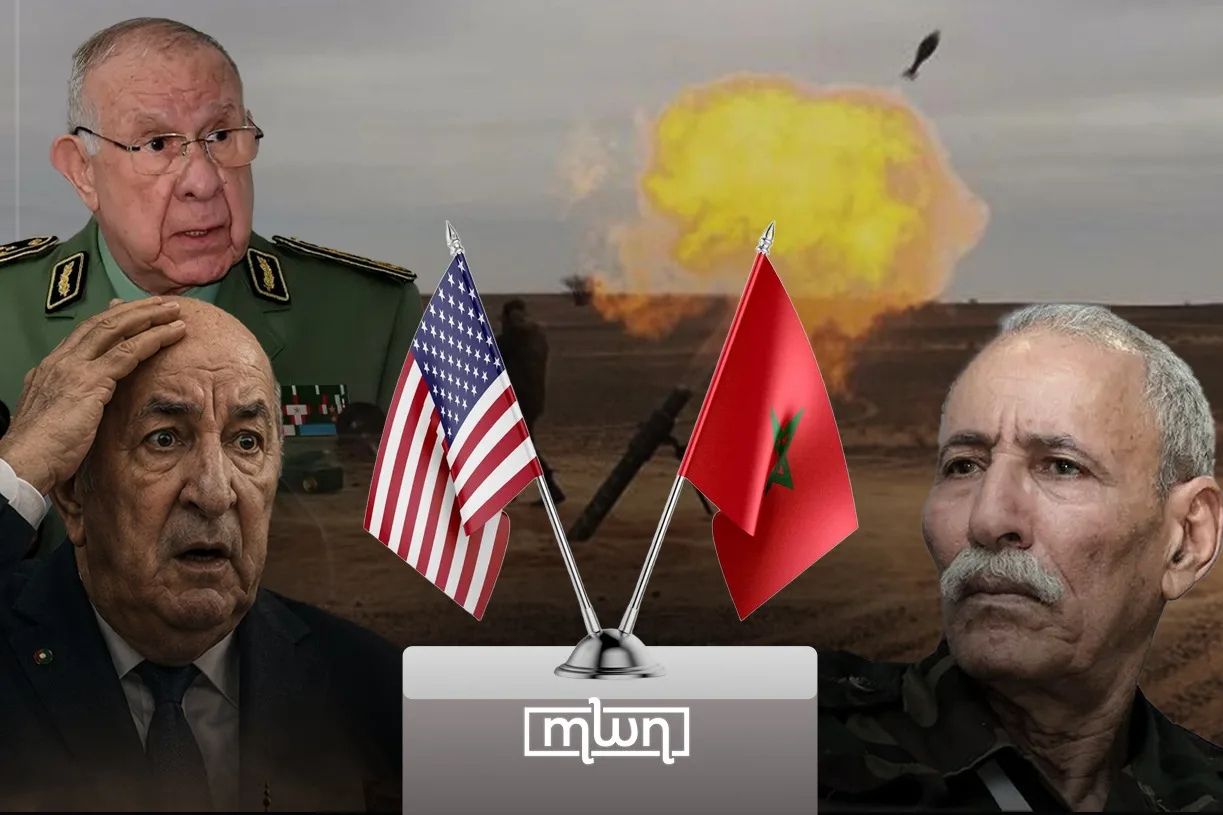
The rogue behavior that the Polisario Front has displayed in recent days, namely its attack on the city of Smara, its condemnation of countries that have denounced that attack, and its criticism of the US Morocco ambassador’s visit to the city of Dakhla, provides ample evidence that this separatist movement has evolved into a genuine threat to peace and stability in the region.
In October last year, the UN Security Council adopted a resolution that most seasoned observers of the Sahara conundrum have described as the ultimate consecration of the Moroccan Autonomy Plan as the only viable route to lasting resolution of this lingering dispute over Morocco’s southern provinces. The Security Council being the UN’s most consequential and authoritative body, its resolutions are both binding and singularly indicative of the international consensus on a given issue.
Resolution 2797 has chartered the end of the road for the Sahara dispute
In this sense, Resolution 2797 did not simply – albeit clearly – define the contours and parameters of the political process that should ultimately lead to a final settlement of the Sahara dispute. More significantly, it once and for settled the legality debate by elevating the Moroccan autonomy initiative as the sole legal basis and intended endpoint of any genuinely negotiated and politically sustainable settlement. For one thing, Resolution 2797 left no room for ambiguity or alternative interpretations regarding the possibility of pursuing any other political option.
For one another, the growing outpouring of international support for the Moroccan autonomy plan is enough indication that the separatist thesis has lost currency and credibility in the prevailing consensus surrounding discussions about what the region needs. Indeed, of the UN member states that have called for, and are still advocating for, implementing the provisions of Resolution 2797, many used to be overtly or tacitly supportive of the Algerian-championed separatist thesis. And so, not only is an increasing number of influential countries – the US, Spain, France, the UK, etc. – pushing for a compromise-based solution in line with the latest UNSC recommendations and the spirit of the Moroccan proposal, countries that had historically leaned toward Algeria’s position are growing weary of the prolongation of this dispute. In an ever-changing global and regional order, many states no longer view the persistence of separatist movements rooted in outdated Cold War-era logic as serving their strategic interests.
In my book about the dispute, I invoked article 25 of the UN Charter to demonstrate that UNSC resolutions are binding. “The members of the United Nations agree to accept and carry out the decisions of the Security Council in accordance with the present Charter,” states that article. But contrary to conventional belief, the binding nature of the UNSC is not limited to resolutions adopted under Chapter VII. It rather concerns all resolutions adopted by the UN’s sole executive body.
Moreover, the binding force of UNSC resolutions derives from member states’ acceptance of their authority and from the obligation to commit to their provisions in subsequent conduct. As the member state that hosts and provides diplomatic, military, and financial support to the Polisario Front, Algeria bears a particular responsibility to uphold international legality as embodied in UNSC resolutions by reasoning with the separatist group and preventing it from taking any actions that could violate its provisions or derail the political process.
Terrorism has put the Polisario beyond the pale of UN respectability
Yet rather than uphold UNSC recommendations and adjust their posture accordingly, Algeria and the Polisario have chosen open defiance of international law and international legitimacy. By carrying out attacks on the city of Smara, the Polisario – with Algeria’s blessing – has committed a flagrant violation of Resolution 2797, whose sixth preambular paragraph “underlin[es] the importance of respecting the ceasefire and avoiding any act that jeopardizes the political process.”
The separatist group has thus demonstrated that it cannot be credibly regarded as a reliable partner in the pursuit of the political solution envisioned by Resolution 2797. In doing so, it has further eroded the already fragile prospects for the mediation efforts the United States has undertaken since the beginning of this year to move the political process toward a final settlement.
In light of these developments and given Algeria’s apparent strategy of dragging out the process in the hope that a future US administration may prove more accommodating toward its regional ambitions and political calculations, Morocco may ultimately be left with only one realistic option. Namely, the kingdom ought to refuse to engage in negotiations in which the Polisario remains a party, while simultaneously intensifying diplomatic efforts to persuade the United States and other governments to designate the separatist movement as a terrorist organization.
This step should go hand in hand with a decision to assert full control over the buffer zone, which Polisario operatives attempt to infiltrate on an almost daily basis in order to carry out attacks against Moroccan positions. It is high time for Morocco to deal a decisive blow to the Polisario’s claims that it exercises any form of territorial control or operational presence within the buffer zone. Morocco should capitalize on the growing wave of international sympathy and support it has secured from an increasing number of countries in order to deprive both the Polisario and Algeria of the last remaining lever they continue to exploit to sustain the illusion that the separatist front exercises authority over even a symbolic inch of the Sahara.
A movement that so openly defies international legality and interferes in the sovereign decisions of independent states merely because they chose to condemn its illegal and unsavory behavior should not continue to be treated as a partner for peace, stability, and prosperity. An entity whose Secretary General sends a letter to the UN Secretary General, in the midst of the US-led mediation process, while persisting in describing Morocco as “the occupying state,” should not be regarded as a partner in the implementation of the provision of Resolution 2797. Rather, it should increasingly be viewed for what it has always been: a destabilizing proxy advancing the agenda of those who manipulate and sponsor it.
In his May 10 letter to the Secretary-General, the Polisario leader chose to openly dismiss all available evidence and question the established UN terminology regarding the Sahara dispute and its legal status. He brazenly claimed that Morocco has been waging a “war of aggression against the Sahrawi people since 1975,” described the internationally backed Moroccan autonomy proposal as a “colonial” proposal, accused countries that have expressed support for Morocco following the Polisario’s attack on Smara of being “complicit in the crimes perpetrated against the Sahrawi people,” and persisted in invoking General Assembly resolutions long rendered obsolete by the direction the Security Council has imposed on the dispute over the past two decades.
Such a misleading and transparently self-serving reading of the conflict should leave little doubt that the Polisario leadership is not genuinely committed to the “good-faith” negotiations called for under Resolution 2797. In fact, and perhaps more critically, the blatant falsehoods and bizarre condemnations contained in the separatist group’s letter should shatter any remaining illusions that this is an entity genuinely prepared to relinquish the financial, political, and diplomatic privileges that the perpetuation of the conflict has afforded its leadership for decades.
The demise of the Polisario and a hard reckoning for Algeria
As I argued in my latest piece, Morocco should no longer wait for the US Congress to pass legislation designating the Polisario as a terrorist organization. Such a process could take years to materialize, giving Algeria and the Polisario leadership precious breathing and maneuvering room they will definitely use to devise better ways of further delaying a final settlement of this territorial question. Instead, Rabat should capitalize on the unprecedented momentum currently defining Morocco-US relations to encourage the White House, the State Department, and the Treasury Department to designate the Polisario Front as a Foreign Terrorist Organization.
American politicians across the political spectrum have consistently celebrated Morocco for being the first country to recognize the independence of the United States in 1777 and for maintaining the longest-standing uninterrupted treaty relationship in American history. As the two countries prepare to commemorate the 250th anniversary of their historic partnership, few American gestures would carry greater symbolic and strategic significance for Morocco than a US decision to designate the Polisario as a terrorist entity.
Such a move would deal a devastating blow to Algeria’s longstanding political maneuvering while clearing the way for the Trump administration to accelerate efforts toward resolving the dispute in accordance with Resolution 2797. The designation of the Polisario as a terrorist organization would also generate a far broader ripple effect, depriving Algeria of the pretext it has relied upon for more than five decades to claim that it is not a principal party to the conflict, thereby eventually forcing it to engage directly with Morocco in meaningful negotiations.
As I have argued in my last two books, CIA and State Department archives are replete with compelling evidence substantiating what has long been an open secret: namely, that Algeria has consistently weaponized the Polisario as a proxy in its geopolitical rivalry with Morocco for regional influence and hegemony. Any decision by the White House, the State Department, or the Treasury Department to designate the Polisario as a terrorist organization would inevitably prompt the US administration to revisit and bring to light archival records documenting Algeria’s direct involvement in weaponizing the Polisario to advance its own strategic objectives.
Such a development would place Algeria in an extraordinarily uncomfortable diplomatic position internationally, exposing decades of carefully cultivated political narratives while significantly undermining its credibility before international partners and within multilateral institutions. Moreover, such a move could amount to a death sentence for the Polisario. As soon as the separatist entity is designated as a terrorist entity, all banks, financial institutions, individuals, charities, media organizations, NGOs, and other entities dealing with it – whether in Algeria or elsewhere – will immediately come under heightened scrutiny from the US Treasury Department. Failure to comply with American sanctions regulations could expose them to severe punitive measures, including visa bans, asset freezes, financial restrictions, and exclusion from the still largely US-dominated international financial system.
Under such circumstances, many charities, NGOs, media outlets, universities, and advocacy organizations that have for decades provided the Polisario with financial lifelines, political legitimacy, and platforms to disseminate its narrative would be compelled to reassess or sever their ties with the separatist movement. The ultimate consequence would be the gradual dismantling of the broader political, financial, and advocacy infrastructure upon which both the Polisario and Algeria have long relied to shape international perceptions of the Sahara dispute and sustain the illusion that the creation of an independent statelet in Morocco’s southern provinces remains a realistic or viable outcome.
Perhaps most importantly, the Tindouf camps, the sanctuary Algeria has provided to the separatist movement for more than five decades, would come under unprecedented international scrutiny. Morocco has for years consistently warned that the camps have evolved into a breeding ground for arms trafficking, drug smuggling, and the recruitment and exploitation of child soldiers. Rabat has also repeatedly denounced the documented involvement of both Algerian and Polisario officials in the systematic embezzlement of humanitarian aid intended for camp populations, as well as Algeria’s persistent refusal to allow a proper census of the inhabitants of the camps.
A US designation of the Polisario as a terrorist organization would inevitably bring renewed international attention to these accusations while placing Algeria under immense pressure to provide credible answers regarding its historical role, responsibilities, and policies concerning the camps.
Such a decision could also encourage other countries maintaining close and longstanding strategic ties with Morocco to follow Washington’s lead. Several Gulf Arab states, alongside a growing number of African countries, could adopt similar measures, further eroding the Polisario’s international legitimacy while deepening Algeria’s diplomatic isolation both regionally and globally.
Morocco’s olive branch cannot wait for Algeria forever
This would constitute a major strategic setback for Algeria, forcing its leadership to confront the reality that decades of vast financial, diplomatic, military, and political investment in the separatist project have produced little beyond mounting isolation and steadily diminishing returns. Perhaps even more troubling for Algiers is the possibility that decisions by certain African states to designate the Polisario as a terrorist organization could revive scrutiny over the anomalous status of the self-proclaimed “SADR” within the African Union. That could ultimately create an opening for Morocco to rally the political support necessary to push for the expulsion of the self-styled “SADR” from the continental organization.
With the Polisario increasingly transformed from a strategic asset into a growing geopolitical liability, Algeria could eventually find itself with little choice but to seriously reconsider seizing the olive branch that King Mohammed VI has repeatedly extended to Algiers in most of his recent speeches.
Announcing the imminent adoption of Resolution 2797 in his address to the nation on October 31, 2025, King Mohammed VI once again adopted the conciliatory and measured tone that has consistently defined his approach toward Algeria. The King notably addressed President Abdelmadjid Tebboune as “my brother,” urging him “to launch together a sincere and fraternal dialogue between Morocco and Algeria in order to overcome differences and build new relations founded upon trust, fraternity, and good neighborliness.”
Much to the King’s disappointment, however, those repeated appeals appear to have fallen on deaf ears. Algerian officials have repeatedly demonstrated an inability or unwillingness to fully grasp the significance of the message Morocco has sought to convey.
Indeed, the relentless media campaign Algerian state-aligned outlets have waged over the past seven years to demonize Morocco, its institutions, its history, and its national symbols provides amply instructive insight into the prevailing mindset within significant segments of the Algerian political, military, and media establishment toward Rabat.
The pattern of hostility and confrontation that Algeria has maintained toward Morocco for more than five decades, and which has intensified dramatically under the current Abdelmadjid Tebboune-Saïd Chengriha leadership, leaves little room for optimism that Algiers is prepared to reciprocate Morocco’s repeated calls for reconciliation, dialogue, and the opening of a new chapter in bilateral relations.
As such, with regional and international geopolitical dynamics continuing to irreversibly shift in Morocco’s favor, it is perhaps finally time for Rabat to adopt a more assertive strategy aimed at increasing diplomatic and political pressure on Algiers. One of the most effective – and potentially most consequential – ways of achieving this objective would be to intensify efforts to secure the designation of the Polisario as a terrorist organization, thereby removing it altogether from the diplomatic and political equation surrounding the Sahara dispute.
With the Polisario pushed beyond the bounds of polite diplomatic consideration and decisively sidelined from the UN-led political process, Algeria would be left with no choice but to abandon its far-fetched narrative and confront the unpalatable reality that no independent state will emerge in southern Morocco.
Samir Bennis is the co-founder and publisher of Morocco World News. You can follow him on Twitter @SamirBennis.