Marrakech – The Saharawi Movement for Peace (MSP) warned on Thursday that the Polisario Front’s threat to suspend cooperation with the UN envoy could sabotage an unrepeatable chance to end the Western Sahara dispute.
In a statement from Madrid, the movement’s media committee urged the separatist group to reconsider this “precipitous and poorly calculated decision” that endangers the Sahrawi future. The warning followed the Polisario’s October 12 letter announcing a possible rupture with Personal Envoy Staffan de Mistura.
The timing of the separatist group’s threat drew particular scrutiny. It came almost exactly a year after the Polisario “accepted” Security Council Resolution 2797 and its stated objectives, a shift that had generated renewed hopes among Sahrawi populations.
The MSP placed the threat against an unprecedented diplomatic push. For the first time in 34 years, it argued, efforts to end the conflict have taken on first-order importance, driven by the world’s leading power. The United States has generated a dynamic that could produce an agreement beneficial to Sahrawis, beyond the balance of forces on the ground and in diplomacy.
This threat lands at a moment of particular weakness for the Polisario, the movement argued, recalling the separatist group’s unilateral rupture of the ceasefire in 2020 as an earlier example of decisions that weakened its position and pushed away a peace “without victors or vanquished.”
The MSP said it would not accept such a stance conditioning the Sahrawi future or torpedoing a solution born of the political process led jointly by the UN and Washington.
On the eve of a decisive Security Council meeting at the end of the month – which must renew the MINURSO mandate and the envoy’s good-offices mission – the MSP called for its own representatives to join the next stages of the process.
The future of the Western Sahara region should not depend on an organization that arrogates to itself the exclusive representation of the Sahrawi people, it maintained. The movement appealed to the Polisario to act responsibly and not sacrifice its people’s future again.
The MSP voiced support for de Mistura and backed the settlement parameters set out in his October 8 report to the Council. It reaffirmed its commitment to a negotiated political solution guaranteeing the rights and wellbeing of all Sahrawis.
‘Not another decade of waiting’ for a political solution that is already in sight
That position builds on an appeal the movement made to de Mistura on October 4. First Secretary Hach Ahmed Baricalla argued the review should not again be limited to the troops, resources, and duration of a mission approaching 35 years, but should open a new stage of the political process.
He asked to widen dialogue to Sahrawis who “renounce the military path” and defend a realistic solution “without victors or vanquished.” He also pointed to the growing loss of confidence among refugees in the UN’s capacity to turn decades of diplomacy into a real prospect. “We ask for something much more elemental,” he said – to take part in a process that shapes their people’s future.
Recent developments have sharpened the contrast. On October 12, the Spanish daily El País mentioned the MSP in the context of US-driven contacts to advance a settlement.
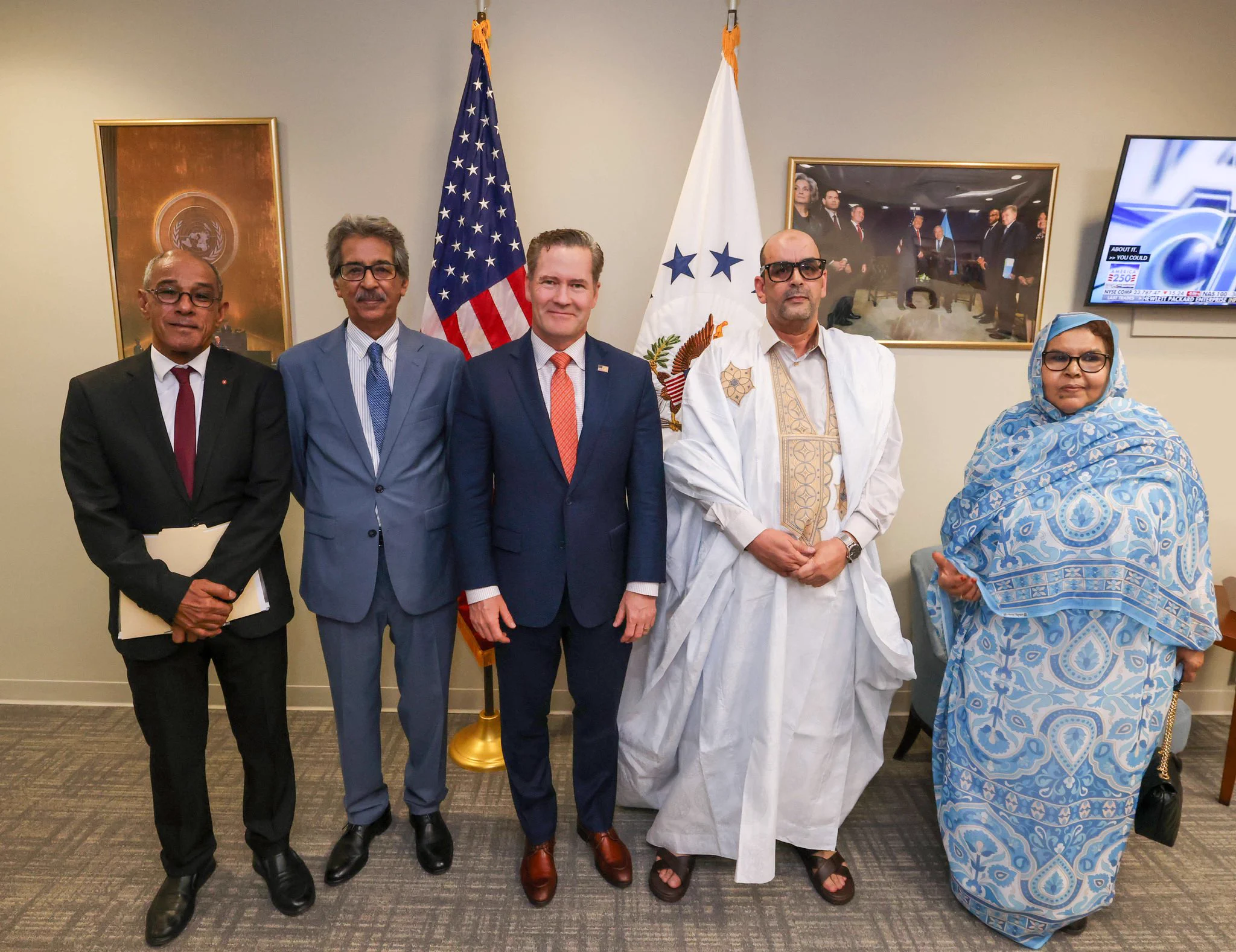
The reference gained weight alongside a June 30 message from US Ambassador to the UN Mike Waltz, who received an MSP delegation in New York and called it “Sahrawi voices committed to peace, engagement and a lasting solution,” adding that “the world should listen to them.”
Great to meet the Sahrawi Movement for Peace today.
These are Sahrawi voices committed to peace, compromise, and a durable solution.
The world should hear them. pic.twitter.com/gRlB3lJI87
— Ambassador Mike Waltz (@USAmbUN) June 30, 2026
Waltz received a Polisario delegation three months later, announcing the late-September meeting on X himself rather than through the group’s official news agency. His message was different. He noted that refugees in the Tindouf camps have waited 50 years, “deserve real choices, not another decade of waiting,” and that “the foundations of the solution are on the table.”
The delegation included Mohamed Salem Ould Salek, who ran Polisario diplomacy for decades, yet the group issued no statement. The Sahrawi writer Salek Ahmed Lanal found the silence telling for an organization that routinely converts every international contact into political gain.
That phrasing carried added weight after Resolution 2797, which set the Moroccan autonomy proposal as the basis for a political solution without contradicting self-determination. Algeria, by contrast, held to its traditional line.
At the 81st UN General Assembly last month, Foreign Minister Ahmed Attaf again defended decolonization and recognition of the Polisario as the Sahrawi representative.
For the MSP, the picture has shifted. The armed movement that monopolized Sahrawi representation for half a century, Lanal argued, is no longer alone, and can no longer claim a political monopoly on the Sahrawi voice.
Read also: UN Resolution 2797 Shifts Sahara Issue Toward Final Settlement, Hilale Says