
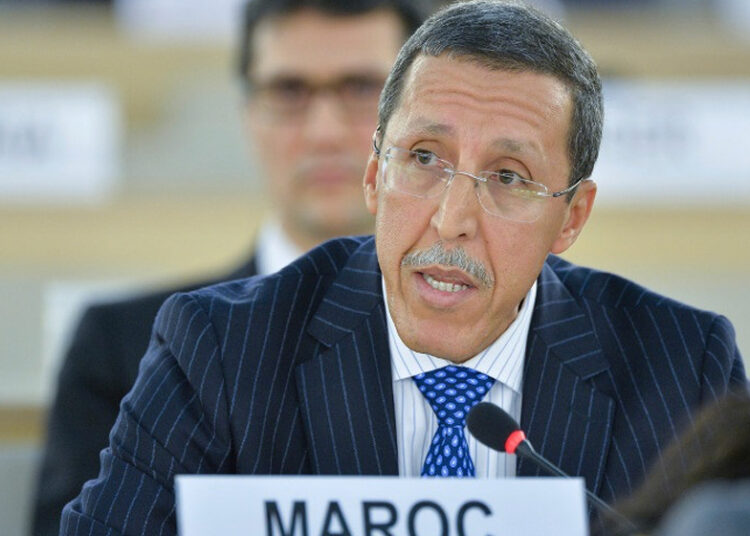
Casablanca – Morocco’s ambassador to the United Nations, Omar Hilale, said Resolution 2797 marks a major shift in how the UN addresses the Sahara issue, moving from managing the dispute to seeking a final settlement.
Speaking yesterday before the UN Fourth Committee in New York, Hilale described the resolution as an “irreversible turning point” compared with previous Security Council resolutions. He said the text places Morocco’s autonomy initiative at the center of negotiations and establishes it as the sole basis for settling the regional dispute.
The resolution also places the proposed autonomy status within the framework of Moroccan sovereignty for the first time, Hilale said. It reaffirms the responsibility of Morocco, Algeria, Mauritania, and the Polisario Front, calling on all four parties to pursue a lasting political solution in good faith and without preconditions.
Direct talks and renewed calls for commitments
Hilale said Resolution 2797 helped pave the way for three meetings between the four parties in Washington and Madrid. The talks took place under the co-presidency of the UN secretary-general’s personal envoy and the United States’ permanent representative to the UN.
During the negotiations, Morocco presented a developed autonomy framework detailing the powers and responsibilities of its executive, legislative, and judicial bodies.
Hilale said the proposal “reconciles political realism, democratic governance and the aspirations of the populations.”
He called on all parties to take responsibility for implementing the resolution, arguing that the current political momentum requires concrete action. Security Council resolutions must be implemented, discussions must proceed without preconditions, commitments must be honored, and the ceasefire must be restored and respected, he said.
The ambassador also drew attention to the humanitarian dimension of the dispute, particularly the situation of people living in the Tindouf camps. He said the international community cannot continue relying solely on humanitarian assistance for what he described as the world’s second-longest refugee crisis.
Morocco, he added, supports durable solutions under international law and the doctrine and practice of the UN refugee agency. These include voluntary repatriation, resettlement in a third country or integration into the host country, depending on the free choice of the populations concerned.
Hilale addresses self-determination and regional cooperation
The ambassador also defended Morocco’s position on self-determination, citing UN General Assembly resolutions 1541 and 2625. He argued that the principle is not limited to independence and can include another political status freely chosen by a people.
Hilale further rejected calls for a referendum, saying the Security Council had moved away from that option decades ago. He also pointed to Morocco’s September 23 legislative elections, arguing that elected representatives from the Sahara region represent its population.
He said the outcome of the resolution and the Washington and Madrid negotiations could open the way to a lasting settlement and a new phase of regional cooperation.
Hilale linked that objective to King Mohammed VI’s call to revive the Arab Maghreb Union through mutual respect, cooperation and complementarity among its five member states.
He also called for a more connected southern Mediterranean, a more secure and integrated Sahel, stronger Atlantic-African links and greater stability across Africa, with countries focusing on development and shared prosperity.