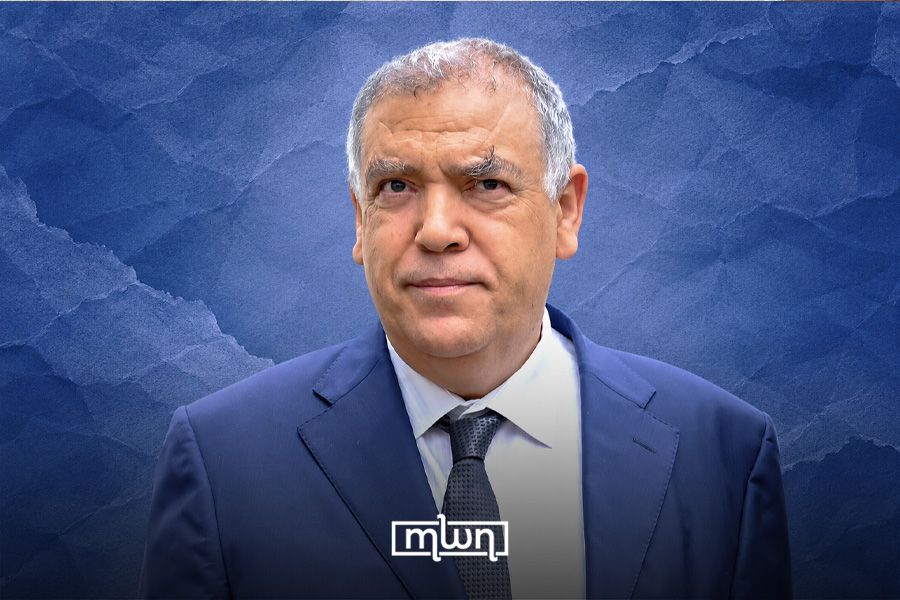
Marrakech – Abdelouafi Laftit has retained his position as Morocco’s Minister of the Interior after King Mohammed VI appointed the new government led by Fatima Ezzahra El Mansouri on Friday.
His reappointment extends a tenure that began on April 5, 2017, under former Head of Government Saadeddine El Othmani. He subsequently served in Aziz Akhannouch’s government and now remains in office under Morocco’s first female head of government.
Laftit’s career began outside electoral politics. Born on September 29, 1967, in Tafersit, Driouch province, he studied engineering in France, graduating from École Polytechnique in 1989 and École Nationale des Ponts et Chaussées in 1991.
After beginning his professional career in France’s financial sector, he joined Morocco’s Office d’Exploitation des Ports (ODEP). Between 1992 and 2002, he successively managed the ports of Agadir, Safi, and Tangier.
In May 2002, he became director of the Tangier-Tetouan Regional Investment Center before moving into territorial administration. King Mohammed VI appointed him governor of Fahs-Anjra in September 2003 and governor of Nador in October 2006.
In March 2010, Laftit took charge of the company responsible for redeveloping Tangier’s former port area. Four years later, in January 2014, he was appointed wali of Rabat-Salé-Zemmour-Zaer and governor of Rabat Prefecture.
Those responsibilities preceded his appointment to the Interior Ministry, which oversees territorial administration, coordinates with governors and walis, supervises local authorities, and manages key aspects of electoral administration and domestic security.
A major component of his ministerial record has been the implementation of advanced regionalization, the reform intended to strengthen Morocco’s regions, clarify their responsibilities, and improve territorial governance.
Laftit participated in national conferences on advanced regionalization in 2019 and December 2024. At the latter gathering in Tangier, government departments and Morocco’s 12 regions signed four framework agreements covering the next stage of implementation.
In April 2025, he chaired a meeting with regional officials to examine an implementation roadmap, as authorities sought to translate those agreements into administrative measures and development projects.
Another major initiative followed King Mohammed VI’s July 29, 2025, Throne Day speech, calling for a new generation of integrated territorial development programs to reduce regional inequalities.
Laftit subsequently chaired a coordination meeting in Tetouan on August 1 to begin implementing the royal directives. The programs prioritize employment, education, healthcare, sustainable water management, and infrastructure development, aimed at connecting national investments more directly to the needs of local communities.
His ministry also oversees important elements of the National Initiative for Human Development (INDH), launched in 2005. Its third phase, introduced in 2019, has focused on early childhood development, education, healthcare access, youth opportunities, and economic inclusion.
Official program figures report 10,120 preschool units, 133 youth support platforms, and approximately 11,000 businesses created and supported. These are results of a national program involving multiple institutions rather than achievements attributable to one minister alone.
Local transportation has formed another major part of his portfolio. In January 2025, Laftit presented a MAD 11 billion ($1.1 billion) investment program covering 2025-2029 to modernize Morocco’s urban bus services.
The program covers 37 local authorities and the planned acquisition of approximately 3,746 buses. It introduces a management model involving public financing for vehicles and maintenance, with private operators managing services under delegated contracts.
On water and sanitation, Laftit reported in July 2025 that cumulative investment in sanitation infrastructure had reached MAD 48.58 billion ($4.858 billion) by the end of 2024, under a national program launched in 2006.
He also outlined a MAD 56 billion ($5.6 billion) investment program for 2025-2034, including wastewater treatment and reuse. Morocco reused approximately 53 million cubic meters of treated wastewater in 2024, according to the figures he presented.
Electoral administration has been another central responsibility. His ministry coordinated preparations for the combined legislative, regional, and municipal elections in 2021 and the September 23, 2026, parliamentary elections.
Laftit announced the 2026 provisional results, which gave El Mansouri’s Authenticity and Modernity Party (PAM) 97 seats, followed by the National Rally of Independents (RNI) with 66 and Istiqlal with 65. Official turnout stood at 38.08%.
His latest appointment therefore keeps an experienced territorial administrator in charge of a ministry whose responsibilities extend from elections and internal security to regional governance, infrastructure development, and local public services.
As El Mansouri’s government begins its mandate, Laftit enters his tenth year at the Interior Ministry, retaining responsibility for several national programs and administrative reforms initiated or continued during his previous terms.
Read also: New Government: Nasser Bourita, Morocco’s Diplomacy Chief, Stays as Foreign Minister