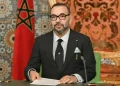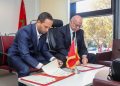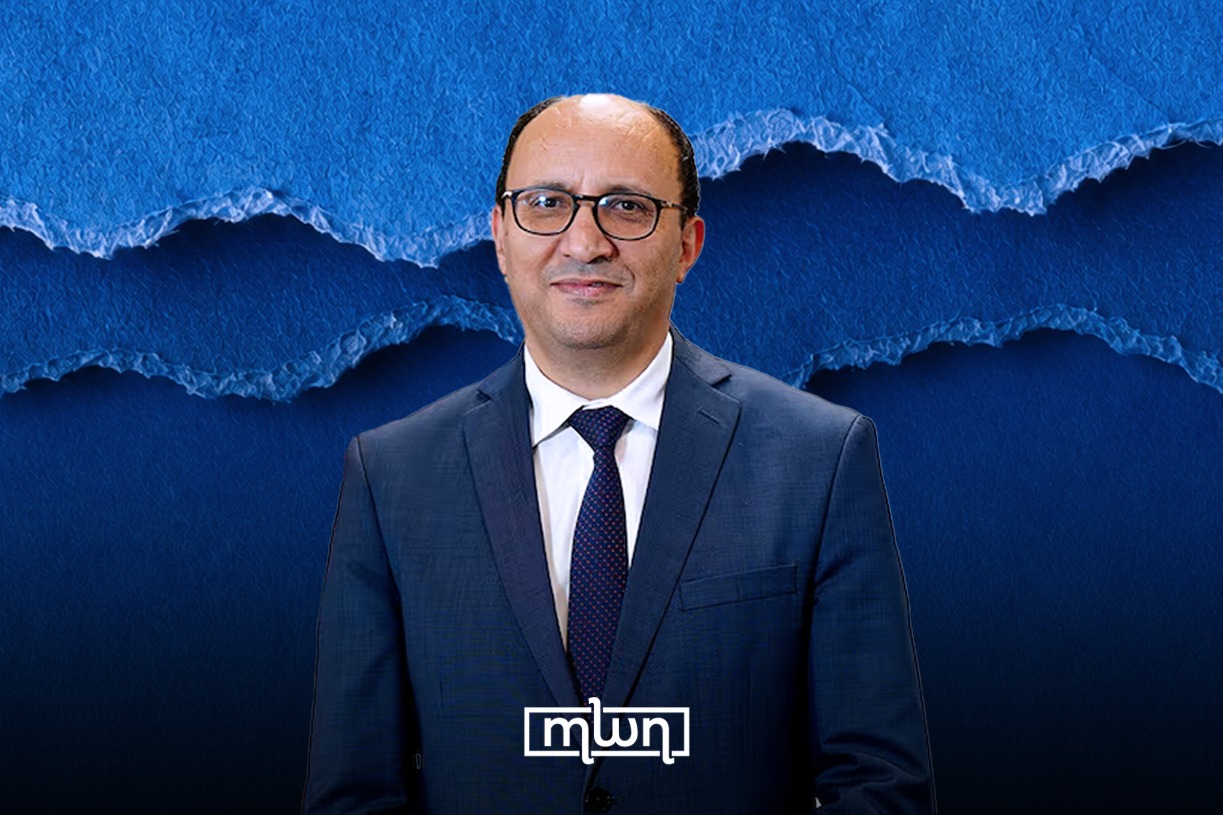
Casablanca – King Mohammed VI appointed Hassan Tariq as Morocco’s new Secretary-General of the Government on Friday as part of the new government led by Fatima Ezzahra El Mansouri.
The appointment brings a familiar figure from the Socialist Union of Popular Forces (USFP) into a key legal and administrative role within the executive.
Tariq succeeds Mohamed Hajoui, who has held the position since 2017. His appointment comes as the USFP returns to the governing coalition after five years in opposition, having last participated in government under Saad Eddine El Othmani from 2016 to 2021.
Before taking up his new duties, Tariq served as Morocco’s Ombudsman from March 2025. His new role means he can no longer head the institution, leaving the position vacant pending the appointment of a successor.
The academic foundations behind his career
Born in 1974 in Bhalil, Tariq built his academic career around public law, political science, and administrative sciences. He earned a bachelor’s degree in public law, specializing in internal administration, from Sidi Mohamed Ben Abdellah University in Fez in 1995. He later pursued postgraduate studies in political science and administrative sciences.
In 2004, he completed a doctorate in public law at Mohammed V University’s Faculty of Legal, Economic, and Social Sciences in Agdal, Rabat.
His academic training laid the foundation for a career that would span public administration, university teaching, parliamentary politics, diplomacy, and institutional leadership.
From public administration to government leadership
Tariq began his professional career in public administration as an inspector at the Ministry of Finance, where he worked from 1997 to 2002. He then joined the cabinet of the Secretary of State in charge of Youth, serving as an adviser from 2002 to 2007.
Alongside his administrative work, Tariq developed a career in higher education. He taught at Hassan I University in Settat from 2005 to 2011 before becoming a professor of higher education at Mohammed V University in Rabat.
From 2017 to 2019, he also headed the Department of Public Law and Political Science at the university’s Souissi faculty.
His political engagement, however, began much earlier. As a teenager, he became involved with the USFP’s student movement and later served as secretary-general of the party’s youth organization, the Chabiba Ittihadia.
Tariq went on to win a parliamentary seat for the USFP in the 2011-2016 legislative term, representing the party in the House of Representatives and serving on its Justice, Legislation and Human Rights Committee.
Tariq then moved into diplomacy, as King Mohammed VI appointed him Morocco’s ambassador to Tunisia in February 2019, a position he held until March 2025.
That month, the King appointed him the country’s Ombudsman, placing him at the head of the institution responsible for strengthening relations between citizens and public administration and addressing complaints involving administrative services.
His work has also extended into academic and civic life. Tariq previously chaired the Moroccan Political Science Association and founded and directed the Moroccan Journal of Public Policies (REMAPP).
His new duties
As Secretary-General of the Government, Tariq takes on a role central to the legal functioning of Morocco’s executive branch.
The General Secretariat of the Government coordinates the government’s legal work by examining draft legislation and regulations submitted by relevant government authorities.
It also provides legal advice to the government, public institutions, and other entities governed by public law, while helping ensure consistency across the national legal system.
The institution prepares the agenda for Council of Government meetings for approval by the Head of Government and follows up on approved legal texts.
The institution also coordinates the preparation of legislation concerning the right of association, monitors the application of laws governing regulated professions, and issues authorizations to practise professions within its remit.
Beyond these responsibilities, the Secretariat works to improve access to legal information, strengthen legal skills within public administration, and develop legal intelligence and monitoring.
Tariq’s appointment brings together his experience in public administration, law, parliamentary politics, diplomacy, and institutional leadership, placing him at the center of the government’s legal coordination.