Rabat – Morocco’s Head of Government Fatima Zahra El Mansouri placed women’s empowerment among the commitments of her government’s five-year program on Monday, pledging to expand women’s participation in decision-making, improve their economic independence, and strengthen protections against discrimination and violence.
Presenting the government’s program for 2026-2031 before both houses of Parliament, El Mansouri outlined measures that link gender equality to institutional reform, social protection, employment, education, and access to essential services.
The program reaffirms the constitutional principle of parity and promises greater representation for women in decision-making positions. It also commits the government to stronger support for women’s entrepreneurship, access to decent employment, and financial autonomy, alongside improved protection and support services for women who experience violence.
The commitments come as Morocco seeks to translate its institutional reforms and economic ambitions into tangible improvements in living conditions. The program presents women’s empowerment as part of a broader effort to reduce social inequalities and extend economic opportunities to vulnerable groups.
A political milestone and a test of representation
El Mansouri opened her address by expressing gratitude to King Mohammed VI for appointing her to lead the government, describing the appointment as recognition of Moroccan women.
Her position marks a significant moment for women’s representation in Moroccan politics. However, the government’s proposed measures go beyond the symbolism of a woman at the head of government, addressing women’s access to positions of authority across public institutions.
The program pledges to expand women’s participation in decision-making and strengthen the constitutional institutions responsible for rights, equality, and parity. It also places these commitments within a wider agenda of democratic governance, the rule of law, and institutional accountability.
The challenge will be to translate these pledges into measurable changes in women’s representation and influence. Greater participation in decision-making requires more than access to political positions; it also depends on women’s ability to shape policies, influence institutional priorities, and participate in economic and public life on equal terms.
The government’s commitments do not, by themselves, establish specific representation quotas or implementation deadlines for every measure. Their impact will therefore depend on the policies, resources, and monitoring mechanisms that follow the program.
Economic independence and equal opportunities
Women’s economic empowerment forms another central component of the government’s agenda.
El Mansouri pledged to strengthen women’s financial independence through decent employment, support for entrepreneurship, and improved access to economic opportunities. The program also commits the government to addressing discrimination and promoting equal opportunities.
These measures connect gender equality with the government’s broader employment agenda, which includes support for small businesses, vocational training, and efforts to improve the transition from education to work.
The program also identifies young people’s exclusion from education, employment, and training as a major challenge. It cites approximately 2.9 million people aged 15 to 29 outside these systems and an unemployment rate of 29.2% among those aged 15 to 24.
Although these figures cover young people as a whole, women’s economic inclusion will form an important part of the government’s ability to expand employment and reduce social vulnerability.
The government also intends to strengthen women’s access to education, healthcare, and social protection, particularly in rural areas and among vulnerable populations.
These commitments acknowledge that economic autonomy depends on more than job creation. Access to essential services, opportunities for training, and effective social protection also shape women’s ability to enter the labor market, establish businesses, and maintain independent incomes.
Stronger protection against violence and discrimination
The government also pledged to combat violence against women and improve access to protection and support services.
The commitment forms part of a wider effort to strengthen human rights, civil liberties, and the rule of law, with the program calling for the integration of human rights into public policies.
El Mansouri’s agenda also identifies women, children, older people, and people with disabilities as groups requiring specific protection and support.
The program’s approach therefore links women’s rights to the wider functioning of public institutions and social services. Better access to protection requires effective support systems, while efforts to combat discrimination depend on the implementation of legal safeguards and equal treatment in public life.
Widows’ pensions to double under proposed reforms
One of the program’s clearest financial commitments concerns widows’ pensions.
The government plans to increase the pension paid to an eligible surviving wife to 100% of her deceased husband’s main pension, compared with the current 50%, while safeguarding the rights of orphans and other beneficiaries.
The measure forms part of a broader pension reform agenda that seeks to expand social protection, improve the sustainability of pension systems, and extend coverage to people without adequate pension entitlements.
The government also pledged to gradually raise the minimum main pension to MAD 3,000 per month across the different pension systems.
For widows who depend on survivor benefits, the proposed increase could provide greater financial security and reduce their exposure to poverty. Its practical impact will depend on eligibility rules, the treatment of other beneficiaries, and the funding arrangements established during implementation.
The pension commitment also places women’s economic security within the government’s wider social protection agenda, which includes more targeted assistance, improved healthcare coverage, and efforts to ensure that benefits reach households according to their actual needs.
Family reform and social inclusion
The program further connects women’s rights with family policy and social cohesion.
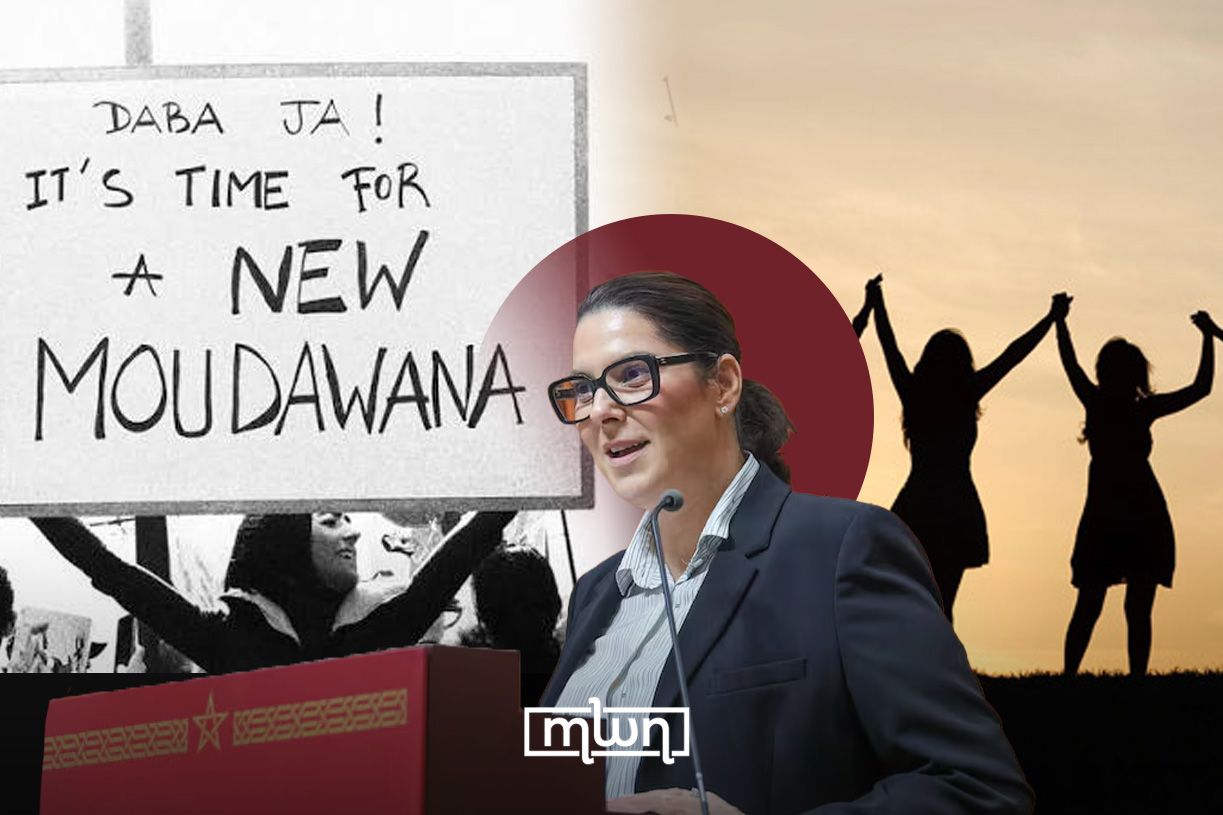
El Mansouri pledged to continue implementing reforms to the Family Code (Moudawana) in accordance with the guidance of King Mohammed VI, in his capacity as Commander of the Faithful.
The government also committed to developing integrated policies for children, young people, and older people, while strengthening protections for people with disabilities and supporting vulnerable households.
These commitments place family reform within a broader framework of social policy. The government’s approach seeks to preserve the family’s role in social stability while addressing questions of equality, protection, and access to opportunities.
From commitments to measurable results
El Mansouri’s program sets out an ambitious agenda for Morocco’s social and economic development, including employment creation, education reform, healthcare, housing, and efforts to narrow regional disparities.
The government has pledged to achieve average annual economic growth of 5% between 2027 and 2031, keep inflation at around 2%, and maintain the budget deficit at or below 3% of gross domestic product throughout the 2026-2031 term.
It has also promised to increase social assistance from MAD 500 to MAD 1,000 by the end of its term and expand measures to improve household purchasing power.
These objectives provide the economic context for the government’s social commitments, including its pledges on women’s empowerment. Delivering stronger protection, better public services, and greater economic participation will require funding, effective administration, and coordination across institutions.
The program also reaffirms Parliament’s legislative, oversight, and evaluation roles, offering a framework through which lawmakers can scrutinize implementation and assess whether the government meets its commitments.
For women, the central question will be whether the program produces tangible changes in political representation, access to decent employment, protection from violence, and financial security.
El Mansouri’s address establishes women’s empowerment as part of the government’s stated priorities. The next test will be whether these commitments translate into concrete measures that expand women’s rights and opportunities across Morocco, including in rural communities and among households most exposed to economic and social vulnerability.