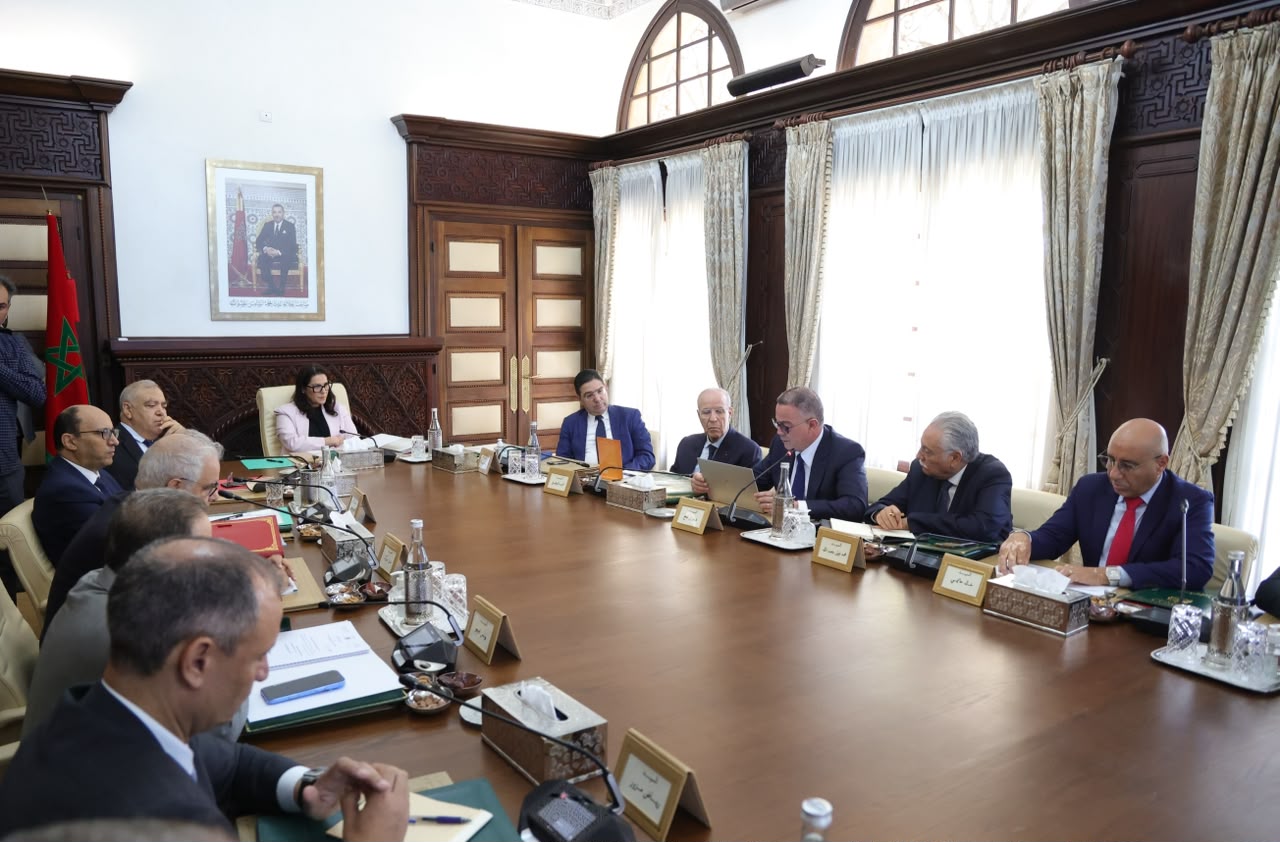
Casablanca – The Council of Government approved draft Finance Bill No. 60.26 for the 2027 budget year in Rabat today, at a meeting chaired by Head of Government Fatima Ezzahra El Mansouri.
Fouzi Lekjaa, minister of economy, finance and public performance, presented the draft, government spokesperson Samir Belfkih said in a statement.
The government submitted the Finance Bill to Parliament today, while the House of Representatives will hold two plenary sessions on Thursday to discuss the government’s policy statement and vote on it. The first session will begin at 10 a.m., with parliamentary groups debating the government’s program. At 6 p.m., Head of Government Fatima Ezzahra El Mansouri will respond to lawmakers’ interventions before the House votes on the program.
Debate on the Finance Bill is scheduled to begin the following day, on Friday.
The draft builds on guidelines that the Council of Ministers approved on October 17. It sets out five priorities, beginning with support for purchasing power and social protection.
The government plans to launch a structural reform of markets and prices in 2027 and increase direct social assistance. It also aims to expand medical coverage, improve public health and education services, and widen access to housing through direct housing assistance.
Another priority concerns youth employment. The government plans a national integrated youth program for 2027 to 2031, linking training with business incubation, financing, loan guarantees and access to markets.
The draft also earmarks around MAD 25 billion for a new generation of integrated territorial development programs. The government wants to clarify responsibilities between central and regional authorities and improve coordination on development projects.
Read also: King Mohammed VI Chairs Council on 2027 Budget, MAD 25 Billion for Regional Development
Other priorities include strengthening Morocco’s water, energy, food and digital sovereignty, accelerating renewable energy development, continuing its green hydrogen offer and gradually implementing the roadmap for gas infrastructure.
The government also plans to support private investment through the Investment Charter, continue reforming Regional Investment Centers and assist very small, small and medium-sized businesses. It aims to finance major development projects and build new industrial ecosystems while preserving macroeconomic and budgetary stability.
The government’s economic outlook projected 4.7% growth in 2026, inflation of 0.7% and a budget deficit of 3% of GDP. These figures form part of the outlook for the current year, rather than confirmed targets for 2027.