
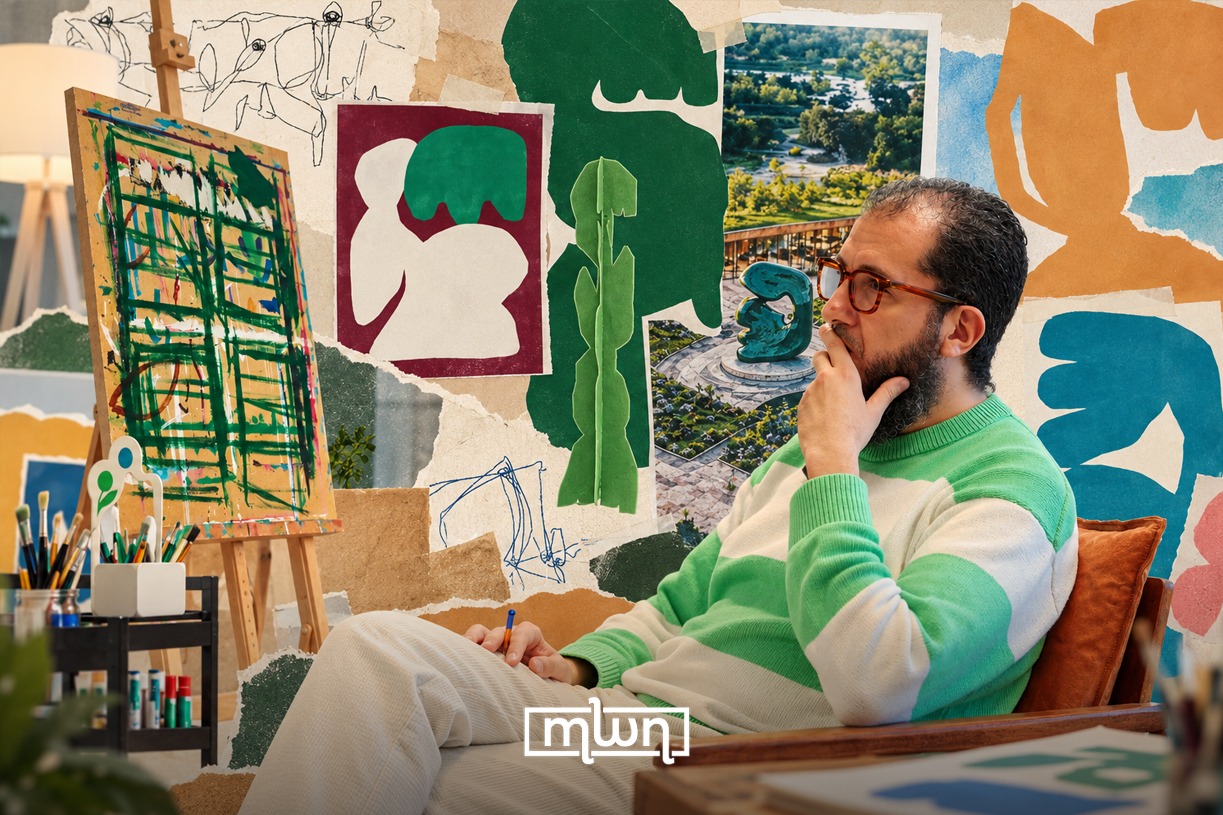
Casablanca – Born and raised in Amsterdam to a family with roots in Marrakech, Hakim El Amrani is the founder of Studio NousNous, a Netherlands-based studio working across art, interior architecture, landscape, and urban design.
His work brings together nature, spirituality, and the spaces people inhabit; it is guided by a question he has carried for years about what connects people across different backgrounds and beliefs.
For El Amrani, the answer begins with nature. “You can have all kinds of people, different colors, young, old, backgrounds, beliefs, religions,” he told Morocco World News (MWN). “But believe me, for everyone, grass is simply grass and a tree is a tree.”
Finding common ground through nature
El Amrani said his interest in nature as a shared reality grew as he tried to connect his Muslim faith with his creative vision. After graduating in spatial design from the Willem de Kooning Academy in Rotterdam, he began an internship at an architecture firm that also designed bars. The work did not sit comfortably with his identity, he said, and he questioned whether it was helping people.
He began looking for a design approach that could be “unifying and timeless.” Nature became that starting point. As he read about nature-inspired design, he also noticed the many references to trees, rivers, and greenery in the Quran, including descriptions of Paradise.
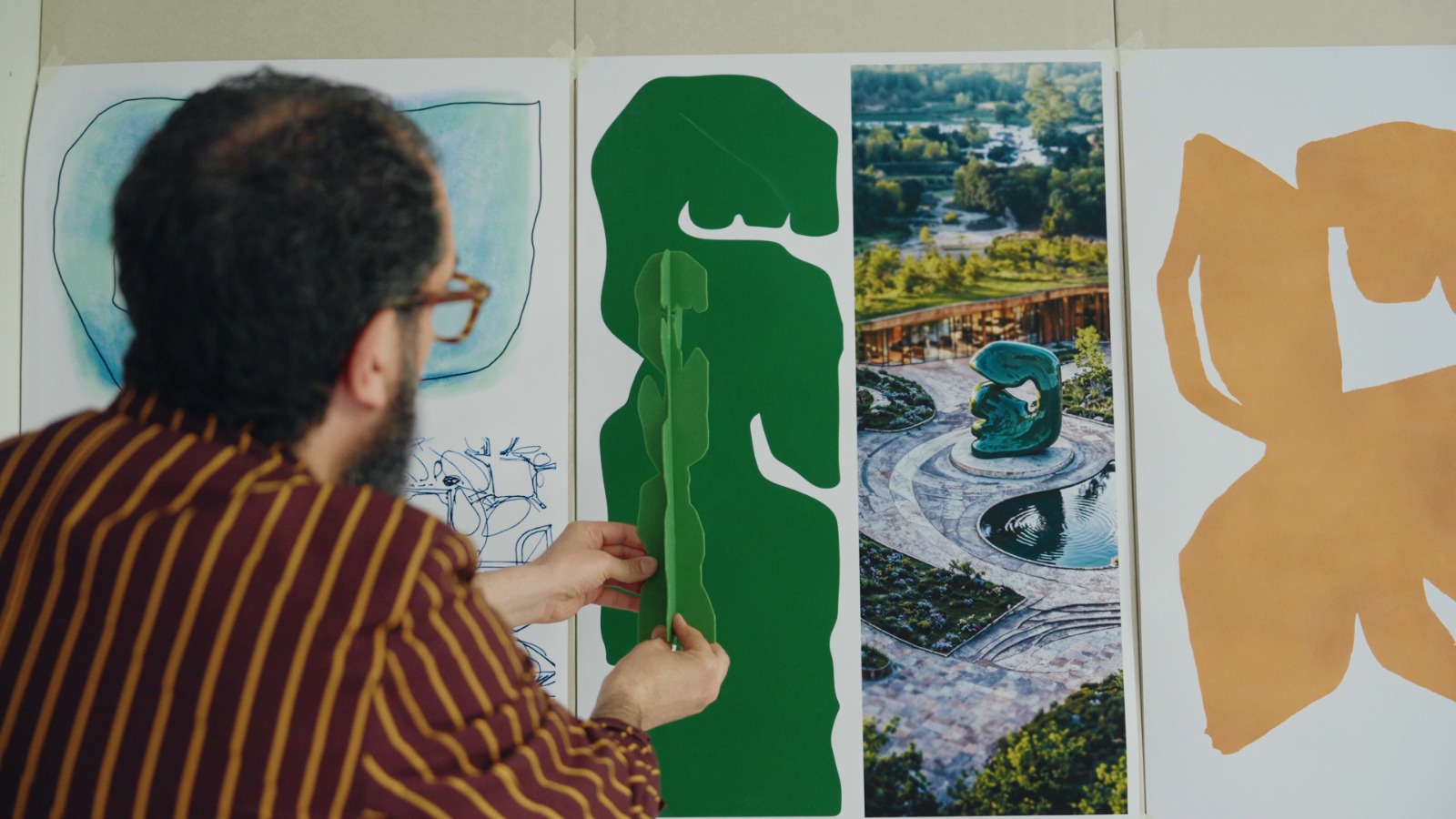
This led him to reflect on why people with different beliefs still feel a deep connection to nature. El Amrani relates this to the Islamic concept of “fitra,” which he describes as an innate human nature shared by everyone, even though people may express it in different ways. He said this common instinct helps explain why nature can bring people together despite differences in religion or their understanding of human origins.
For El Amrani, this shared connection is rooted in the belief that Allah created nature as humanity’s original home. He contrasted this with the view held by people who do not believe in an afterlife and understand human beings as having evolved from nature. Although their explanations differ, he sees their connection to nature as common ground, a starting point from which people can recognize what they share rather than what separates them.
“That moment gripped me and never let me go,” he said.
Read also: Morocco Launches Ander.ma Platform to Combat Art Counterfeiting
He founded Studio NousNous in 2019. The name means “half and half” in Moroccan Arabic, reflecting his connection to Amsterdam and Marrakech, as well as the studio’s approach to bringing the outside world into interior spaces.
The studio focuses on biophilic design, which connects people with nature through the built environment. El Amrani said its work rests on two pillars: raising awareness and design.
Through lectures and presentations, he encourages people to reconsider the role of greenery in their lives before translating that understanding into a space, object or artwork.
He has spoken on international platforms including TEDx, Polestar, the Stedelijk Museum and the Rewilding Academy. His clients range from individuals seeking healthier homes to developers planning buildings, neighborhoods and cities. For him, every project begins with a question about what best serves the client, people’s well-being and the environment.
From a miniature city to a wider world
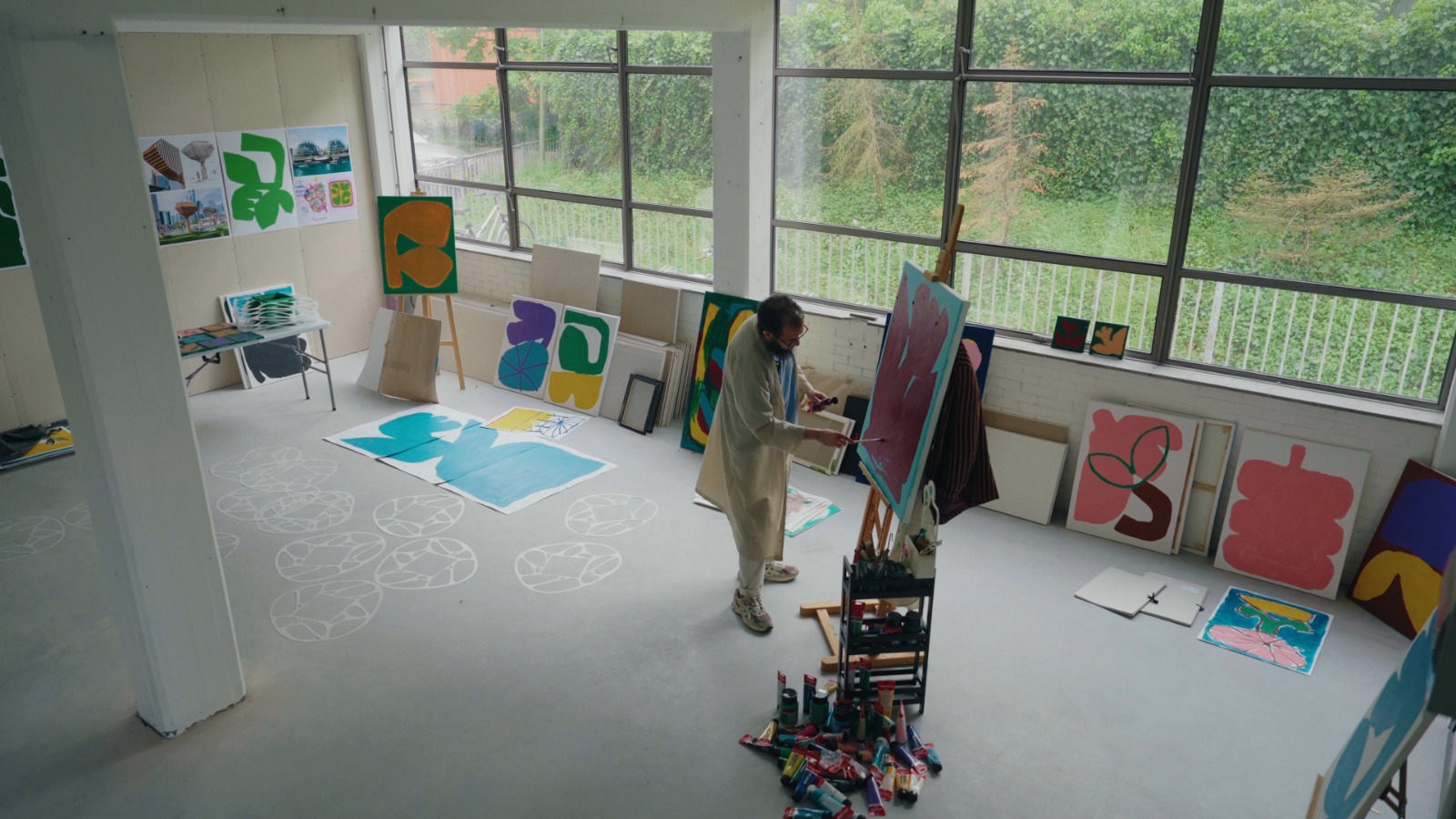
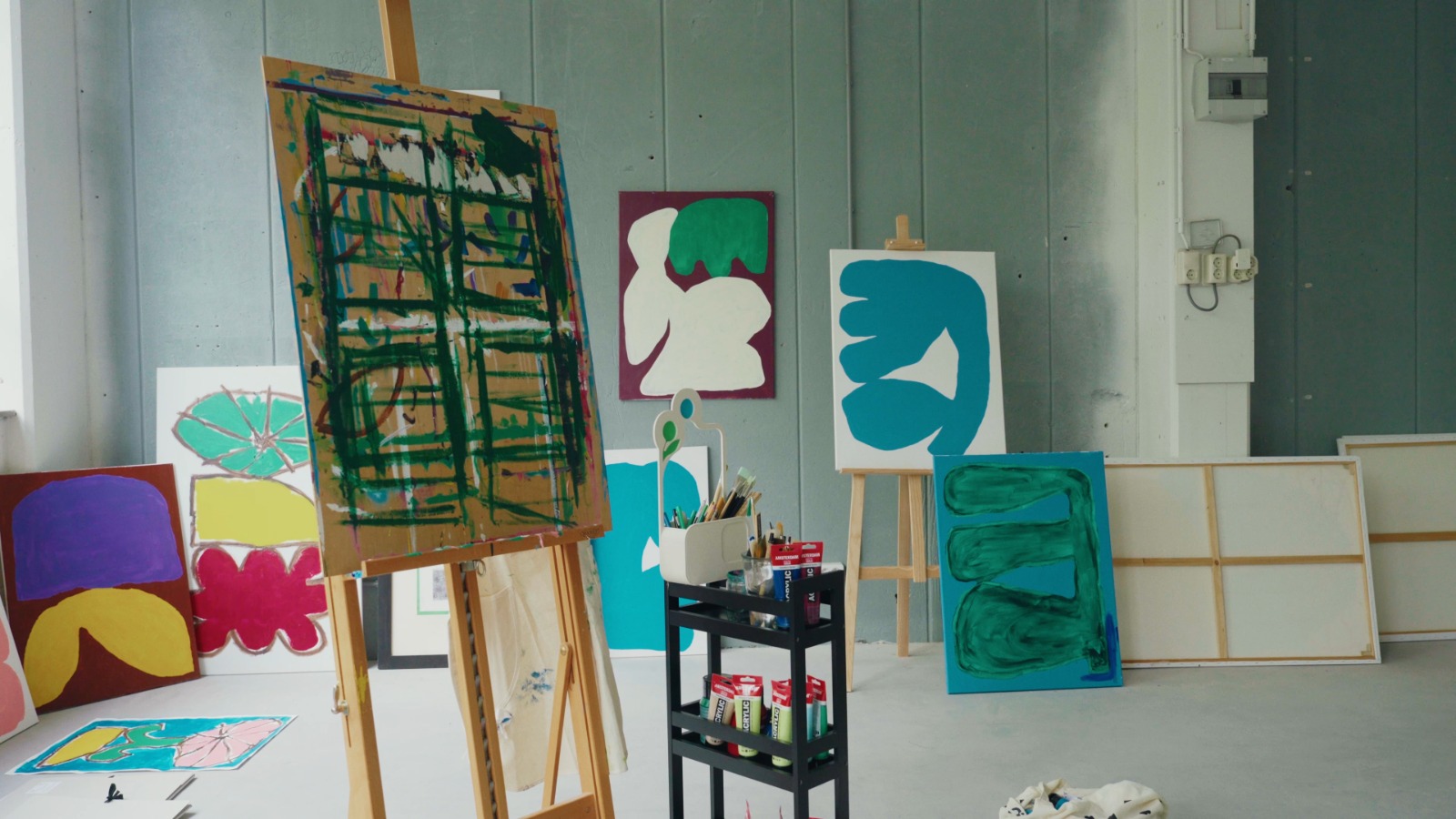
That approach explains why El Amrani moves between paintings, sculptures, murals, objects, gardens and architectural spaces. He calls the idea connecting these different forms the “green thread,” arguing that the transition toward greener cities cannot happen through isolated disciplines.
“The accelerated transition to a green city can no longer take place linearly,” he said. “It must instead occur organically.”
El Amrani’s recurring images of a tulip and a palm tree connect this philosophy with his own identity. The tulip is associated with the Netherlands, while the palm tree evokes Marrakech. He often combines the two into a single abstract form, inviting viewers to recognize something familiar while looking closer.
He calls this his “Zoom In and Zoom Out” method. From a distance, viewers see an organic shape that connects them with nature. Up close, the texture and the combination of the two plants become clearer, adding a layer of cultural identity to a form that first speaks to a shared human experience.
His work has appeared in several international settings. His ZELL Frame object was shown at Design Museum Den Bosch. He also created an 11-by-3-meter mural for a hotel designed by the late architect Zaha Hadid. Paintings he made now hang in the main hall of the Dutch Embassy in Abu Dhabi after the Dutch Ministry of Foreign Affairs acquired them for its Dutch Art Collection.
El Amrani and his collaborators spent more than a year making The Nature of Art, a documentary following his work and the people connected to it in the Netherlands and the United Arab Emirates.
He wanted the film to explore questions beyond art and design, including whether modern environments reflect what people need or whether people have simply grown accustomed to places that no longer serve them.
“With this documentary, I therefore want not only to take people into my creative world, but above all to invite them to question their own reality,” he told MWN.
A father’s influence, and what remains
One of the most personal parts of El Amrani’s story reaches back to his childhood. His father, Mohamed El Amrani, passed away on August 8. Hakim remembers him as someone who helped everyone around him and could repair almost anything, from bicycles and furniture to computers and electronics.
As a child, El Amrani sometimes ran errands for his father, who worked with electronic components at his desk late into the evening. When he was 11, he was sent to buy small parts used to solder circuit boards. Looking at the components, he began to imagine a city, with each tiny piece resembling a house.
“Whether unconsciously or consciously, my father introduced me to a whole new perspective,” he explained. “Suddenly, I had a sort of miniature abstract mini-city right in the palm of my hand.”
He said he still recognizes his father’s determination, calm, and commitment to finishing what he started in his own work.
His father’s death also brought him to a stark reflection about the spaces he designs. At the burial, he thought about how even the most beautiful interiors do not accompany a person into the earth.
The moment brought him back to his Islamic faith and the importance of good deeds and the hereafter. He said he has made peace with the loss through the belief that his work is a form of stewardship, inspired by nature and intended to help people.
“I would not be who I am or able to do what I do without my father,” he said. “I am eternally grateful to Allah and, secondly, to my father.”
Read also: The Amazigh Woman as Memory Keeper: Soundousse Belayachi’s Art of Cultural Remembrance
For El Amrani, his work ultimately comes back to gratitude, faith, and the desire to make life easier for others. He sees his creative abilities not as something he owns, but as a gift from Allah, and credits both his faith and his parents for shaping the person he has become.
El Amrani explained that whatever knowledge he has comes through God’s “grace, mercy and kindness.” He also expressed gratitude to his parents for nurturing him and helping him stand on his own feet.
He said he finds joy in making people happy and creating spaces where they can feel comfortable, without worries. Whether he is designing an interior, a building, a garden or a work of art, he hopes to use his creative abilities to contribute to people’s well-being.
That desire now informs his next ambition. El Amrani hopes to design a mosque, which he described as “one of the houses of Allah. Baytullah.”