 Join on WhatsApp
 Join on Telegram
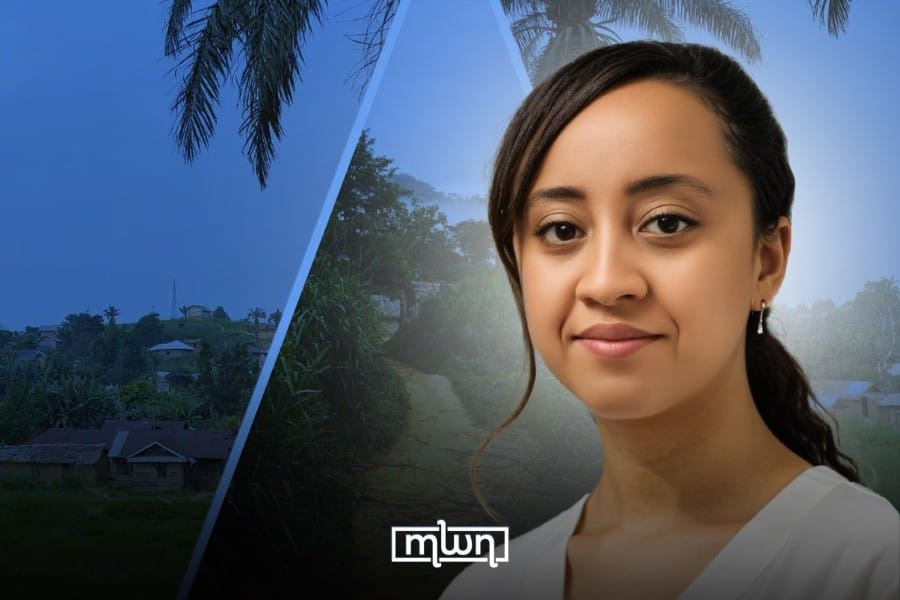
Rabat – In a world marked by conflict, crisis, and displacement, humanitarian aid workers often find themselves on the frontlines, bringing hope to communities in need. For Basmah Lambarki, a 34-year-old Moroccan currently working as a Human Resources and Finance Project Manager with Médecins Sans Frontières (MSF) in the Democratic Republic of Congo (DRC), this calling has become a lifelong mission.
With years of experience in organizations like MSF, she has dedicated herself to serving vulnerable populations, drawing deeply on her Moroccan heritage and personal resilience.
Lambarki’s work in the DRC remains a powerful driving force behind her humanitarian efforts, as she continues to aid communities amidst the escalating crisis.
The ongoing conflict between the Congolese army and the M23 movement has intensified since January 2024, further destabilizing the eastern DRC and causing mass casualties and displacement. North Kivu, South Kivu, and Ituri provinces have been the hardest hit, with over 5 million people displaced, including 2 million in the last two years.
As the fighting drives more people into displacement camps around Goma, conditions worsen due to overcrowding and a lack of basic necessities such as shelter, food, water, sanitation, and healthcare.
Many new arrivals have nothing but makeshift shelters, and in areas like Masisi, displaced families are forced to take refuge in schools, churches, and sheds.
These dire circumstances are exacerbating health risks, increasing the likelihood of disease outbreaks, and further straining already limited resources.
Basmah’s journey into humanitarian work was not without challenges. Despite beginning her career in a secure government role, she felt the need to go beyond conventional paths and pursue something more meaningful—ultimately finding her calling in the humanitarian sector.
“I spent over five years in a government position within a ministry, but I found myself stagnating,” she recalls in an interview with Morocco World News (MWN). Leaving that comfort zone to engage in humanitarian work has transformed Basmah’s life, providing her with opportunities for growth, learning, and fulfillment.
Today, she encourages young Moroccans to take similar leaps, noting that while traditional paths offer stability, humanitarian work brings unparalleled personal and professional rewards.
Influence of Moroccan roots
Reflecting on how her Moroccan background has shaped her approach, she notes: “Growing up in a diverse culture that values community and solidarity has instilled in me a deep sense of empathy and understanding for the challenges faced by vulnerable populations.”
She believes her Moroccan heritage has taught her the importance of collaboration and respect for local traditions, which boosts her ability to connect with the communities she serves. The Moroccan values of resilience and adaptability are qualities she finds essential when working in challenging environments.
These cultural roots also shape her interactions. “As Moroccans, we are naturally warm and hospitable, which fosters a sense of trust with local communities,” she explains.
This cultural warmth, combined with a commitment to understanding and respecting diverse beliefs, has allowed her to build meaningful relationships with the people she serves. Her approach includes what she calls “people intelligence,” a quality that has earned her the affectionate title of “mother” among her colleagues and the communities she supports.
As Basmah sees it, Morocco’s unique cultural heritage positions it as a potential bridge and leader in international humanitarian efforts, particularly in Africa and the Arab world.
“Morocco holds a unique position in international humanitarian efforts,” she says, “serving as both a bridge and a leader within Africa, the Arab world, and globally.” She believes that the country’s advances in healthcare, education, and social programs can inspire and support neighboring countries, especially through knowledge-sharing and training initiatives.
In her view, Morocco’s commitment to stability and development makes it well-suited to mediate international efforts in crisis-prone areas.
Connection to local communities
In her fieldwork, building connections with local communities is paramount. She underlines the importance of engaging directly with community members, local leaders, and health authorities to ensure that humanitarian initiatives are aligned with local needs.
“To gain insights into their specific healthcare challenges, we conduct regular community meetings and focus group discussions,” she explains.
Through these conversations, her team tailors their approach to respect local values, while also collaborating closely with local health workers to multiply the effectiveness of their services.
She stresses the role of local partnerships in creating sustainable healthcare solutions. By involving communities in planning and implementing healthcare projects, her team fosters a sense of ownership, which she believes is essential for the longevity of any program.
“Actively listening and adapting our strategies based on local input leads to healthcare solutions that are not only effective but also sustainable,” she says.
The dual challenge of disease and war in vulnerable regions
In her reflections on working in war-torn regions, Lambarki noted the constant struggle against both violence and disease. “These areas are not only battling the devastating consequences of conflict, but they also face the harsh reality of widespread diseases like malaria, cholera, and other preventable illnesses,” she shared.
The escalating violence in eastern Democratic Republic of Congo is exacerbating an already devastating humanitarian crisis, displacing millions who are now trapped in overcrowded camps with severely limited access to basic necessities. DRC, the second-largest country in Africa, is grappling with its highest displacement levels to date, with 7.2 million people forced from their homes, predominantly in the eastern provinces.
As one of the five major conflict zones with the highest number of grave violations against children, DRC ranks alongside Palestine, Somalia, Ukraine, and Syria, according to the UN. With 75% of the population living on less than $2.15 per day, the country remains one of the world’s poorest. Meanwhile, childhood vaccination rates have dropped to their lowest levels in three decades.
Since 1996, an estimated 6 million people have lost their lives due to conflict in the region. The lack of infrastructure and limited access to healthcare further hinder efforts to address these health crises, worsening the already dire situation.
In such environments, humanitarian work becomes not just about providing medical care, but also about building trust and instilling hope in the affected communities.
“It’s an exhausting cycle,” Basmah notes, “where the diseases are just as dangerous as the conflicts themselves. In many places, the hospitals are overwhelmed, and the resources are limited. Our presence, though small, can mean the difference between life and death.”
Despite these challenges, she believes that addressing health concerns in conflict zones requires more than just immediate relief. It involves long-term investments in health systems, education, and sustainable care practices that can outlast the current crises.
“Our goal isn’t just to patch up the wounds but to help these communities rebuild and empower them to care for themselves,” she explained.
Impact and inspiration
When asked about the impact of her work, she responded with a discernible note of humility, emphasizing the cumulative effect of “small wins.” She reflects on how her team’s solidarity with women affected by sexual and gender-based violence (SGBV) in local communities has been especially rewarding.
In particular, she spoke of the direct improvements in community health facilities, like constructing new hospital sections or drilling wells, as a tangible example of small but significant successes.
While she may not have a singular “wow” success story, she finds meaning in each daily victory: the professional growth of her colleagues, the empowerment of marginalized groups, and the improvement in healthcare access for vulnerable populations.
“These daily small victories create a ripple effect of positive change,” she explains. “Each moment reinforces why I am passionate about my work and the difference we can make together.”
Encouraging youth to take highly rewarding unconventional paths
Her message for young Moroccans considering humanitarian work is clear: don’t be afraid to go beyond conventional career paths. “Education, family, and society often emphasize job security, with government positions seen as the ultimate achievement,” she reflects.
While such focus is pragmatic, it can stifle ambition. She encourages youth to recognize that while traditional careers offer stability, humanitarian work offers profound personal and professional fulfillment.
She suggests that young people interested in humanitarian work start with local initiatives. “Youth can make a significant impact by volunteering with local NGOs, engaging in advocacy on social media, and organizing fundraising events,” she notes.
By participating in local governance and addressing critical issues such as mental health and gender-based violence, young people can drive meaningful change within their own communities.
Skills for humanitarian success
In her view, succeeding in humanitarian work requires a mix of pragmatism, resilience, and open-mindedness. “Working in this sector requires you to step out of your comfort zone, adapt to diverse environments, and build trust with communities,” she says.
Creativity, cultural sensitivity, and strong communication skills are also essential, as these allow humanitarian workers to respond effectively to the needs of those they serve.
She also underlines the importance of personal integrity and empathy in building trust, both with the communities and within her team. Basmah’s “people intelligence” enables her to be a nurturing and supportive leader, qualities that have helped her forge strong relationships and foster morale even in challenging environments.
Future aspirations and organizational evolution
Looking ahead, she hopes to see strengthened local healthcare systems that can endure crises, along with more robust international collaboration and funding for tailored health solutions.
“I envision a future where local health systems are strengthened, enabling communities to take charge of their own healthcare needs,” she shares. She also hopes that organizations like MSF continue to evolve by investing in local partnerships, integrating technology into operations, and advocating for systemic changes to address the root causes of humanitarian crises.
She believes that by embracing innovation and empowering local healthcare workers, humanitarian organizations can improve their responses to modern crises. “By continuously evolving and adapting, MSF can maintain its impactful role in the global humanitarian landscape,” she argues, stressing the importance of adaptability and cultural sensitivity.
Advice for aspiring humanitarians
For those interested in pursuing a career in humanitarian work, her advice is to build a strong foundation of skills and experiences, starting with relevant education and volunteer work.
Practical experience, she says, will not only enhance a resume but also develop essential skills like adaptability, teamwork, and cultural sensitivity. She encourages aspiring humanitarians to network with professionals in the field and remain committed to learning about global challenges.
In her career, this Moroccan humanitarian has found not just a profession, but a calling. And she wants her journey, rooted in the values of empathy, resilience, and cultural respect, to serve as an inspiration for the next generation of Moroccans who are ready to step beyond traditional paths and contribute to a better world.
Humanitarian work, she believes, offers an unparalleled experience, transforming one’s worldview and priorities. “You’ll find a home and a family in each project and every place you visit,” she says, noting that the friendships and experiences gained in humanitarian work are unlike any other. “The path may be demanding, but the rewards of making a difference in the lives of those in need are immeasurable.”