 Join on WhatsApp
 Join on Telegram
Doha – Mauritanian authorities have announced a new measure allowing Moroccan professional drivers to obtain three-month multiple-entry visas, marking a significant development in facilitating cross-border transportation between the two nations.
The Moroccan Embassy in Nouakchott confirmed that Mauritanian authorities have responded favorably to its request to enable Moroccan drivers operating in international road transport to secure multiple-entry visas valid for three months.
This new policy applies to drivers traveling between Morocco and Mauritania, as well as those transiting through Mauritanian territory to West African and Sahel countries.
Previously, Moroccan professional drivers were required to obtain a new visa for each entry into Mauritanian territory, a requirement that negatively impacted their operations and increased logistical costs for transport companies.
The embassy has advised professional drivers and international transport company managers to apply for the three-month multiple-entry visas through Mauritania’s electronic visa application platform, specifically selecting the “professional driver” option.
Morocco-Mauritania: A strategic corridor to Africa’s future
This visa facilitation comes amid intensifying cooperation between Morocco and Mauritania. Most recently, on Tuesday, the two countries signed a landmark electrical grid interconnection agreement in Nouakchott.
The agreement was signed by Tarik Hamane, Director General of Morocco’s National Office for Electricity and Drinking Water (ONEE), and Sidi Salem Mohaned Elabd, Director General of the Mauritanian Electricity Company (SOMELEC).
According to Jeune Afrique magazine’s analysis published Wednesday, “Rabat has made significant progress in recent months that has caused concern and dissatisfaction in Algeria.”
The magazine noted that “while Mauritania continues to maintain good relations with Algeria, its rapprochement with Rabat in recent years appears to be growing stronger, particularly thanks to economic development promises and infrastructure projects offered by Morocco.”
Mauritanian President Mohamed Ould Cheikh El Ghazouani’s December visit to Morocco, which resulted in discussions about two major cooperation initiatives, was a particularly strong indication of the rapidly deepening ties between the two countries.
The first involves Mauritania’s participation in the Africa-Atlantic gas pipeline project, a 5,665-kilometer pipeline connecting Nigeria to Morocco with an estimated cost of €23 billion.
The second focuses on the Moroccan Atlantic Initiative, designed to provide landlocked Sahel countries (Burkina Faso, Mali, Niger, and Chad) direct access to the Atlantic Ocean through the future Dakhla Atlantic port.
Mauritania joined 19 other African countries in Rabat this week in endorsing the “African Atlantic States Process.”
The four-day parliamentary summit, which concluded yesterday, saw parliamentary leaders strongly supporting both the Morocco-Nigeria gas pipeline project and Morocco’s initiative to provide Sahel states access to the Atlantic Ocean.
Additionally, Morocco’s Royal Armed Forces launched a strategic 53-kilometer road project in February 2024, connecting Smara to the Mauritanian border.
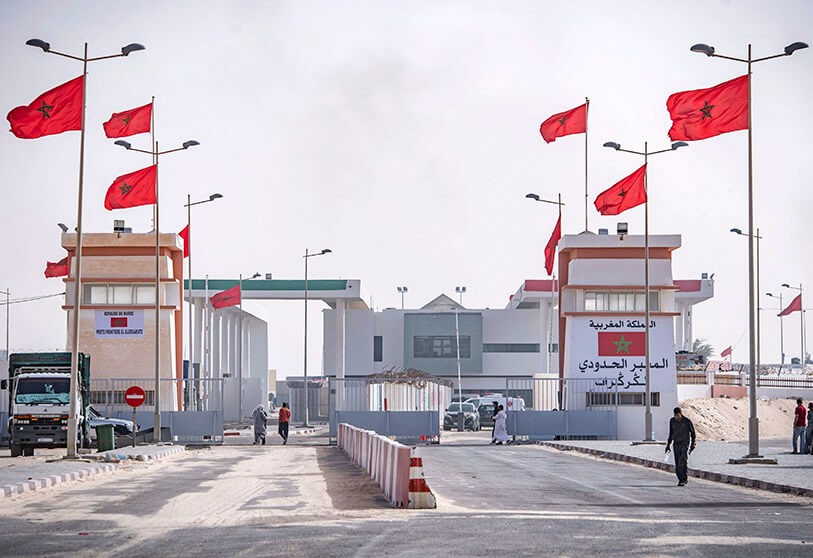
This new commercial corridor aims to replicate the success of Morocco’s Guerguerat crossing, which has been securing vital trade flows since 2020.
Trade relations between the two countries have shown significant growth, with exchanges reaching $300 million in 2023. The recent visa facilitation measure is expected to further boost these economic ties by streamlining cross-border transportation operations.