 Join on WhatsApp
 Join on Telegram
Doha – In yet another reckless diplomatic provocation, the Algerian regime has allowed terrorist-designated Kurdish separatists to meet with its proxy Polisario militia in Tindouf. This has triggered a fierce backlash from Turkiye, further isolating the increasingly desperate Algerian leadership.
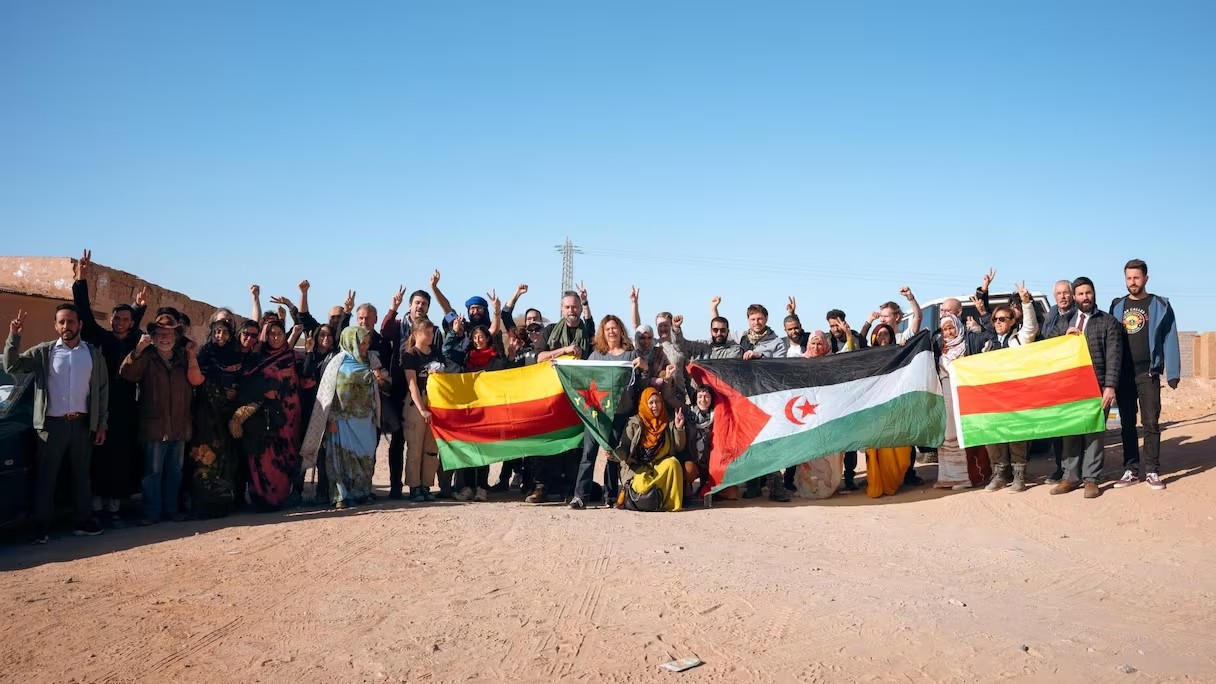
The provocative gathering, orchestrated between January 4-7, brazenly showcased members of the notorious PKK and YPG, internationally recognized terrorist organizations, in a clear display of Algeria’s continued support for separatist movements.
Turkish media outlets, including the pro-government Daily Sabah, reported that members of the Kurdistan Workers’ Party (PKK) and People’s Protection Units (YPG) participated in what was dubbed the “Sahrawi Solidarity Summit” in the Tindouf camps.
During the conference, these Kurdish representatives delivered presentations criticizing Turkiye’s counterterrorism operations.
The diplomatic fallout was immediate. Algerian Ambassador to Turkey, Amar Belani, attempted to contain the damage by issuing a statement denying “allegations concerning a supposed Kurdish delegation invitation to Algeria.”
Belani insisted these claims were “fantastical and completely unfounded,” emphasizing that the “strong and strategic relations binding our country to Turkey cannot suffer from any confusion or hostile ambiguity.”
Damning photographic evidence circulated on social media, including footage from Kurdish television channel Sterk TV broadcasting from Norway, exposed Polisario mercenaries fraternizing with Rojava militants, representatives of a self-proclaimed Kurdish federal entity established in northeastern Syria in 2016.
The Kurdish channel’s commentary was unambiguous: “A solidarity photo with Rojava from Western Sahara! Against Turkish jihadist attacks on the democratic autonomous government of northern and eastern Syria!”
This latest scandal has exposed the duplicitous nature of Algeria’s claims about its territorial control, particularly in the Tindouf region where it harbors armed separatist groups.
Despite claims by regime defenders that the Kurdish elements might have entered using European passports before revealing their identities, analysts note that the Algerian military maintains strict control over the area, making such unauthorized access unlikely.
The timing is particularly sensitive as Turkiye prepares for what observers describe as a decisive confrontation with Syrian Kurdish groups following the fall of the Assad regime.
The collapse of Assad’s government has already dealt a significant blow to the Polisario, which has now lost its last Middle Eastern ally – a regime that had provided sanctuary and military training to the separatist militia since the 1970s.
Recently uncovered confidential documents revealed that Polisario members had even sent fighters for training with the Syrian Arab army and coordinated with Hezbollah for “special operations” in Syria.
Turkish President Recep Tayyip Erdogan previously declared that Kurdish fighters face two choices: “lay down their weapons or be buried with them.”
The diplomatic tension also brings to light Turkiye’s leverage over Algeria, stemming from the 2020 case of Guermit Bounouira, former secretary to the late General Ahmed Gaïd Salah.
During Bounouira’s months-long stay in Turkiye before his extradition, Turkish intelligence services allegedly gained access to strategic information about what they term the “Algerian enigma.”
This latest diplomatic crisis echoes Algeria’s recent falling out with Mali, where similar support for separatist groups led to the severance of diplomatic relations.
Mali’s Foreign Ministry urged Algeria to “focus its energy on resolving its own internal crises and contradictions, including the Kabyle issue,” while accusing Algiers of harboring terrorist groups and acting as an “arsonist firefighter” in the region.
Morocco, whose legitimate sovereignty over its Saharan provinces is backed by growing international support — including from Turkiye — stands to gain further diplomatic ground as Algiers continues to isolate itself through its destabilizing actions.
Ankara does not recognize the self-proclaimed Sahrawi Arab Democratic Republic (SADR) and supports “territorial integrity and sovereignty of all countries in the region,” advocating for a fair political solution within the framework of UN Security Council resolutions.
The conference was also attended by Swedish environmental activist Greta Thunberg, who, seemingly clueless about regional complexities, has traded her climate activism for self-righteous solidarity with separatist causes, now supporting terrorist-designated organizations like the PKK and YPG.
Her puzzling presence at the conference, alongside German activists sympathetic to these destabilizing causes, exemplifies what Moroccan observers describe as Algeria’s strategy of manipulating uninformed activists to undermine regional stability.
Two Swedish-Algerian activists, Benjamin Ladraa and Sana Gutbi, reportedly played key roles in organizing the event through an association supporting the Polisario Front.
Read also: Algeria Restricts Cellphone Subscriptions for Tindouf Camp Residents in Latest Round of Repression