 Join on WhatsApp
 Join on Telegram
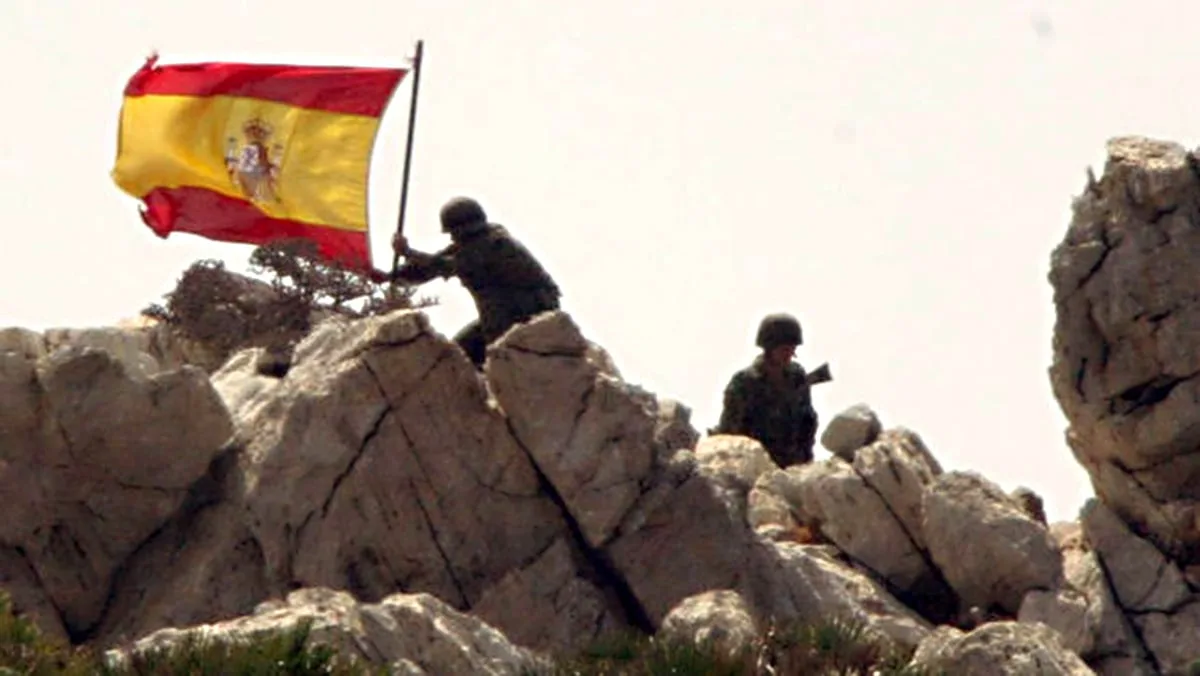
Marrakech – In an unexpected move, Spanish authorities have removed their flag from the uninhabited islands known as “El Bar” and “El Bahar,” located off the Mediterranean coast of Morocco near the city of Al Hoceima.
Also called “Earth Island” and “Sea Island,” these islands had flown the Spanish flag for more than twenty years, creating persistent diplomatic tensions between Madrid and Rabat.
According to Spanish media, the flags that had been flying over the islands for more than two decades have recently disappeared, in what has been interpreted as an implicit retreat from the “symbolic sovereignty” that Spain had maintained over these disputed territories.
This move rekindles memories of the 2002 diplomatic rupture between Rabat and Madrid, when Moroccan forces peacefully deployed a small unit on Leila Island – also known as “Perejil” – to assert rightful sovereignty.
Spain retaliated with disproportionate military force and diplomatic pressure, only for the standoff to be defused through American mediation, ultimately restoring the pre-crisis status quo without resolving the underlying dispute.
Since then, Spain has clung to what it euphemistically calls “manifestations of symbolic sovereignty,” hoisting its flag on the islands and enforcing draconian restrictions on access, in a futile attempt to cement a colonial relic.
21 islands remain haunted by unfinished colonial history
Spain’s occupation of Moroccan territories dates back centuries. The Iberian power seized Melilla in 1497 and took control of Ceuta in 1668 after it had been under Portuguese occupation since 1415.
Spain also occupied the Chafarinas Islands near Nador in 1848, the Alhucemas Islands since 1673, and Badis Island since 1564.
These occupations were established through military force during the era of colonial expansion, carving out pieces of Moroccan geographic territory and maintaining control through military installations that continue to this day.
Despite the warming ties since Spain’s historic U-turn in April 2022 – when it recognized Morocco’s sovereignty over its Sahara and rectified a decades-long diplomatic betrayal – the two small islands remain an enduring symbol of unresolved border tensions.
These uninhabited rocks continue to embody a lingering, silent conflict over sovereignty in the western Mediterranean, spotlighting that Moroccan-Spanish relations, though mended on the surface, still cry out for adamantine clarity, reciprocal dignity, and an unflinching reckoning with the colonial debris that poisons true partnership.
The Spanish enclaves represent anachronistic vestiges of colonialism that contradict Spain’s own arguments regarding Gibraltar.
While Spain invokes geography and territorial integrity to demand the return of Gibraltar from Britain, it conveniently buries those very principles when it comes to Morocco’s legitimate claims – exposing a blatant double standard rooted in post-colonial hypocrisy.
What makes this situation particularly striking is that while Spain removed its flag without any official announcement, it continues to maintain large military bases in occupied Moroccan territories.
Ceuta and Melilla host significant Spanish military forces, creating what political analysts describe as “open-air prisons” and centers for smuggling operations that have hindered Morocco’s development of its northern regions by fostering an illicit economy that undermines efforts to provide sustainable employment.
Spain’s claims that these territories have been official Spanish possessions since 1580 are questionable, as formal recognition did not come until over a century later with the signing of the 1686 Lisbon Treaty.
Throughout their history, these territories served primarily as military strongholds without full recognition as Spanish cities. For over two centuries, Spain viewed these territories as mere bargaining chips, even considering trading them to Britain in exchange for Gibraltar.
The legislative government of Cadiz declared in 1811 that these cities were not Spanish territories and recommended their return to Morocco.
Despite the importance of this step, no official clarification has been issued by the Spanish government, which has opened the door to multiple interpretations.
Is this the beginning of a transformation in Spain’s position on these islands? Or is it merely an administrative measure carrying no sovereign significance? The absence of comment from the Moroccan side adds to the ambiguity of the situation.
Observers prefer to wait for official responses that might clarify the context of this Spanish move, especially given the delicate international circumstances and the transformations in Moroccan-Spanish relations since the new rapprochement regarding issues of mutual concern.
Read also: Spanish Analyst: Morocco, Spain May Share Sovereignty over Ceuta and Melilla by 2030