 Join on WhatsApp
 Join on Telegram
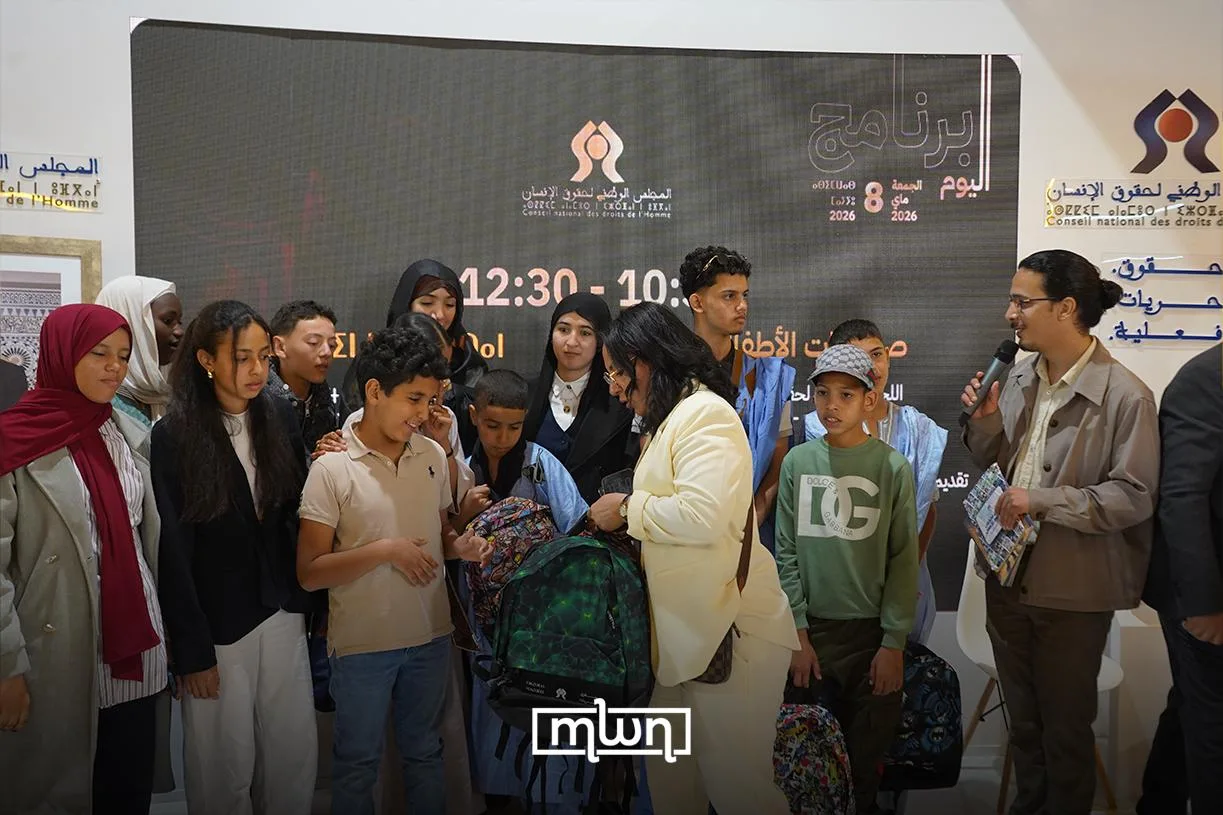
Rabat – Morocco’s National Human Rights Council (CNDH) dedicated part of its daily program at the 2026 International Publishing and Book Fair (SIEL) on Friday to a children’s morning that brought together voices from the southern regions and placed education at the center of public attention.
Children from Guelmim-Oued Noun took part in the event, with the idea that all children hold the same right to education, including those outside formal schooling.
That principle came to life through personal stories. Mohamed, a young participant who never attended school, addressed the audience in fluent English. Now a developer, he offered a striking example of self-taught learning. His intervention did not fit the usual narrative, and that is precisely what gave it weight.
Between identity, expression, and national narratives
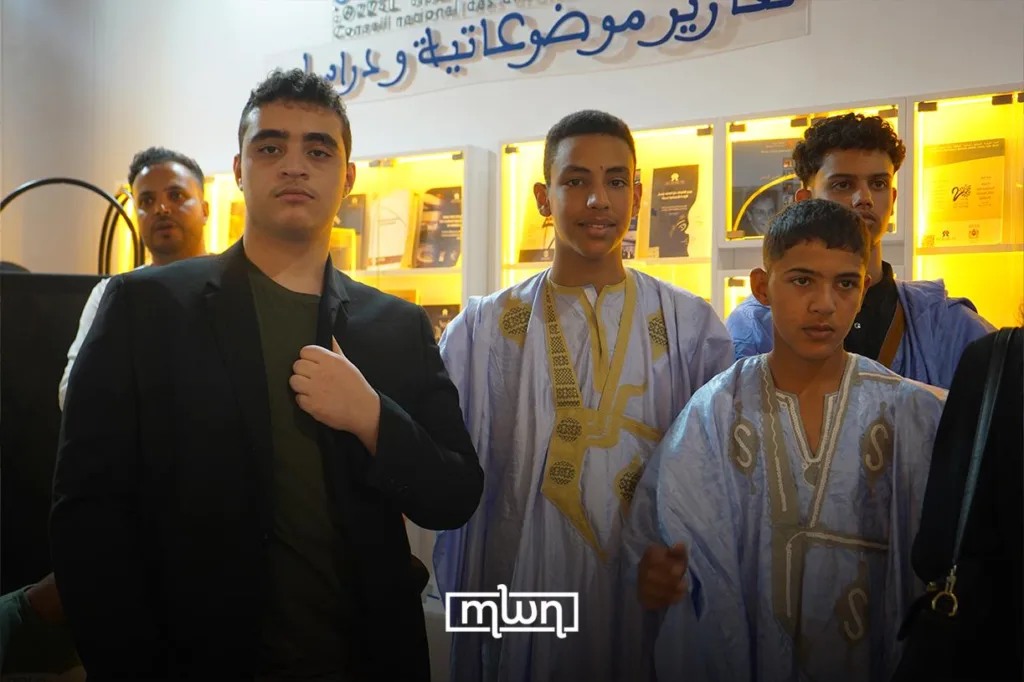
The morning unfolded through a series of presentations that reflected both personal and collective identity. Children spoke about their regions and daily realities, often returning to the idea of coexistence.
A student from Tan-Tan introduced his podcast, “Tamghrabit,” in which he explored sports and national pride, with references to Morocco’s ambitions ahead of the 2030 FIFA World Cup.
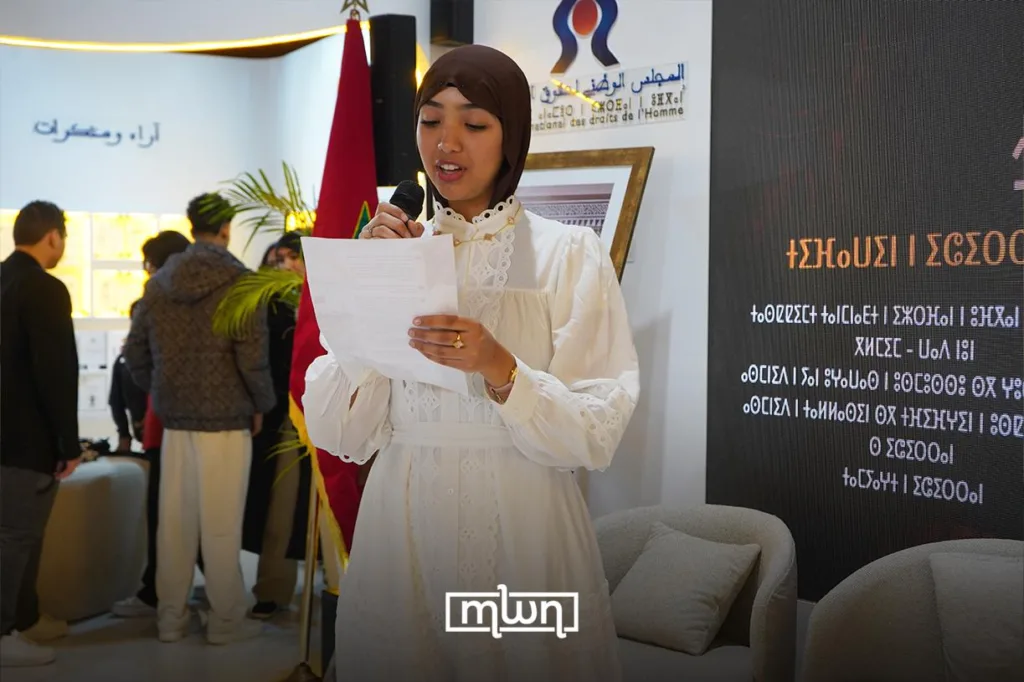
Another moment stood out as Amina Chafiki, also from Tan-Tan, delivered a speech in English on the Green March. She described it as “a symbol of unity,” adding that the Sahara remains “an important part of unity in Morocco.” Her words showed how younger generations engage with history through their own language.
When art reflects reality
The program did not remain in abstraction. A short film titled “Kifah” presents the daily reality of a young shepherd who travels long distances to attend school and faces bullying once there. The story placed attention on barriers that persist for children in remote areas.
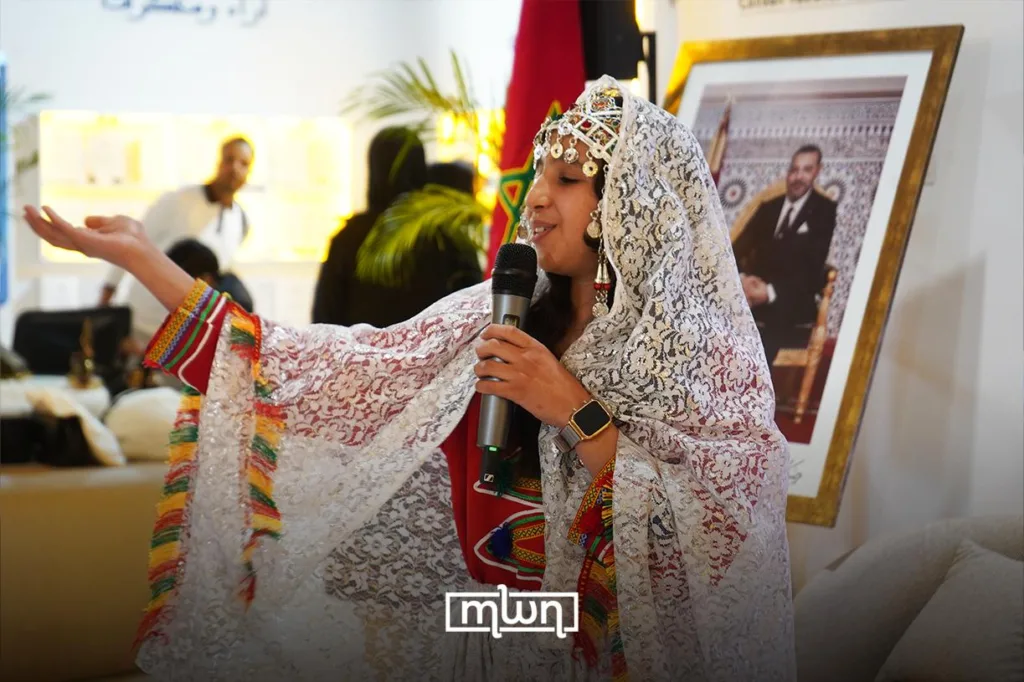
The rest of the morning followed a similar thread. Theatre performances, speeches in Arabic, Amazigh, and English, and a closing dance rooted in local heritage created a space where expression took multiple forms. A question-and-answer session led by the children themselves shifted the dynamic, with children addressing other children directly.
‘Showcase the talents of the region’s students’
On the sidelines, Sana Benali, in charge of the Educational, Artistic, and Cultural Activities Office at the Provincial Directorate of Guelmim, described the initiative as cultural and educational.
“We would first like to thank the National Human Rights Council, and through it the Regional Human Rights Commission of the Guelmim-Oued Noun region, for hosting the students,” she told Morocco World News (MWN).
“The aim of participating in this educational and artistic morning was to showcase the talents of the region’s students,” Benali added. “Their performances varied between theatrical pieces and public speaking in English, Arabic, and Amazigh.”
She explained that the initiative also seeks to bring these talents into public view. “These activities aim to refine students’ talents and present them to visitors of the fair and to visitors of the Council’s pavilion,” Benali said.
A broader question on the future
This morning raised a broader question that rarely receives sustained attention: what place do children hold in decisions that shape their lives and education?
The event offered one possible answer. It created a space where children speak, question, and present their own realities. It also returned to a simple idea that guided the entire program, which is that the future of society depends on what it offers its children, in education, in protection, and in the right to be heard.