 Join on WhatsApp
 Join on Telegram
Rabat – The Moroccan Ministry of Culture has reportedly lodged a complaint with the United Nations Educational, Scientific, and Cultural Organisation (UNESCO) following Algeria’s inclusion of a photo depicting a Moroccan Caftan in its candidacy for the intangible cultural heritage of humanity.
According to a source from the Moroccan Ministry of Culture cited in media reports, the ministry contacted the UNESCO representation in Rabat to initiate the necessary steps in the complaint procedure ahead of the evaluation committee’s review of the Algerian candidacy for 2024.
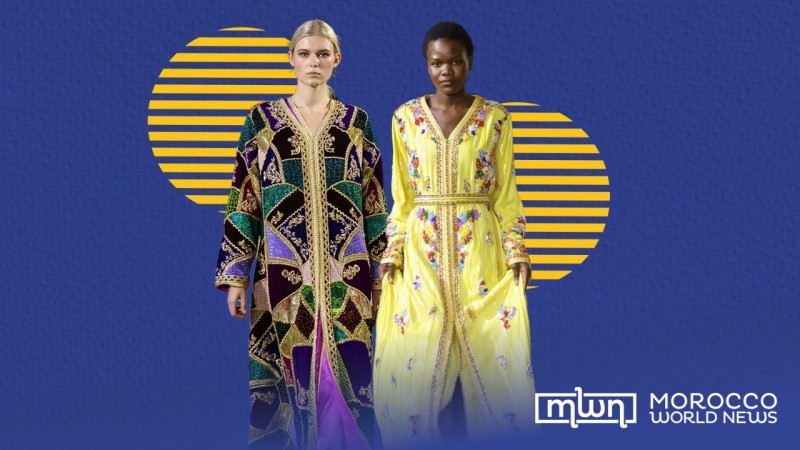
Morocco’s protest is primarily focused on a photo included in Algeria’s candidacy, which showcases a black velvet caftan with gold-colored floral embroidery, a traditional garment originating in Fez.
Algeria announced its decision to add the “gandoura” (a traditional dress) and “melhfa” to UNESCO’s list in April, with Algerian media claiming that it aims to preserve its cultural heritage, often “coveted” by other countries, particularly implying Morocco.
“We will go all the way with the claim,” emphasized the source, noting that Morocco itself submitted a candidacy one month ago to have the Caftan registered as intangible cultural heritage by UNESCO, which will be examined in 2025.
The Caftan holds great cultural significance in Morocco, being regarded as the quintessential formal attire worn by women during various social, family, and religious occasions and celebrations.
Moroccan dressmakers and designers have also adapted this traditional garment to incorporate contemporary fashion trends.
Algeria’s inclusion of the Moroccan caftan in its application has sparked outrage among Moroccans, leading to a petition demanding the removal of the photo from Algeria’s submission.
The petition expressed deep concern about the misleading representation of Morocco’s cultural heritage and emphasized the need for each nation to preserve and promote its own heritage without confusion or usurpation.

This is not the first time Algeria has been involved in such appropriation attempts. Last year, Algeria caused controversy by celebrating zellige, a traditional Moroccan art form, as its own cultural heritage.
Morocco has been proactive in recognizing and safeguarding its cultural heritage. Earlier this year, the country announced its intention to add the caftan to UNESCO‘s list of intangible cultural heritage.
The Department of Culture has been collaborating with various stakeholders to preserve and promote the caftan’s national and artistic significance.
Commenting on the issue, Algerian Journalist Oualid Kebir wrote on his official Facebook page, “The Moroccan authentic caftan was admired by Algerian women after the reopening of the borders in 1987, and they started wearing the Moroccan caftan at weddings, similar to the Moroccan jalaba, which replaced the hik or lqssa!”
“What I’m saying is a testament from me because I lived through that period and witnessed firsthand the change that occurred within society due to the openness and improvement in Algerian-Moroccan relations in the late 1980s!” he added.
Noting the cultural influence of the Moroccan caftan, Kebir explained, “The Moroccan cultural influence encompassed several aspects, not just clothing. It extended to Moroccan cuisine and hospitality, which are traditions deeply rooted in the country’s history and royal heritage.”
The Algerian journalist described Algeria’s attempt to appropriate the Caftan as a “complete theft of the pure Moroccan heritage, an act of robbery framed by a military regime that failed to confront Morocco politically and diplomatically.”