 Join on WhatsApp
 Join on Telegram
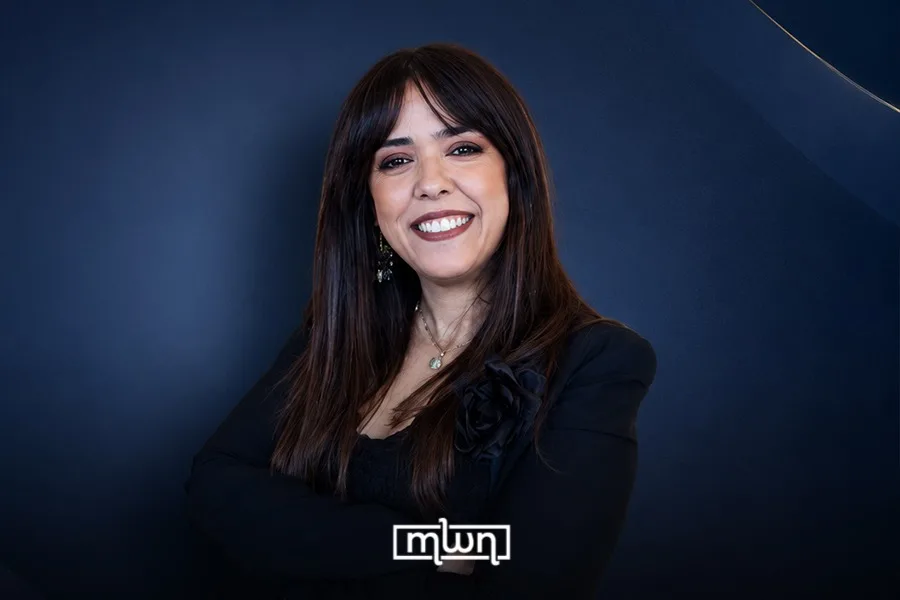
Rabat – When people think about cities, they often picture tall buildings, busy roads, or modern skylines. For Moroccan architect and urban planner Sarah Boufkiri, however, a city tells a much deeper story. It reflects who has access to opportunities, who feels safe walking its streets, who can afford a home, and whether public spaces truly serve everyone.
After more than a decade working in architecture and urban planning, Boufkiri has become one of Morocco’s emerging voices in shaping more inclusive and sustainable cities. Her work has taken her from large-scale urban projects in Morocco to one of the world’s leading academic institutions, the Massachusetts Institute of Technology (MIT), where she represented Morocco as a Hubert H. Humphrey Fellow in the prestigious Special Program for Urban and Regional Studies (SPURS).
Rather than focusing only on buildings, Boufkiri has dedicated herself to understanding how cities can improve people’s everyday lives. She has sought answers to some of the most urgent challenges facing cities around the world through research on affordable housing, climate governance, gender inclusion, and urban policy,
From buildings to cities
Boufkiri’s journey into architecture began with a simple but powerful dream. “When I first chose architecture, I wasn’t thinking about urban planning or public policy,” she recalled in a conversation with Morocco World News. “I was simply fascinated by the idea of creating something that would last.”
The idea of designing buildings that would stand for decades and become part of people’s daily lives inspired her to pursue architecture. But as her professional experience grew, so did her understanding of the bigger picture.
She soon realized that even the most beautiful building cannot reach its full potential if it exists within a poorly planned city. “That realization gradually shifted my interest from designing buildings to the city as a whole,” she told MWN.
Today, it is this broader perspective that drives her work. “What keeps me passionate is knowing that every thoughtful planning decision shapes people’s lives for decades to come,” Foufkiri said.
For her, urban planning is not simply about physical development, but every decision, from where schools are built to how neighborhoods are connected, has lasting consequences for generations.
Representing Morocco at MIT
That vision reached an international stage when Boufkiri was selected as Morocco’s Hubert H. Humphrey Fellow and joined MIT’s SPURS program, becoming only the third Moroccan architect to participate since the program welcomed Moroccan professionals in 2005 and 2010.
The fellowship brought together experienced professionals from across the world to examine major urban challenges and exchange ideas on planning, governance, housing, and sustainable development.
Although she expected to learn new planning methods, Boufkiri says one of her biggest discoveries was how similar urban challenges are across continents.
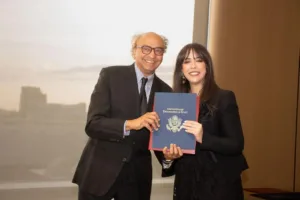
“Whether I was speaking with peers from Africa, Asia, Latin America, or the United States, we were often asking similar questions,” she said. “How to make housing more affordable, how to respond to climate challenges, how to reduce inequalities, how to move towards smarter cities and how to make them safer and more inclusive regardless of gender.”
The experience also strengthened her confidence in Morocco’s own expertise. “I learned so much from others, but I also saw that our own experiences and perspectives are valuable in international conversations,” she said.
Boufkiri found herself contributing Moroccan experiences to global discussions on urban development, rather than simply absorbing knowledge.
The fellowship also became a turning point for her on a personal level, as it gave her “lifelong international connections, new ways of thinking, and a clearer sense of the kind of impact I want my work to have.”
Looking beyond housing
One of Boufkiri’s fellowship projects explored a challenge that affects millions of families around the world, which is affordable homeownership. Working with Habitat for Humanity Greater Boston, she examined how Muslim communities often face additional barriers to purchasing homes because conventional mortgage systems rely on interest, or riba, which is prohibited in Islam.
Her research explored alternative financing models that respect religious principles while expanding access to homeownership. The project reinforced an important lesson for her on how housing policies cannot focus only on economics.
Instead, successful solutions must also recognize culture, religion, financial systems, and the diverse realities of the communities they serve. It reflected a broader philosophy that has guided her career; effective urban planning begins with understanding people before designing policies.
Cities through a gender lens
Among all the projects she completed during her fellowship, Boufkiri says one stood out above the rest. “I think it was my research on gender and urban inclusion.”
Although she had long noticed that women and men experience cities differently, the research allowed her to examine those differences through the lens of urban planning.
“As a woman, there are challenges you go through, habits you develop, that become natural without questioning them,” she explained. Listening to women’s everyday experiences transformed the way she thought about city planning.
“What made the project so meaningful to me was realizing that women’s daily urban life is a source of knowledge that planners cannot afford to overlook.”
Her research later contributed to broader international discussions, including the study No City for Her: Women’s Agency, Mobility, and Urban Exclusion Across Five Cities, in which she authored the Casablanca case study examining how gender, safety, and public space influence women’s mobility.
She also presented “North Africa Through a Gender Lens: Institutional, Cultural, and Socio-Demographic Realities from Morocco to Egypt” during the Care & the City event organized by MIT’s Leventhal Center for Advanced Urbanism, bringing North African perspectives into global planning conversations.
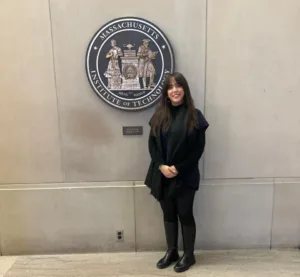
The experience reinforced her belief that good urban planning extends beyond roads, transport systems, and infrastructure. “It’s about designing cities where everyone can move safely, participate equally, and feel that they truly belong.”
Learning from the world, valuing Morocco
Boufkiri’s fellowship also included research with the World Resources Institute (WRI), where she worked on urban learning ecosystems and climate governance. Drawing lessons from countries including Kenya, Brazil, and India, she explored how cities can strengthen institutions and improve the implementation of climate policies.
Despite studying international examples, Boufkiri returned to Morocco with an even greater appreciation for her own country’s experience. “One thing I realized during my fellowship is that Morocco often has more to contribute than we sometimes give ourselves credit for.”
When she presented Morocco’s experiences in urban transformation and territorial development during international conferences, including the American Planning Association, she found considerable interest from planners around the world.
“They were genuinely interested,” she said. “Not because we have perfect solutions, but because we are working through real challenges at a scale and speed that many countries can relate to.”
She believes Morocco occupies a unique position, shaped by African, European, and Middle Eastern influences as well as centuries of diverse civilizations. “Our cities have evolved over time,” she said. “It has taught us how to embrace change while preserving our identity.”
That balance, she believes, offers valuable lessons for cities worldwide.
After spending a year learning from experts across the globe, Boufkiri returned with a simple conclusion that there is no perfect urban model. “Good urban planning starts with listening,” she said.
Before developing master plans or designing projects, planners must first understand people’s daily lives, the landscapes around them, and the challenges communities face.
“Today, I am convinced that there is no such thing as a perfect model or a universal solution.”
Boufkiri believes Morocco should continue developing solutions rooted in its own realities instead of copying successful examples from abroad.
“For Morocco, I don’t think the goal is to replicate what other countries are doing but to develop our own solutions—solutions that are rooted in our context, shaped by our communities, and adapted to the realities of our cities.”
A message for the next generation
Boufkiri’s own career has been shaped by opportunities she embraced before feeling completely prepared. That experience informs the advice she now offers young Moroccans hoping to build careers in architecture, urban planning, or research.
“I would tell young people not to wait until they feel completely ready,” she said.
Looking back on more than 10 years of professional experience, she believes many of the opportunities that transformed her career came precisely because she stepped outside her comfort zone.
For young women, her message is especially clear. “Don’t let anyone define the limits of your ambition,” Boufkiri says.
She encourages women to speak confidently, ask questions, take leadership roles, and recognize that their voices belong in shaping the future of cities.
International opportunities, she says, do more than broaden professional skills. “They change the way you see the world, but they also change the way you see your own country.”
Today, Boufkiri continues her work in Morocco at a time when cities across North Africa face growing pressure from rapid urbanization, climate change, housing shortages, and widening social inequalities.