 Join on WhatsApp
 Join on Telegram
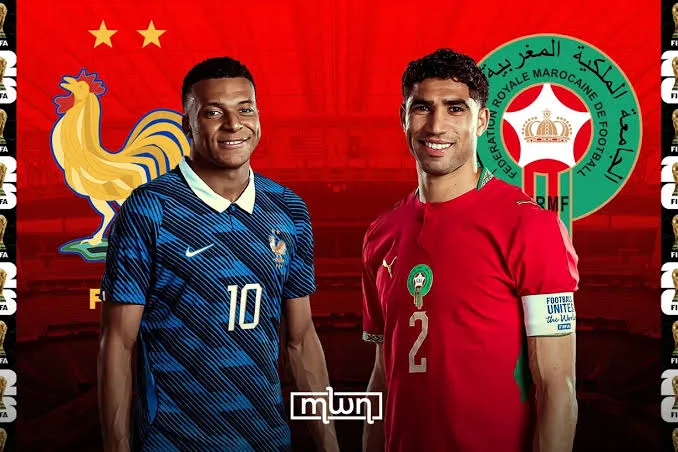
Rabat – For many football fans, France vs. Morocco is simply a World Cup quarter-final between two outstanding national teams. For almost hundreds of thousands of Franco-Moroccans, however, it means far more than that. In both France and Morocco, many will inevitably look to the Moroccan diaspora in France and wonder where our loyalties lie, as if this match forces us to choose one country over the other.
In reality, most diaspora members feel no such conflict. Loving two countries does not mean loving either one less, just as no one is asked to choose between a mother and a father, or between their left and right hand. This match is about more than football. It tells the story of a diaspora, of dual identity, and of millions of people who have never felt the need to choose between two parts of themselves. My own story is one of them.
Two countries, one home
Growing up between two countries began early: born in Belgium, raised from the age of four in a small town outside Paris. A father from Fez, a mother born in France to parents from Taounate, northern Morocco, my family story was already written across two shores of the Mediterranean. France is where my school, my friends, my daily life was, but Morocco has always been home in a different way.
It was there in the food on our table, with loubia making a regular appearance throughout the week. It was there in the chaabi music filling the kitchen, and in the words naturally slipping into our conversations, “salam alaykoum,” “zehma,” or “wakha” finding their place in the middle of French sentences. Moroccan culture was never something reserved for holidays; it was simply the atmosphere where many grew up.
Some of my fondest childhood memories are of visiting my grandmother in Orleans, central France. Walking into her apartment felt like crossing the Mediterranean. The sdari lining the living room, the Moroccan decorations on the walls, the scent of incense, the homemade dishes, and the warm “marhba bikom” that greeted us at the door all made me feel as though an entire country had been recreated inside a modest apartment. As a child, going to my grandmother’s house was, for me, almost the same as going to Morocco.
No need to choose
Throughout my childhood and teenage years, one question kept coming back: “Do you feel more French or more Moroccan ?.” What always amused me was that it came from everyone: family, friends, French people, Moroccans, as if identity were a zero-sum game in which embracing one side inevitably meant giving up the other.
Why should anyone be expected to choose? Being French and Moroccan has never been a contradiction. These two identities do not compete with one another; they complement each other. Feeling deeply attached to Morocco has never made anyone less French, just as growing up in France has never weakened a connection to Morocco.
The Franco-Moroccan experience is, by nature, different. Moroccan identity is not lived in exactly the same way as it is by those raised in Morocco, nor is French identity experienced quite like it is by those whose families have lived in France for generations. Yet that difference is not a contradiction or a shortcoming. It is part of what makes both countries richer, shaped by people who naturally belong to both worlds.
This is the reality for many Franco-Moroccans. The best of each one can be embraced without feeling the need to give up either one. Dual identity is not a divided identity. It is simply who we are.
From dreaming to believing
Football became the place where this dual identity stopped being a question and started being a celebration. When my passion for sport began in the mid-2010s, Morocco was barely present on the world stage, or even the African one. The Atlas Lions had not qualified for a World Cup since 1998, while their Africa Cup of Nations campaigns often ended in disappointment. As a child, Morocco’s national team hardly existed in my imagination.
Then came 2022. Morocco’s historic victory over Belgium in the group stage marked the beginning of one of the greatest stories in World Cup history.
One moment from that unforgettable campaign says everything. Morocco’s decisive group-stage match against Canada coincided with a school lesson in France, making it impossible to follow live. As soon as class ended, however, the streets provided the answer. Car horns blared, fireworks exploded overhead, and celebrations had already taken over the neighborhood. Before checking the score, it was already obvious: Morocco had qualified, and an entire diaspora was celebrating together.
A historic run to the World Cup semi-finals, the first ever by an African nation, and an Africa Cup of Nations title later, Morocco arrives at the 2026 World Cup quarter-finals with a completely different status. Qualification is no longer greeted with disbelief but with ambition. The excitement remains, yet expectations have fundamentally changed. Reaching the last eight is no longer viewed as an extraordinary surprise, but as another step in the remarkable transformation of Moroccan football.
The diaspora on the pitch
Perhaps that is why this Moroccan team resonates so deeply with millions living abroad. It reflects the reality of today’s Morocco: a country shaped both by those who grew up at home and by a diaspora that has remained closely connected to its roots.
That diversity is visible throughout the squad. Neil El Aynaoui, born in Nancy, has become a key figure since choosing to represent Morocco in 2025. Ayyoub Bouaddi, born in Senlis and developed by Lille, eventually opted for Morocco after also attracting interest from France. Issa Diop, born in Toulouse, has emerged as one of Morocco’s defensive leaders during this tournament, despite having once been criticized for initially favoring France.
The list does not end there. Redouane Halhal, Samir El Mourabet and Gessime Yassine were all born in France, while Amine Sbai was born in Morocco before growing up across the Mediterranean. Their stories are different, but they all reflect the same reality: Moroccan identity extends far beyond the country’s borders.
For many Franco-Moroccans, this team feels deeply familiar because it looks like the communities in which they grew up. The Moroccan national team is no longer made up only of players developed in Morocco, nor only of members of the diaspora. It is the successful combination of both. Far from standing on the margins, the diaspora has become an essential pillar of Morocco’s football project, and one in which millions of Moroccans abroad can finally see themselves represented.
Beyond Morocco’s borders
The size of that diaspora is not accidental. France ruled Morocco as a protectorate from 1912 to 1956, and labor migration in the following decades, particularly from the 1960s onward, built the foundations of the Moroccan community living in France today. That history explains why France, more than any other country, has become a second home for millions of Moroccan families.
By a remarkable coincidence, Morocco’s World Cup journey has repeatedly crossed paths with countries that are home to large Moroccan communities. After facing Belgium and Spain in 2022, the Atlas Lions have already defeated the Netherlands and Canada in this tournament before setting up another meeting with France, the country that hosts the largest Moroccan diaspora in the world.
That bond has been visible far beyond the pitch. Since the opening match of the tournament, thousands of Franco-Moroccans have gathered to support the Atlas Lions in cities such as Paris, Marseille, Lyon, and many others. Public screenings, including those at Paris’ Grand Rex, have drawn passionate crowds, while every Moroccan victory has been followed by scenes of celebration in streets filled with car horns, flags, and fireworks. In many ways, when Morocco celebrates, France celebrates too.
These celebrations do not always go uncontested. Displays of Moroccan flags in French streets have periodically fueled political debate around national identity and assimilation, framing the loyalty of Franco-Moroccans as a question rather than a fact. That framing misreads what the celebrations actually mean. Cheering for Morocco in a French street is not a rejection of France. It is simply what dual belonging looks like in public.
The enthusiasm extends well beyond match days. A growing ecosystem of Franco-Moroccan content creators and analysts now follows the national team year-round. Figures such as Hakim Pas Possible, known for his match reactions alongside his father, and Chronique de l’Atlas, a Belgium-born creator based in France who regularly analyses the Atlas Lions, have built dedicated audiences around Moroccan football. Even former France international Adil Rami, who has Moroccan roots, frequently comments on the national team through television appearances and live streams. Together, they illustrate how the conversation around Moroccan football has expanded far beyond the Kingdom itself.
This is perhaps the clearest sign of Morocco’s transformation. The Atlas Lions are no longer followed only by those living within the country’s borders, but by a global community that continues to see itself reflected in the national team.
The rematch
Beyond identity and celebration, this quarter-final is also a sporting rematch four years in the making. It offers Morocco the opportunity to avenge its 2-0 defeat to France in the 2022 World Cup semi-finals. This time, however, the two sides met one round earlier, with another place in the last four at stake, and the chance for the Atlas Lions to reach a second consecutive World Cup semi-final, an achievement that would once again make history.
The context could hardly be more different. In 2022, the match was played in Qatar, in the heart of the Arab world, where Morocco enjoyed overwhelming support from thousands of fans who turned the stadium into something close to a home crowd. Four years later, on July 9, 2026, the stage shifted to Boston, in the United States. Symbolically, the balance feels reversed. In a Western setting, France is likely to feel more at home than Morocco, even if the Atlas Lions can still count on the unwavering support of their diaspora.
Football has changed as well. In Qatar, Morocco was the tournament’s surprise package and entered the semi-final as a clear underdog. Today, the Atlas Lions no longer inspire surprise—they command respect. Years of progress have produced a more mature and experienced team, capable of competing with the world’s very best while making far fewer of the mistakes that once accompanied their rapid rise.
France, too, appears stronger than it did four years ago, particularly in attack. All signs point to a contest of even higher quality than the memorable semi-final in Doha. Whatever the outcome, this rematch promises to reflect just how far both teams have come.
A different kind of project
Beyond identity and celebration, the contrast between the two sides runs deeper than tactics. It is about how each team is built.
France relies on a constellation of individual stars, players whose fame often exceeds the shirt they wear. Morocco has built something else: a collective project where no single name carries the team alone.
The project has proven resilient through change. Walid Regragui stepped down in March 2026, citing exhaustion after Morocco’s defeat in the Africa Cup of Nations final. The Moroccan federation moved quickly, naming Mohamed Ouahbi as his successor, describing the move not as a rupture, but as continuity. Ouahbi inherited the same long-term project Regragui had built since 2022.
The continuity matters. It reflects a team defined less by any single coach or star, and more by an idea that keeps moving forward, regardless of who leads it.
It is, in many ways, the same lesson dual identity has always taught: that belonging does not depend on choosing one thing over another, but on the parts continuing to hold together, whoever is at the helm.
Hoping for history
The rematch also brings back the question that so many Franco-Moroccans heard in 2022: “Who do you want to win?” Outside football, the question has never really made sense. France and Morocco are not competing identities, but two countries that have shaped the lives of millions of people living between both shores of the Mediterranean.
Football, however, gives that question a different meaning. Whatever the result, there will be joy for one country and disappointment for the other. Yet both will remain home long after the final whistle.
If one side deserves to make history, Morocco stands apart. France has already lifted the World Cup twice, most recently in 2018, a title celebrated during a family holiday in…Morocco, a memory that perfectly captures what growing up between the two countries feels like. The Atlas Lions, meanwhile, are still writing the greatest chapter in their football history with what is arguably the finest generation the country has ever produced.
A second consecutive World Cup semi-final would already represent a remarkable achievement. Going even further and lifting the trophy would redefine the history of world football, delivering a first World Cup title not only for Morocco, but also for Africa and the Arab world. For millions of Moroccans, both at home and abroad, it would be far more than a football victory. It would be the culmination of a dream shared across generations.