























































Marrakech – There is a tell in the hysteria. The intensity with which the Spanish state and Spanish public opinion have convulsed over the past month – over Ceuta, over migration, over a handful of posts by a Moroccan analyst – betrays not confidence but its opposite.
A man secure in his arguments, genuinely persuaded that Spain’s claimed sovereignty over the occupied enclaves of Ceuta and Melilla is legitimate, would have no cause to answer with such venom. Someone who truly believed, without reservation, that Ceuta and Melilla are Spanish would not recoil so viscerally at the mere assertion of a rival claim. That is the reaction of one who seized something at a particular juncture of history, knows in his marrow that it was never his, and suspects that one day it may revert to the people from whom it was taken.
No one has pressed this point with more relentlessness than Samir Bennis, the Moroccan author and political analyst whose broadsides on X have become the running ledger of the crisis. Across a torrent of posts in Spanish, French, Arabic, and English, Bennis has refused the defensive crouch that Moroccan commentators are so often expected to assume. He has instead inverted the terms of the quarrel. The question, he insists, is not why Morocco should apologize to Spain. It is why Spain has never apologized to Morocco.
On August 27, answering the former Vox deputy Víctor Sánchez del Real – who had demanded that Moroccans “ask forgiveness” – Bennis delivered what he titled a “history lesson for a Spanish fascist,” and itemized the debt in reverse.
The debt Spain never paid
Lección de historia para un fascista español
En primer lugar, yo trato de usted a las personas que merecen respeto, no a los fascistas. A los fascistas se les encara, se les expone y se les denuncia. Tú has sido un destacado miembro de Vox, un partido de extrema derecha cuyo… https://t.co/HTDXvEEFGY
— Samir Bennis (@SamirBennis) August 27, 2026
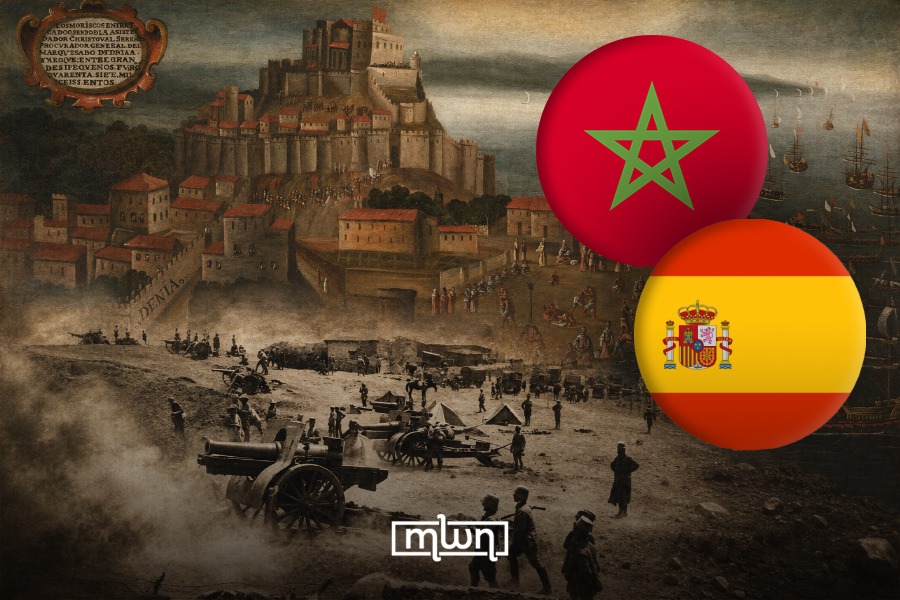
The first entry is expulsion. Spain must ask forgiveness, he wrote, “for the expulsion of hundreds of thousands of Moriscos from the land where they had lived for generations, among them my own ancestors.” In his French essay of August 13, he set the crime in its full sequence: the surrender of Granada came with a pact guaranteeing the Muslims who remained their freedom of worship and their right to stay; the pact was betrayed by degrees until it culminated in the definitive expulsion of the Moriscos – and, the same year Granada fell, the expulsion of the Jews.
The second entry is a war of aggression. Bennis returns again and again to the War of Tetuán, that “shameful war” the O’Donnell government imposed on Morocco under Isabel II amid Spain’s own domestic turmoil. Morocco was forced to pay 400 million reales in indemnity merely to secure Spain’s evacuation of Tetuán, which its army had occupied during the fighting. The consequences, he argues, were structural: financial ruin, the opening of the country to foreign penetration, and, decades on, the French and Spanish protectorates. From the same defeat came the Treaty of Wad-Ras of 1860, extracted under coercion, by which Morocco was compelled to cede the territory around Ceuta that Madrid had long coveted.
The third entry is chemical warfare. Bennis names the Rif War and Spain’s use of gas against the Riffian population “one of the darkest episodes in the history of Spanish colonialism in Morocco.” He went further in his French essay, casting the deployment of gas and chemical weapons against Moroccans as a violation of the international norms then in force.
Depuis que j’ai publié des tweets dans lesquels je dénonçais l’attitude tendancieuse des élites universitaires, médiatiques et politiques espagnoles à l’égard du Maroc, ainsi que leur propension, toujours à fleur de peau, à diaboliser et à dénigrer le Royaume chaque fois qu’un…
— Samir Bennis (@SamirBennis) August 13, 2026
The fourth is conscription into someone else’s slaughter. As Bennis charges, Spain recruited tens of thousands of Moroccans to fight in the Spanish Civil War – “a war that was not theirs” – and spent them as shock troops, chair à canon, in an internal Spanish quarrel.
The fifth is the Sahara. From the 1960s onward, Spain adopted a policy that obstructed Morocco’s recovery of sovereignty over the territory. And yet, Bennis contends, rather than make amends, Madrid “invented the legend” of a moral debt owed to what he calls an imaginary people, the “Saharawi people.” Francoist Spain, and the post-Francoist reflex that lingered in parts of the Spanish left and in public opinion, remained for more than five decades among the principal obstacles to a definitive settlement.
Spain’s sovereignty claims on Ceuta and Melilla have no convincing historical ground
If the historical ledger explains why an apology is owed, Bennis’s longer disquisition on the occupied enclaves explains why Spain’s claim of unassailable sovereignty is a fiction dressed as law. Writing to a rare Spanish interlocutor who argued without insults, he dismantled the argument the enclaves’ defenders lean on hardest – that the cities do not appear on the United Nations list of non-self-governing territories, as Gibraltar does.
True, he conceded, but the omission has a history. He traced it to the “Spirit of Barajas,” the July 6, 1963 meeting between Hassan II and Franco at Madrid’s airport, at which Morocco agreed to detach the question of Ceuta and Melilla from its other territorial disputes before the UN. That concession, coupled with Rabat’s decision to prioritize the recovery of the Sahara through the 1970s and Hassan II’s studied forbearance toward the fragile post-Franco transition, cost Morocco its chance to have the cities inscribed on the decolonization list.
Then Bennis marshaled the archive against Madrid. If the enclaves were always as Spanish as Seville or Valencia, he asked, why did Spanish governments spend three centuries contemplating their abandonment, sale, or exchange? He cited Jerónimo Bécker on the 1801 proposal to cede the Presidios Menores; the diplomats Máximo Cajal and Alfonso de la Serna, who judged the founding treaties void for want of legal or moral force, signed as they were under duress; Foreign Minister Fernando María Castiella, who in 1966 told the US ambassador that Spain might accept for Ceuta and Melilla the very terms it demanded of Britain over Gibraltar; and King Juan Carlos himself, who in 1979 told Senator Edmund Muskie at La Zarzuela that he would study ceding Melilla, and mused about internationalizing Ceuta on the old Tangier model.
Por fin, un español que debate de manera civilizada, sin insultos ni faltas de respeto. Pues debatamos sobre Ceuta y Melilla con calma, serenidad y sin apasionamientos. No voy a extenderme demasiado sobre la utilización, por parte de la clase política española, de todo lo… https://t.co/yGLEnOYfuc
— Samir Bennis (@SamirBennis) August 15, 2026
A state does not haggle over supplying its own cities, he observed; yet Madrid once negotiated with Rabat over provisioning the enclaves’ populations, as it never had to for Madrid or Granada. Geography is obstinate, he concluded. Nothing guarantees that Spain will command in four or six decades the position it holds now, or that Morocco will not.
Demonization as strategy, and why Morocco should not flinch
Around this historical core, Bennis has waged a parallel campaign against what he calls the “Algerianization” of Spanish political, academic, and journalistic debate – the substitution of manufactured outrage for fact. The examples would fill pages, but a few suffice. He accused the journalist Sonia Moreno of distortion for a headline claiming Rabat was pressuring Madrid without adducing a single concrete act, and for laundering a co-sovereignty musing by the former minister Lahcen Haddad into an official Moroccan position.
Aquí, otra vez, la señora Sonia Moreno, pillada in fraganti tergiversando la realidad. El titular dice que Marruecos estaría presionando a España para que aceptara la creación de una célula de reflexión, pero no aporta ninguna acción concreta por parte de Rabat que permita… https://t.co/BXEzNZyvGh
— Samir Bennis (@SamirBennis) August 30, 2026
Days later, on September 2, Moreno was back with another alarmist dispatch on a military base said to be rising on Mount Gurugú beside Melilla. The journalist framed the reportedly emerging base as a Moroccan bid to control the Strait, launching into the sort of journalistic headlong rush Bennis reads as an act of cheap propaganda aiming to paint his country as a standing threat.
Sonia, gracias por escribir tantos artículos alarmistas sobre Marruecos, por estar tan obsesionada con mi país y por publicar tantos bulos, porque gracias a gente como usted y a las personas que comparten su ideología y su visión de Marruecos, estamos tomando cada vez más… https://t.co/i9h17NIT1X
— Samir Bennis (@SamirBennis) September 2, 2026
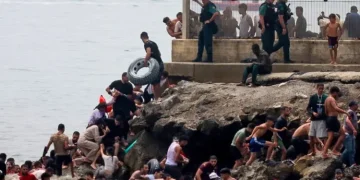
He tracked the migration figures at Ceuta as they were inflated turn by turn – from roughly 50,000, most of whom returned within a day, to an official 72,000, to the 80,000 outlets like El Español printed anyway. On August 26, he singled out a televised pundit who intoned “invasion” five times in eighty seconds and spoke of a “hybrid war” without offering a shred of proof.
Aquí tenemos un ejemplo de cómo hablan determinados tardofranquistas, nostálgicos de Franco y de la Falange, que todavía parecen vivir en un mundo alternativo y cuyo odio visceral hacia Marruecos, alimentado por un imaginario histórico que se remonta a Isabel la Católica y a… https://t.co/rEhAI3RhSv
— Samir Bennis (@SamirBennis) August 27, 2026
Beneath the polemics runs a single diagnosis. The rupture between the two peoples, Bennis argues, is rooted in a Spanish condescension of long standing – a nouveau-riche disdain from a country that has “conveniently forgotten” its bloody record in Morocco.
In his 2021 book on the “turbulent history” of Spanish-Moroccan relations, he traced that paternalism to centuries of schooling. Spanish textbooks have historically cast Morocco as a perennial menace and an untrustworthy neighbor, Bennis documented in his forcefully sourced analysis, concluding that this centuries-long demonization campaign has bred, generation after generation, a sense of racial and cultural superiority.
Spain treats Morocco as a lesser, younger, unruly neighbor, although the historical record says the opposite. Insulting Morocco, and its king, has become “almost a national sport” in Spain, Bennis charged, precisely because it pays – politically for the parties, commercially for the press – with legislative elections drawing near.
This episode has also been characterized by a reflex Bennis reads as the tic of a whole class of commentators: reaching for insult and disqualification the moment someone challenges them on the terrain of ideas and their own position proves thin, rather than engaging his arguments. He has met these personal attacks with contempt.
Branded an “agent” of the Makhzen – one accuser sneering that he “hopes M6 pays him well” – he answered on September 1 that he would wear the slur “as a crown of honor,” and dared his accusers, one of whom, he noted acidly, could not so much as pronounce “Makhzen,” to read his four books and 450-odd articles across twenty-six years and then rebut him on the merits, in any of four languages.
Este es el nivel de análisis de gran parte de los periodistas españoles. En vez de confrontarme en el terreno de las ideas, trata de descalificarme tachándome de «agente» del Majzén, una palabra que ni siquiera sería capaz de pronunciar correctamente, y diciendo que «espera que… https://t.co/EoEeAvjbLf
— Samir Bennis (@SamirBennis) September 1, 2026
It is the same ready-made template the propagandists reach for every time, the recycled drivel and delusions written about Morocco for decades, including their preference for styling the country the “Alaouite regime” rather than simply naming it Morocco. They cling to such formulas because, in his telling, they lack the intellectual formation and argumentative depth to confront him seriously on the terrain of ideas.
“We debate ideas, not people,” Bennis wrote, drawing the line he says separates Moroccan manners from the shouting matches of Spanish television. When reporter Francisco Carrión branded Haddad a liar and a face of “Moroccogate,” Bennis countered that hurling grave accusations “without the slightest proof” is the mark of a debater who has exhausted his arguments.
Esta es la diferencia que existe entre nosotros, los marroquíes, y la mayoría de los periodistas y comentaristas españoles: vuestra tendencia enfermiza y atávica al insulto y a la descalificación en cualquier debate.
Se nota incluso en las mesas redondas difundidas por las… https://t.co/SUo9Fy6iih
— Samir Bennis (@SamirBennis) August 18, 2026
As for Vox’s demand to expel Morocco’s ambassador, he read it as electoral theater. The far right, like the right, knows that governing and grandstanding are different trades. He recalled Felipe González, who in opposition branded Morocco an “occupier” of the Sahara and helped legitimize the Polisario, only to reverse course entirely on reaching power in 1982. Even a Vox government, he argued, would collide with the same immovable geopolitics – and with the plain fact that Spain, not Morocco, has more to lose from a rupture, as France and Germany discovered before they realigned toward Rabat.
Simples fanfarronadas del partido de extrema derecha Vox que no tendrán ninguna relevancia ni importancia. Les aseguro que el día en que este partido se haga con el poder en España, algo no del todo descartable, dado el preocupante giro hacia la extrema derecha de amplios… https://t.co/6SiWzv2iCb
— Samir Bennis (@SamirBennis) September 1, 2026
And this is precisely why Moroccans should not fall silent when faced with Spanish vilification and grandstanding. On August 14, Bennis issued a “fraternal appeal” to Moroccan intellectuals, academics, and journalists to answer the campaign article by article, to keep a continuous presence on the platforms, and to defend a decade’s accumulated soft power against a coordinated attempt to demolish it.
هذا نداء أخوي لكل المثقفين والأكاديميين المغاربة: يتعرض المغرب منذ ما يزيد عن أسبوعين لحملة إعلامية غير مسبوقة ومنقطعة النظير لتشويه سمعته وسمعة مؤسساته وتلطيخ الصورة الطيبة التي يحظى بها المغرب والمغاربة في جميع أنحاء العالم، والتي تعززت خلال السنوات القليلة الماضية.
صحيح أن…
— Samir Bennis (@SamirBennis) August 14, 2026
The demonization should not intimidate Morocco into apology. It should provoke the opposite – a sustained demand for accountability from the Spanish state and its elites, and an open reckoning with the crimes committed against Morocco and its people: the Moriscos, Tetuán, the gas of the Rif, the conscripts of a foreign civil war, the long obstruction over the Sahara. The ledger is long, and it has never been settled. Until Spain can regard its own past with the severity it reserves for its neighbor, it is in no position to ask anyone for forgiveness.