
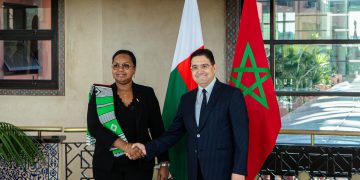





















































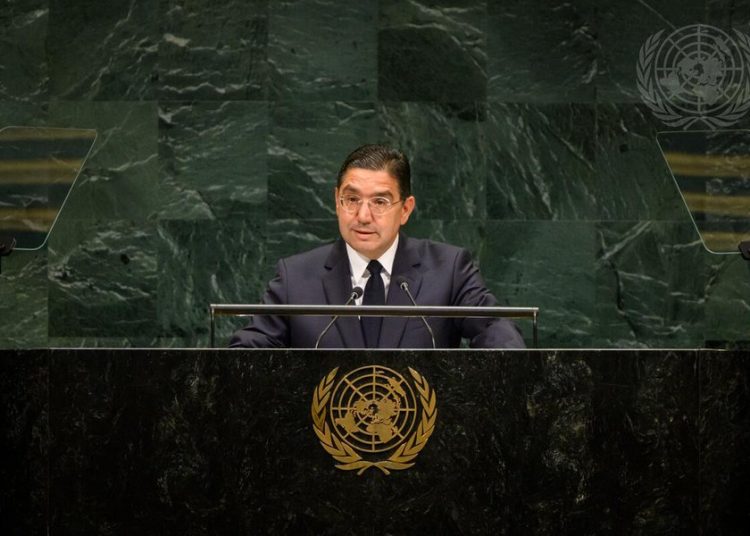
Rabat – Foreign Minister Nasser Bourita presented Morocco’s approach to mobilizing more financing for development during the “Financing the Future” high-level meeting at the UN in New York on Wednesday.
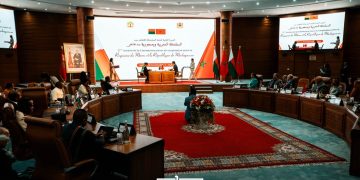
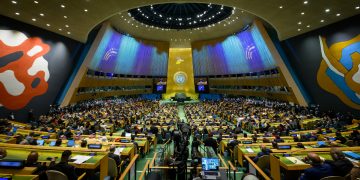
Co-organized by Morocco and the UN Development Program, the meeting focused on partnerships between public and private actors to invest in development. Held on the sidelines of the 81st session of the UN General Assembly (UNGA), it brought together ministers and senior officials, international organizations, financial institutions, private-sector representatives and development actors to explore new ways to address growing financing needs.
Bourita said public finances remain essential but cannot finance development ambitions on their own. He cited an estimated annual financing gap of $4.3 trillion for the Sustainable Development Goals. He said the challenge now involves not only raising more resources but also finding new ways to connect public resources with private capital, innovation, technology and expertise.
He pointed to Morocco’s investment reforms, including the new Investment Charter and the Mohammed VI Investment Fund. Morocco aims to gradually increase the private sector’s contribution to nearly two-thirds of national investment by 2035, according to Bourita.
The minister also referred to the Noor Ouarzazate solar complex, Tanger Med port and the Casablanca-Tangier high-speed rail line as examples of investments that can generate jobs, infrastructure, better services and long-term value for citizens.
Read also: Bourita Reiterates Morocco’s Support for Palestinian State at UN
Bourita also addressed Africa’s infrastructure financing needs, estimated at between $181 billion and $221 billion annually for 2023-2030. He cited Morocco-backed initiatives including the African Atlantic Gas Pipeline, the Atlantic Initiative for Sahel States and the Process of Atlantic African States. These projects, he said, aim to connect economies, bring markets closer and create conditions for shared prosperity.
He called for a stronger role for multilateral development banks in reducing risks, making projects more financially viable and attracting long-term private capital. He also urged the UN development system to use its field presence and expertise to connect governments, financial institutions and private companies, help prepare bankable projects and develop financing solutions adapted to countries’ different vulnerabilities.
Bourita proposed reducing regulatory fragmentation, exploring regional co-investment mechanisms, creating regional guarantee and risk-reduction platforms, and adopting financing approaches that consider factors beyond GDP, including geographic isolation and climate vulnerability.
He said Morocco remains ready to share its experience through South-South and triangular cooperation based on solidarity, co-development, and mutually beneficial partnerships.