Marrakech – Mohammed VI Polytechnic University (UM6P) formalized the consortium agreement for the Africa Center of Manufacturing Excellence (ACME) on Wednesday, October 7, on the sidelines of the Marrakech Airshow.
The agreement unites nine institutional and corporate parties around a single advanced-manufacturing platform hosted at UM6P’s Nouaceur site, in the Casablanca aerospace industrial area.
The consortium brings together Morocco’s Ministry of Industry and Trade, the National Defense Administration, and OCP Group on the public and national side.
Alongside them sit four of the world’s largest aerospace and industrial manufacturers: Boeing, Airbus, Lockheed Martin, and Safran Nacelles, together with the research center CETIM Maroc. UM6P serves as academic host and research partner.
The university cast the mix of Moroccan institutions and international players as a foundation meant to consolidate advanced manufacturing capabilities in Morocco, with the stated ambition of developing and spreading those capabilities across Africa.
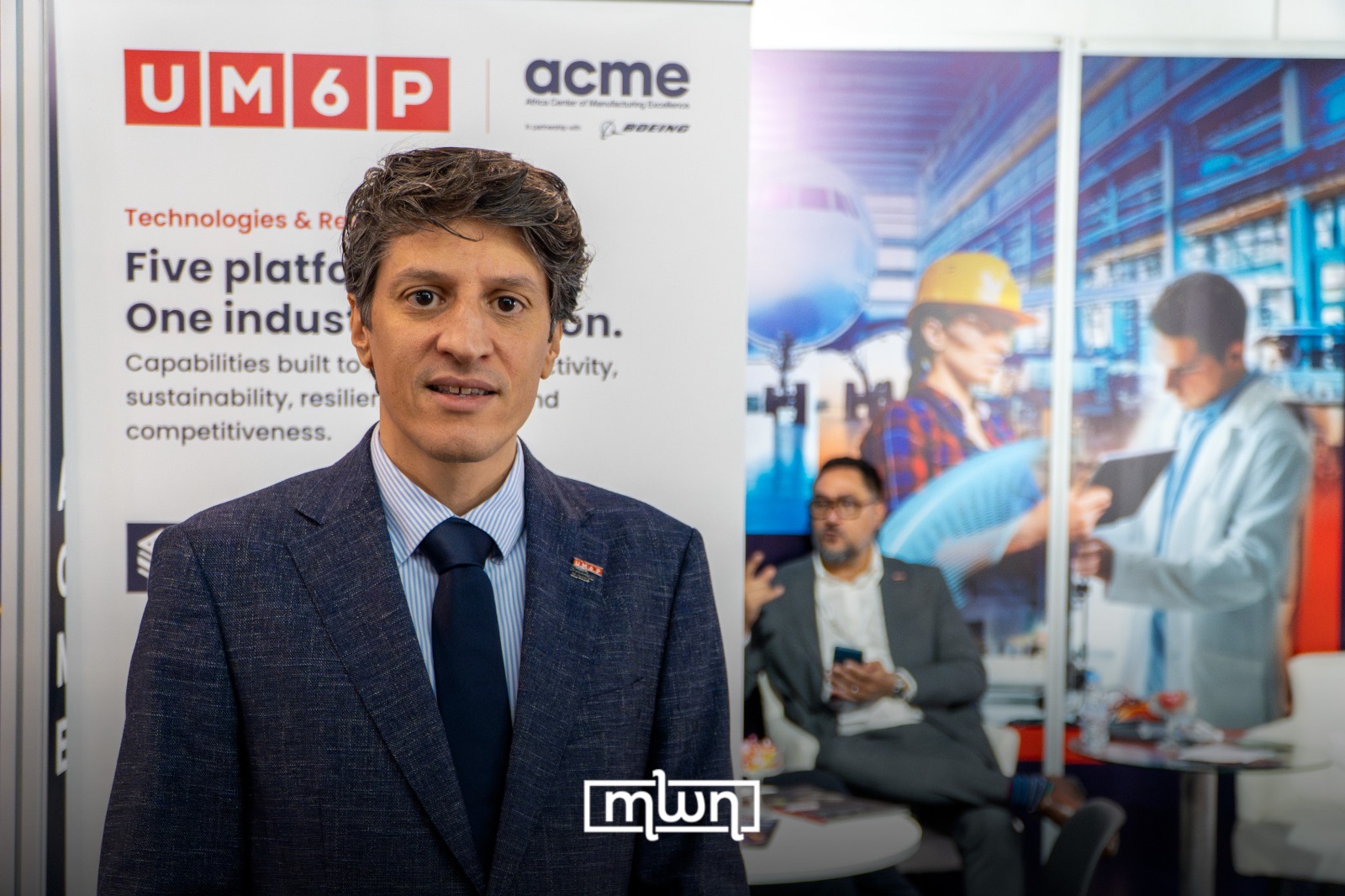
Othmane Smires, General Manager of ACME, described the center to Morocco World News (MWN) as “a unique R&D center in Africa.” He pointed to an ambition that reaches beyond research output.
The platform, in his words, would “bring together tomorrow’s technology to improve efficiency and strengthen Moroccan sovereignty.” He framed ACME as “a tool serving Moroccan industry” meant to move the country up the value chain and develop local talent.
View this post on Instagram
From 2023 offset deal to a nine-party consortium
An important distinction shapes the story. ACME was not created this week. Its establishment was first announced in October 2024, also at the Marrakech Airshow, where Ryad Mezzour, Minister of Industry and Trade; Abdellatif Loudiyi, Minister Delegate in charge of the National Defense Administration; and Hicham El Habti, President of UM6P and Secretary-General of OCP Group, signed a partnership to build the center in Nouaceur.
The Industry Ministry at the time described it as Africa’s first internationally oriented R&D center carrying the Boeing label. What happened on October 7 was the formalization of its wider consortium.
The groundwork runs back further still. In February 2023, the Ministry of Industry and Trade, the National Defense Administration, and Boeing concluded an industrial offset agreement intended to strengthen Morocco’s aerospace ecosystem and engineering capabilities. That framework opened the path for ACME.
By December 2024, UM6P had formally established the center, and in June 2025, Boeing confirmed its cooperation at the Paris Air Show, with executive Vince Logsdon tying the agreement to manufacturing expertise and workforce development.
The October 7 signing gathered the executives now steering the project. El Habti signed alongside Abdelhadi Sohib, Vice-Chancellor of UM6P, and Smires. The industrial partners were represented by Fahad Al Mheiri, Boeing’s regional executive for the Middle East and North Africa; Joseph Rank of Lockheed Martin; Vincent Caro, President of Safran Nacelles; Gabriel Sémelas, Airbus President for Africa and the Middle East; and Karim Cheikh, General Manager of CETIM Maroc.
The ceremony took place in the presence of Abdellatif Loudiyi, Minister Delegate in charge of the National Defense Administration.
What ACME will do, and what remains unknown
ACME is designed as a shared research, testing, and industrial development platform. Rather than each manufacturer running its own laboratory in Morocco, members will cooperate through common equipment and coordinated programs.
UM6P describes it as a shared hub where members can develop, test, and support the industrialization of manufacturing technologies toward industrial application.
The center will operate through a project-based approach. R&D projects will be conducted collectively by consortium members or developed in response to more specific industrial requirements. That model is meant to let members define, develop, and validate technologies against identified needs while drawing on shared research and technical capabilities.
The announced research fields span advanced materials, additive manufacturing, precision machining, composite processing, robotics, industrial automation, artificial intelligence, metrology, and non-destructive testing. A training arm, ACME Academy, is meant to connect that research to real industrial requirements, though its curriculum, intake, and start date remain unspecified.
The center frames the academy and its coordinated programs as a way to translate research into industrial applications, strengthen supply chains, and invest in Moroccan talent.
The agreement also sets out the structural terms that make such cooperation possible. It addresses consortium governance, financing arrangements between members, intellectual property generated through research, and a tiered membership model that allows new organizations to join.
The arrangements are framed to support cooperation between institutions with different mandates while preserving a shared direction for ACME’s research and industrial activities. The same text notes that the projects may generate new knowledge and intellectual property, creating value for members and strengthening the wider industrial and technological ecosystem.
A promotional brochure distributed at the airshow sketches how membership would work in practice. It describes three research formats: shared generic research that pools expertise and costs, focused research with a defined scope and fewer members, and a broader collaborative ecosystem across industry, research, and technology partners.
It also sets out three membership tiers: full research access, access to selected projects, and network-plus-equipment participation.
No financing amount, fee schedule, or intellectual-property formula has been disclosed.
The industrial partners have offered their own confirmations. Sémelas noted that Airbus employs roughly 1,200 people in Casablanca and that components built in Morocco are incorporated into Airbus commercial aircraft worldwide.
Boeing described its role as co-founder alongside UM6P, building on its 2025 commitment to manufacturing capacity and training.
Lockheed Martin confirmed that it signed on as a founding member, while CETIM Maroc, through Cheikh, pointed to the center’s potential contribution to manufacturing innovation across Africa.
Several questions stay open as the center moves from paper to practice. The reviewed announcements do not establish the total investment, the individual contributions of Boeing, Airbus, or Lockheed Martin, the number of researchers already employed, or a firm opening date for the laboratories.
No named joint R&D project has been announced, and the consortium has established no program to produce military aircraft or weapons. For now, ACME stands as a governance framework whose practical results in Nouaceur remain to be seen.